
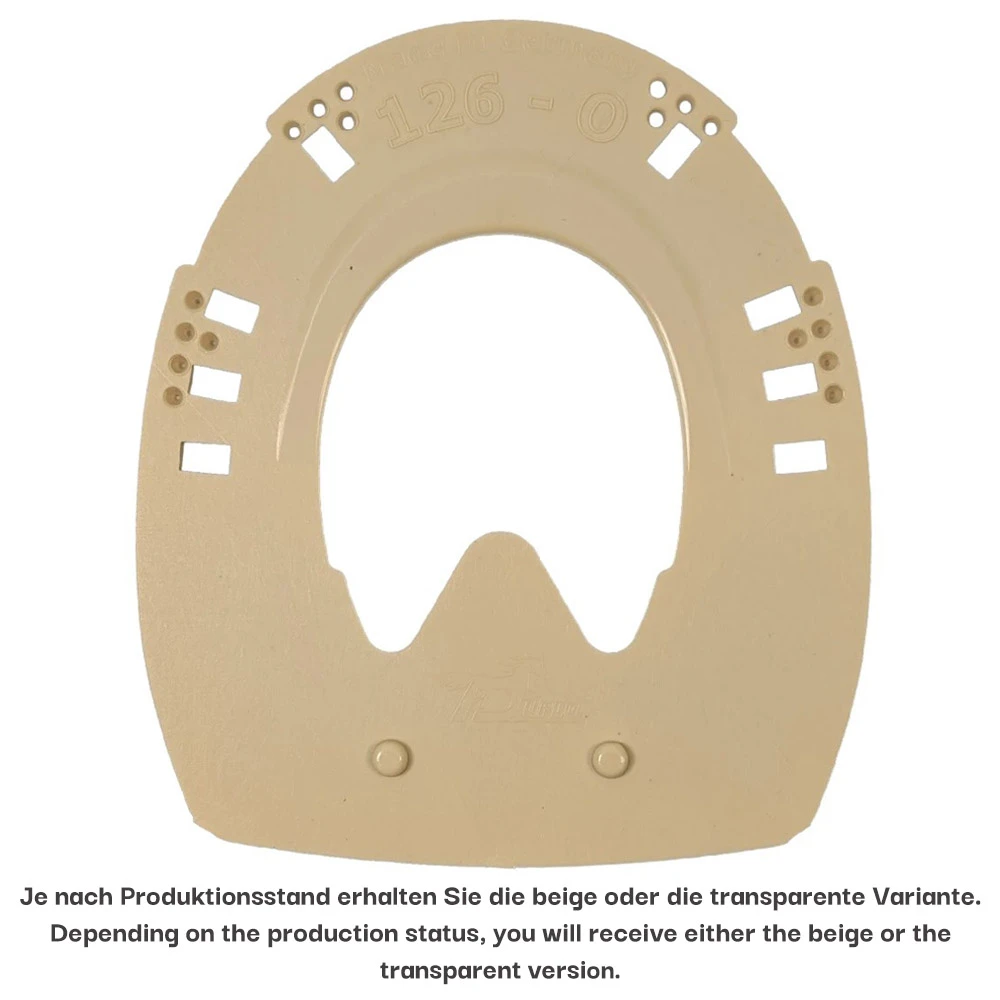
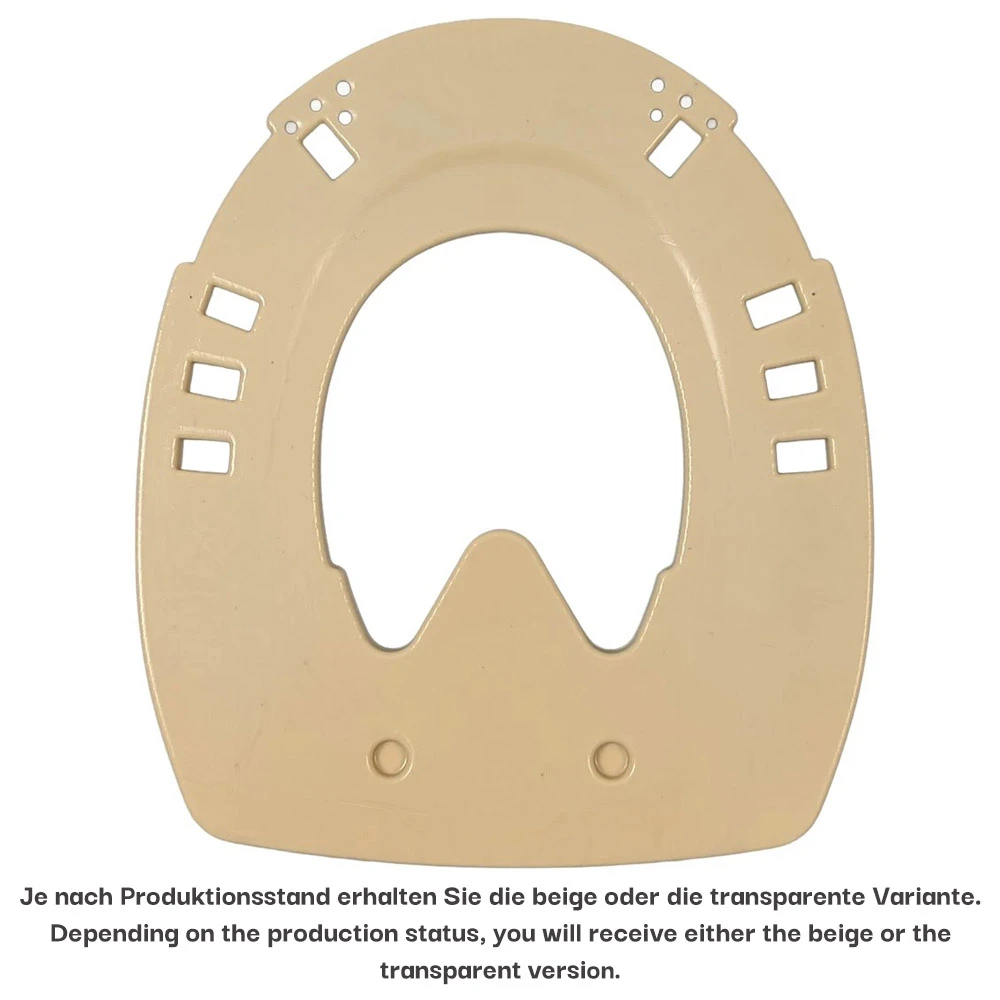

Wedge (oval / 118mm)
Item No.: 081118
Manufacturer/Brand: Duplo Verbundbeschläge
6,00 EUR - 6,69 EUR
incl. 19 % VAT
Scaled Prices
| Quantity | Unit Price |
|---|---|
| 1-7 | 6,69 EUR |
| >= 8 -0,69 EUR | 6,00 EUR |
-

- delivery time 3-5 Werktage (*)
- weight 0,05 kg
Are you already benefitting from our commercial conditions? Please contact us!
Adjusting the Hoof Angle with a Plastic Wedge Combined with a Hybrid Horseshoe
In the context of hoof care, as a farrier, you are constantly faced with various challenges in your
daily work, especially when it's necessary to alter the hoof angle. Typically, a wedge pad
is used for this purpose, allowing you to achieve an elevation of the heels.
The reasons for needing to elevate the heels with wedge pads can be diverse. Especially in
corrective shoeing, which includes the use of wedges, there are no universal statements. A wedge
might help one horse with underrun heels, but it could harm another horse. The same goes for
conditions like navicular disease
– what might be beneficial for one horse could worsen the
condition for another.
This is why we cannot provide general guidance on the applications of wedge pads. We recommend that the decision to use a wedge, the angle at which the elevation should occur, and the duration of usage should always be discussed with the on-site veterinarian.
The purpose of wedge pads is to elevate the heels and steepen the hoof angle, effectively putting the hoof more on its tip. When utilizing wedges to elevate the heels, it's common to also add a toe rocker to optimize breakover. This is also achievable with a plastic shoe. Depending on the specific reason for needing a wedge, using a shock-absorbing plastic shoe, with or without a stabilizing metal core, could be beneficial. Especially when a horse is in pain, this shock absorption can be perceived as comfortable by the horse.
A plastic wedge induces a 2.5 degree change in the hoof angle. If necessary, it's also possible to insert two wedge pads into the shoe, resulting in a 5.0 degree alteration. For these applications, you can purchase our plastic wedge.
Please note that our products do not diagnose or cure any diseases. Any application in the therapeutic or orthopedic domain lies within the discretion of the on-site farrier and should always be coordinated with the treating veterinarian, particularly when dealing with corrective shoeing involving wedges.
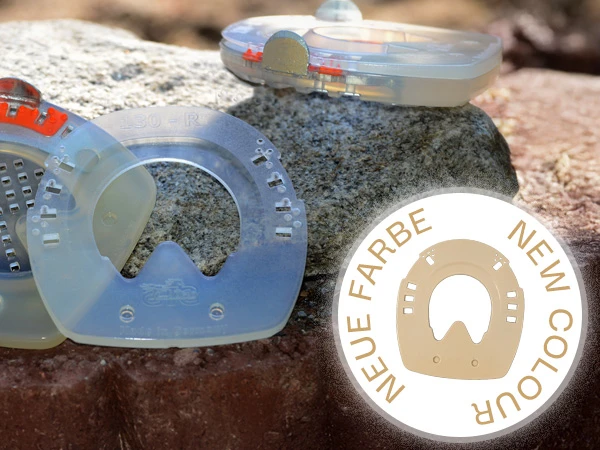
New Color, Same Function
The wedges made from recycled material — specifically from what’s known as regranulate , will now come in a neutral beige color — so don’t be surprised if you see product images or videos where they still appear transparent.
Special Features of Our Wedges

Ring Shape
Our wedge pads are designed in a ring shape, covering the entire contact area of the shoe. This design enhances the stability of the wedge on the horse's hoof, reducing the likelihood of slipping as it's securely anchored across a larger surface area. This applies to both glued-on and nailed-on wedge shoe applications.
Anatomical Sole Relief
The shape of the wedge is based on the anatomy of the hoof. A molded bevel provides
for perfect fit around the sensitive sole and avoids needless pressure.
When
using a clipped horseshoe, you only need to adjust the wedge pad to the hoof
shape before using it.
Manufactured from Recycled Material
The excess sprues
generated during our production process are recycled through a
proper procedure to produce plastic regrind. Using this recycled material, we create
our wedges (among other products).
We are pleased to make a small contribution towards
better resource management through this initiative.
Elevation of the Heels with Wedge Pads in Horseshoeing - Photos
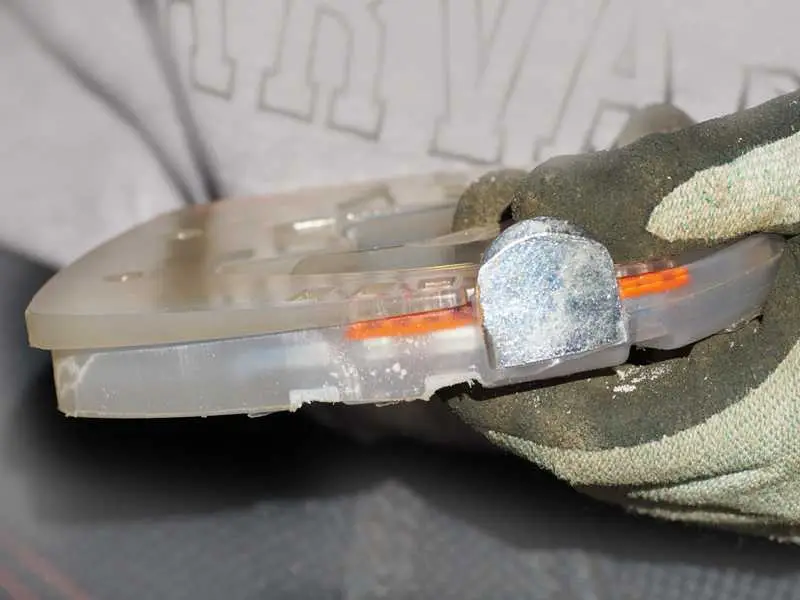
Begin by performing the barefoot trimming and adjusting the shoe to the hoof as usual. Afterward, place the wedge pad in the prepared shoe.
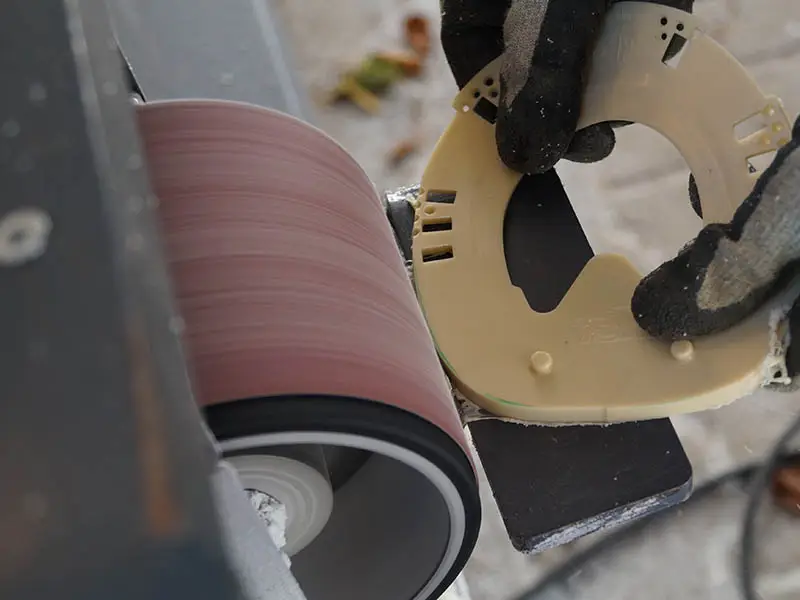
Adjust the wedge pad to the shoe, for example using a grinder. Be sure to avoid inhaling any grinding dust.
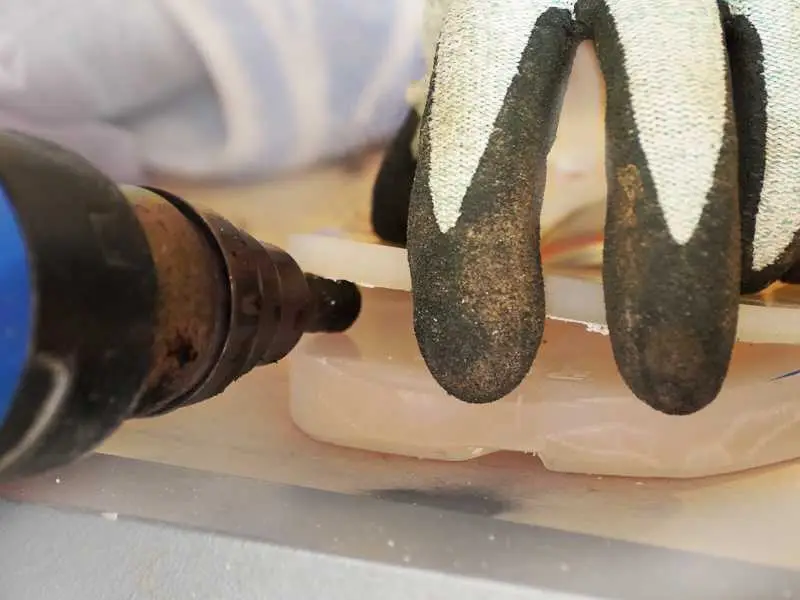
It is possible (but not mandatory) to fix the wedge pad in place using spot welding. To do this, you can use your heat gun with a reduction nozzle .
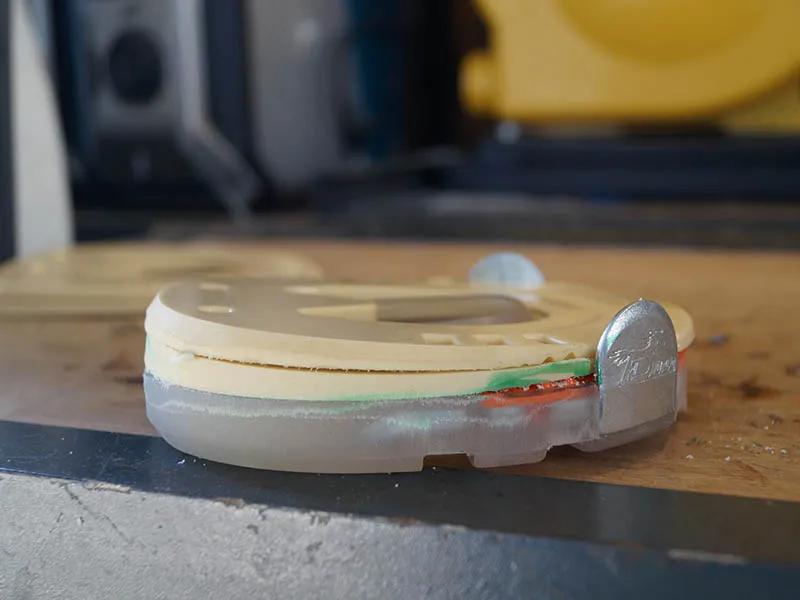
To achieve a change of the hoof angle of 5.0 degrees, combine two plastic wedge pads together.
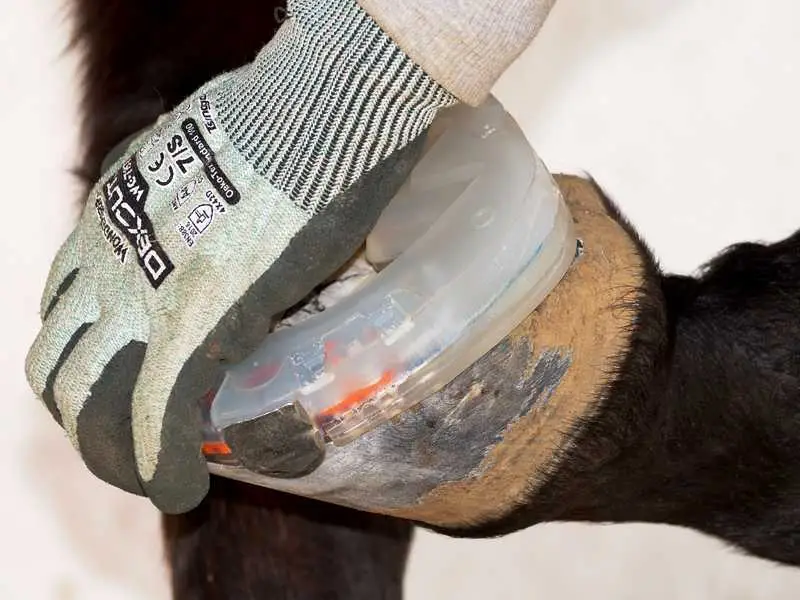
Ensuring the precise fit of the horseshoe is paramount. Confirm the accuracy of your wedge pad shoe before applying it to the horse.
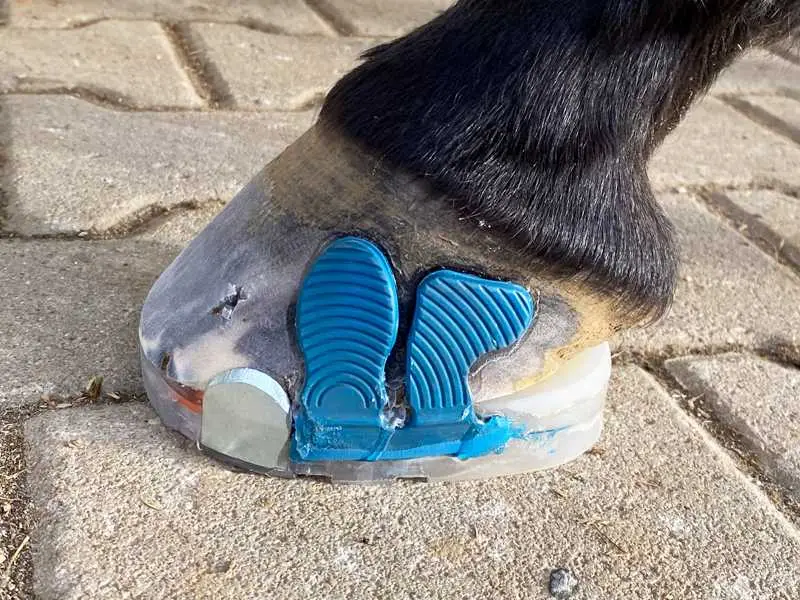
You can attach the wedge shoe for heel elevation using glue, nails, or even apply it half-glued and half-nailed.
Application and Safety Instructions - Heel Elevation with Wedge Pads - Video
Whether during hoof care or later in the pasture or while riding, there are certain Safety Instructions and risks that we need to bring to your attention. Our safety guidelines are intended not only for farriers but also for horse owners and riders. Please observe these guidelines to prevent injuries to both humans and horses.
If you have further questions regarding the application of corrective shoeing with wedge pads, we are here to assist you. However, please be aware that it's not possible for us to provide remote diagnosis, and the general information about our products, especially in regards to orthopedic or therapeutic applications, cannot be directly applied to every individual horse. Since wedges are typically used as therapeutic aids, they should only be applied by hoof professionals in collaboration with the local veterinarian.
Shoeing with Wedge Pads
Alteration of the hoof angle using wedge pads as part of orthopedic or therapeutic shoeing requires the necessary expertise.
The appropriate barefoot trimming and adjustment of the shoe and the wedge pad are extremely important in corrective shoeing. We would like to recommend our general shoeing guide to you for further information on this.
When using a wedge, perform the barefoot trimming as usual and adjust the shoe to the individual hoof shape. Then, place the wedge in the shoe and adjust it to the shoe before nailing or gluing it to the hoof. You can also spot-fix the wedge using a heat gun.
A single wedge pad induces a 2.5 degree angle change; by using two wedge pads, you can achieve a 5 degree alteration.
Shoeing Instruction Hybrid Horseshoes - Plastic Cover and Metal Core
Custom Horseshoeing Solutions:
Half-Nailed and Half-Glued Horseshoes with Wedges
In the following video, we demonstrate the possibilities of working with a wedge in a special case.
Sandy Frank shoes her horse with a clipped composite horseshoe, using a wedge to alter the hoof angle by 2.5 degrees. What makes this case special is that it is half-nailed and half-glued. It is evident that creativity has almost no limits, allowing the farrier to tailor their approach to the horse's specific needs on-site.
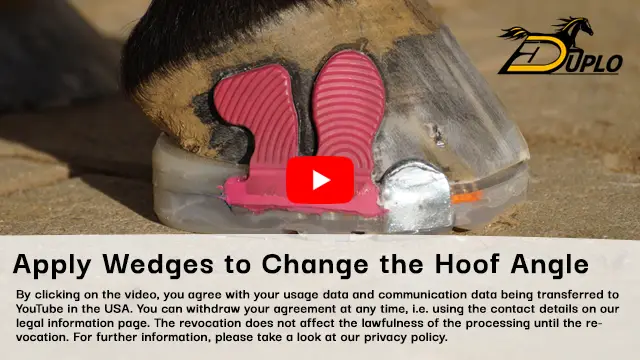
Application of Wedge Plates
Application of the Wedge Pad for Clipped and Unclipped Hybrid Horseshoes
The easiest application of the plastic wedges is in combination with a clipped horseshoe (excluding open-toe models). The wedges are available in all existing shoe sizes, both in round and oval shapes as well as in the STS form; this makes the application very straightforward.
Wedges in Combination with a Clipped Horseshoe
When using the wedge pads with a clipped horseshoe, the wedge is precisely fitted for the nailing slots and knob arrays of the shoe. Therefore, the wedge pad does not need to be manually adjusted to match the knob arrays or nailing slots of the shoe before use. As a result, it is recommended in most cases to use a clipped horseshoe.
Wedges in Combination with an Unclipped Horseshoe
If you intend to combine the wedge pads with an unclipped shoe, the process will depend on whether it's an already modified model or not. If in doubt, feel free to contact our customer service — our team will be happy to assist you.
- In the case of the already revised sizes, the positions of the nailing slots in the unclipped shoe align precisely with those of the wedge pad. When using a wedge pad with these shoes, you only need to sand down part of the knob arrays to match them to the wedge pad.
- Using the wedges with the older (not yet revised) unclipped models is feasible in theory, but it often involves a significant amount of effort.
Product Specifications
| General Data and Delivery Information | |
|---|---|
| Model | plastic horseshoe wedge, ring-shaped full wedge pad, wedge pad, 2.5 degree wedge, horseshoe wedge, plastic wedge pad |
| Brand | Duplo |
| Manufactured in | Germany |
| Item Numbers | 080, 081, H80, H81, 1010 |
| Packaging Unit | sold individually |
| Returns and Exchanges | Possible under certain conditions within 3 months within the European Union (EU). For returns from outside the EU, please contact our customer service. All details can be found under FAQ → Service & Conditions |
| Function and Application | |
|---|---|
| Function | wedge shoe, corrective shoeing, provides a heel lift, changing the hoof angle, elevating the heels, raise the heels by 2.5 degrees, wedging heels, wedge the heel up, wedged hoof, adjust breakover |
| Season | The wedge pads can be used all year round. |
| Measurements, Shapes, Sizes, and Weight | |
|---|---|
| Available Shapes | round and STS (usually fits front hooves) / oval (usually fits hind hooves) |
| Size Determination for Horseshoe and Wedge Pad | Based on hoof shape and the widest part of the hoof (after proper trimming), or, if
necessary,
the size of the previous steel shoes. Feel free to use our free template. |
| Sizes (=Width) |
|
| Size Intervals | in 4mm steps; in 8mm steps from size 182mm on |
| Length | varies by size – for details please visit FAQ → Sizes and Shapes |
| Weight | depending on the size from 30 up to 210g |
| Shoeing and Customization | |
|---|---|
| Application | nail-on shoe, glue-on shoe or cast shoe |
| Shoeing Instruction | can be found unter FAQ → Instructions |
| Therapy Shoe / Rehab | Wedges provide a heel lift and are used to change the hoof angle. We expressly point out that our products do not diagnose or cure any diseases and advise for any use with a therapeutic or orthopedic background to work closely with the hoof specialist or veterinarian on site. |
| Customization | Always fit the horseshoe and the wedge pad individually to the hoof shape. More info available under FAQ → Adjustment to the Hoof. |
| Safety Instructions | |
|---|---|
| Safety Information | can be found unter FAQ → Safety Information |
| Safety Instructions as PDF Download | PDF Download |
Adjusting Breakover
Since it’s often useful to add a toe rocker to the horseshoes when using wedge plates, we’d like to briefly explain the options for attaching a toeing direction to a composite horseshoe.
- Rocked Toe Shoe - Adjust by Grinding
If you have an angle grinder or a belt sander at your disposal, you can modify the horseshoe accordingly. - Rolled Toe Shoe - Adjust by Bending:
A less common method is to bend the toe rocker. To do this, secure the plastic shoe on the edge of your anvil or in a vice and reshape it using a hammer.
Straight Toe Shoes
If you wish to place the horseshoe further backwards to achieve an earlier breakover point , our straight toe shoes could be a possible alternative for you.
The STS models come in a round shape with a slightly straightened toe. The quarter clips of these models are positioned further backwards compared to our other shoes. Furthermore, all STS models already have a certain toe rocker, potentially saving you the need for adding a rolled or rockered toe later. Of course, you can also purchase wedge pads that are compatible with the STS models.


Manufacturer in accordance with the Regulation (EU) 2023/988 on General Product Safety (GPSR)
Manufacturer in accordance with the Regulation (EU) 2023/988 on General Product Safety (GPSR)
Name: H. Frank Kunststofftechnik GmbHElectronic Address: info@duplo-frank.de
Physical Address: Vorderfreundorfer Straße 20
ZIP Code: DE-94143
City: Grainet
Country: Deutschland
Phone: +49 (0)8585/96926-0
Responsible Person in accordance with the Regulation (EU) 2023/988 on General Product Safety (GPSR)
Name: H. Frank Kunststofftechnik GmbHElectronic Address: info@duplo-frank.de
Physical Address: Vorderfreundorfer Straße 20
ZIP Code: DE-94143
City: Grainet
Country: Deutschland
Phone: +49 (0)8585/96926-0