Spike Adapter (L)
Item No.: 041000
8,65 EUR - 9,10 EUR
incl. 19 % VAT
Scaled Prices
| Quantity | Unit Price |
|---|---|
| 1-9 | 9,10 EUR |
| >= 10 -0,45 EUR | 8,65 EUR |
-

- delivery time 3-5 Werktage (*)
- weight 0,02 kg
Are you already benefitting from our commercial conditions? Please contact us!
Spikes — Tungsten Carbide Pins for Alternative Hoof Protection with Plastic Coating
Everyone knows about tungsten carbide pins as an add-on for additional anti-slip protection for horseshoes — but what if the horseshoe is not made of steel or aluminum , but is an alternative hoof protection with plastic coating?
The answer is quite simple: What the carbide pin is for the steel shoe, the screw-in spikes are for the plastic hoof protection — regardless of whether it is a hoof boot, a pure plastic shoe or a composite horseshoe.
Screw-in studs, like tungsten carbide pins, are intended as a preliminary step to studs — that's probably why many of our customers also call them quick studs. These quick studs offer a certain additional slip protection. However, compared to studs, they have the advantage of a reduced risk of injury and less stress on the horse's leg.
For additional grip, we usually use two quick studs in the heel area of the shoe. For an "ordinary" leisure or endurance rider, this simple measure is often sufficient as an additional anti-slide protection. Of course, you can't say that as a general rule.
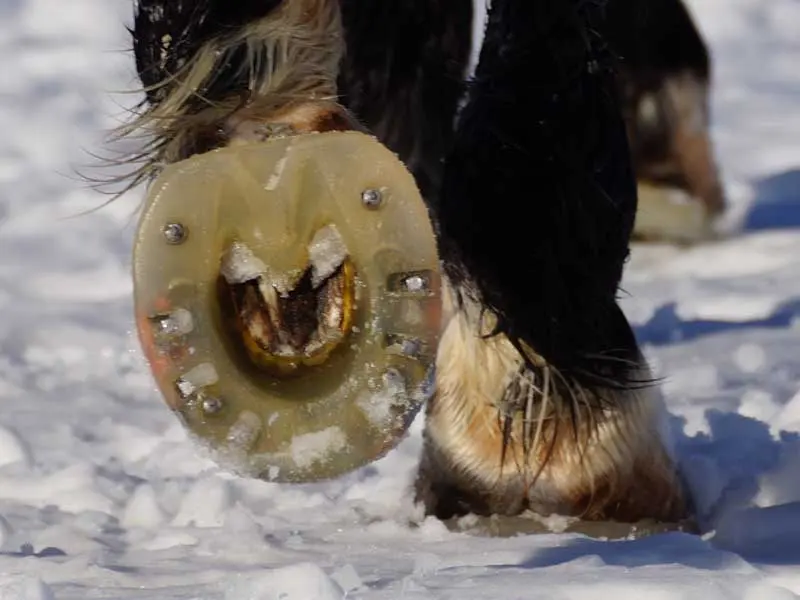
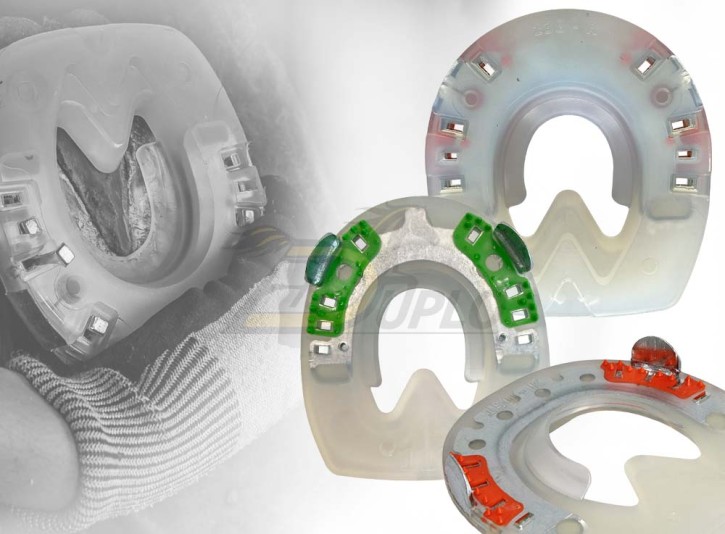
Quick Studs as Additional Anti-Slide Protection — Photos
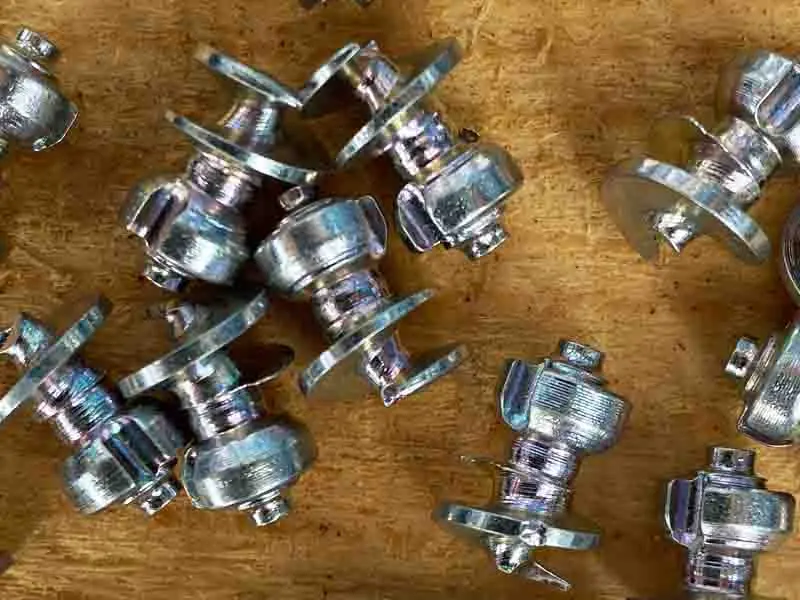
The quick studs — also known as spikes — are similar to the carbide pins of the traditional steel shoe. You may buy quick studs in two different sizes for additional anti-slide protection.
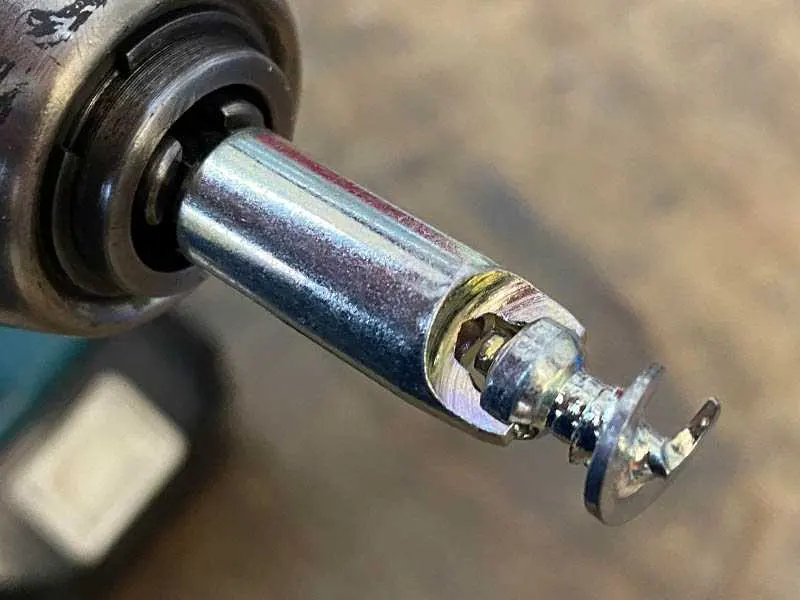
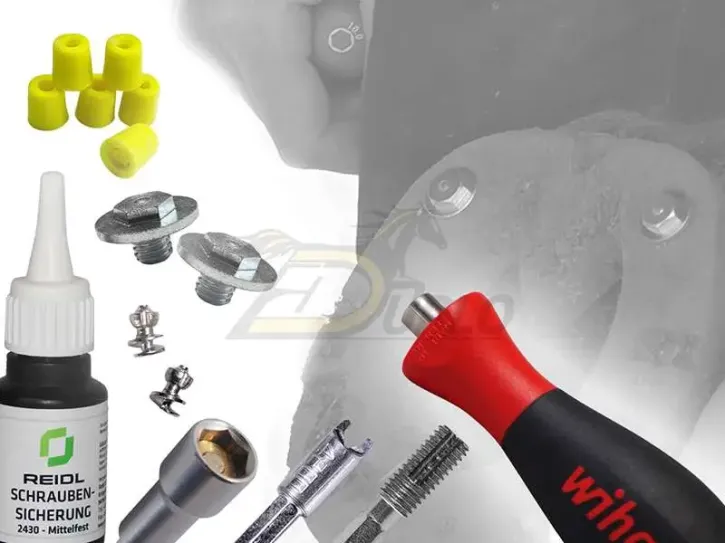
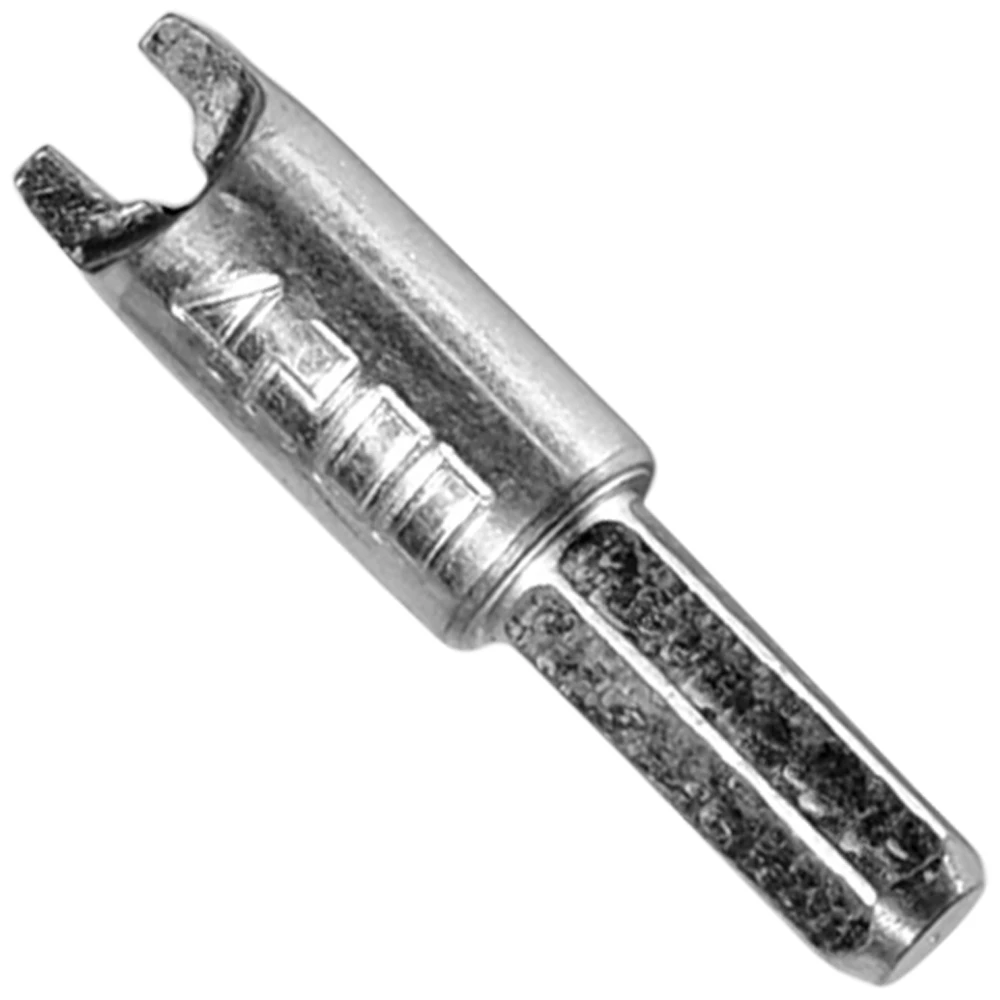
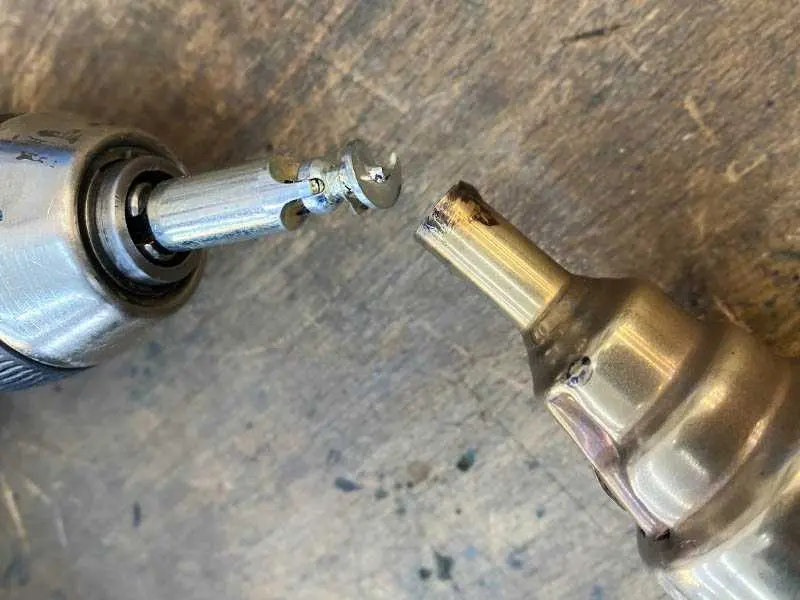
For the application of quick studs, you need a quick stud application tool. Please note that this adapter is available in two sizes.
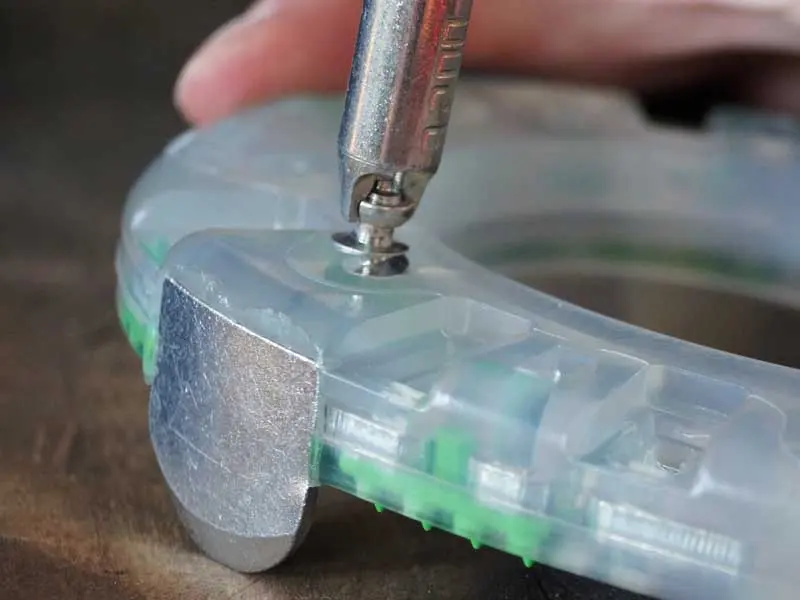
When screwing in the quick studs, make sure they are in the correct position so that no undesirable pressure is exerted on the hoof.
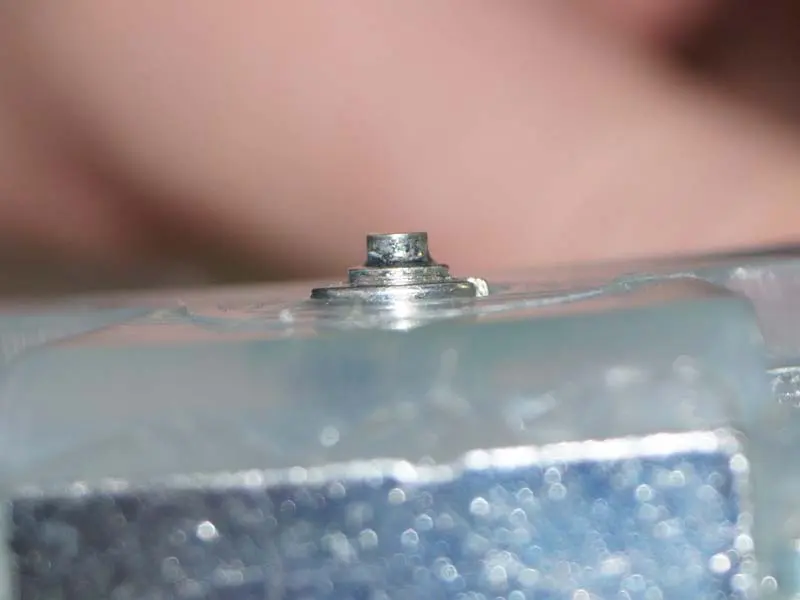
Even if the spikes, as a preliminary stage to studs, only minimally protrude above the synthetic cover of the horseshoe, they increase the risk of injury in a herd situation.
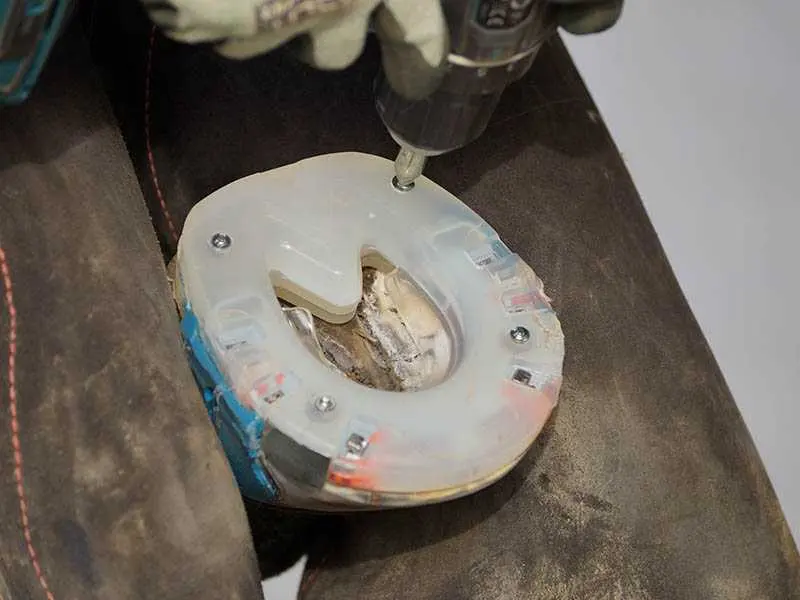
With most horses, the quick studs can even be screwed in afterwards — that is, when the shoe has already been nailed or glued to the horse's hoof.
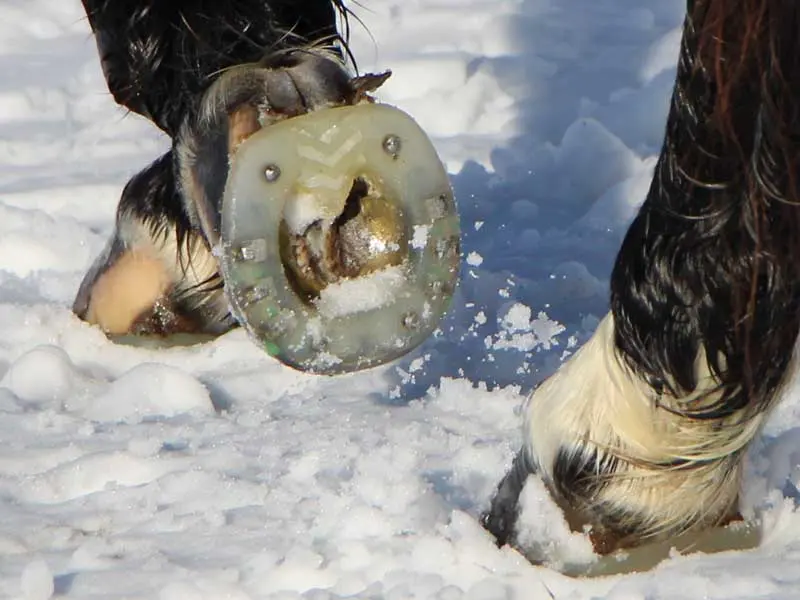
Even with quick studs as an additional anti-slip protection, you must always adapt your riding style and speed to the surface and climatic conditions to avoid injuries.
Application and Safety Instructions - Using Quick Studs (Spikes) for Extra Grip - VIDEO
In general, the application of the quick studs is simple and quickly done with a little technical skill. Depending on the horse's behavior, it is in principle even possible to subsequently install the spikes. For all work, observe our currently valid Security Advices for working with our products as well as with the tools used.
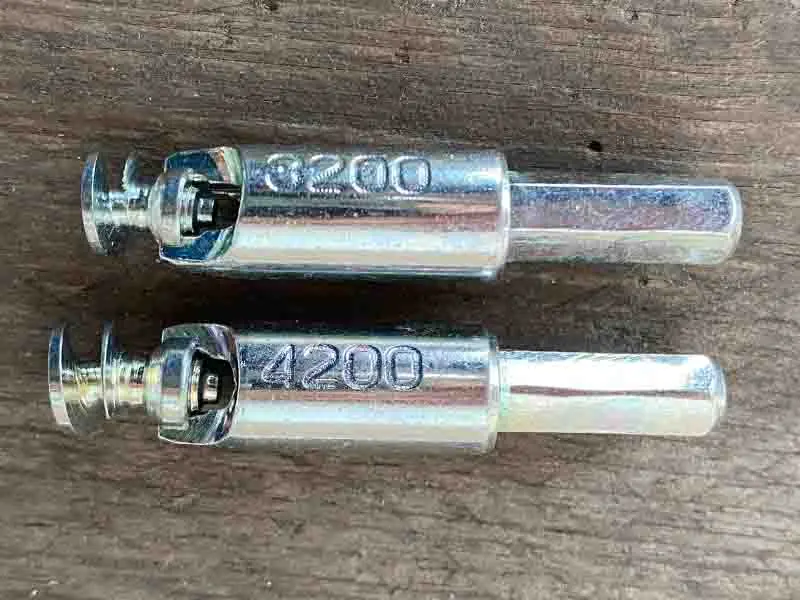
The Difference between M Spikes and L Spikes
In principle, the spikes can be combined with all composite and plastic horseshoes. However, the larger L spikes are less suitable for certain applications. Therefore, please use the M spikes in the following cases:
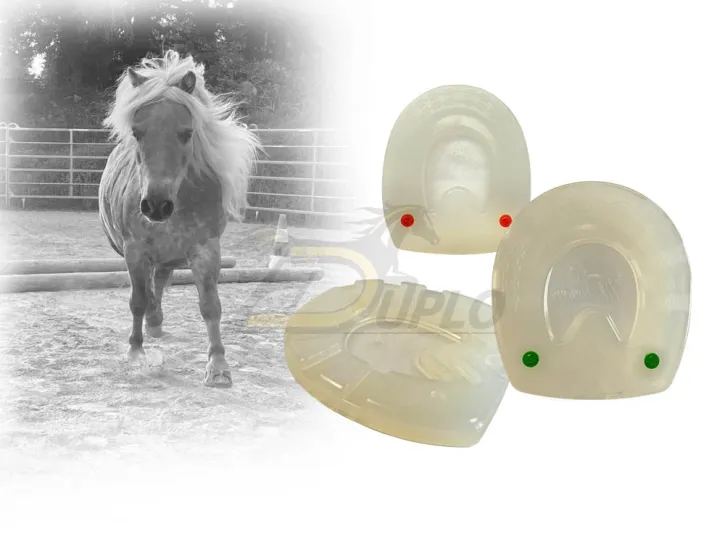
- for pony horseshoes
- in the toe area of STS models
- for the blueline® evo! up to and including size 130 mm
- for the Full Branch Shoe
In all other cases, you can generally decide freely whether to use M or L spikes for additional grip.
If you use the screw-in spikes with alternative horseshoes from other manufacturers or in combination with hoof boots, please ensure when selecting the appropriate size that the spike cannot be pushed through toward the sole of the hoof. For alternative horseshoes and hoof boots from other manufacturers, we cannot provide any binding recommendations regarding the use of spikes. However, we generally assume that similar mounting principles may apply. Spikes are not suitable for use with conventional metal horseshoes or GluShu. Spikes must not be screwed directly into the hoof.
Spike / Quick Stud Application Step-by-Step
The Correct Position of the Spikes
In principle, the spikes can be placed wherever there is no metal core. The exact positioning and the number of spikes used is at the discretion of the farrier on site. In general, the options differ depending on the model of the horseshoe.
To avoid pressure on sensitive areas of the hoof, the spikes should be fitted in the plastic cover in the area of the bearing edge of the hoof wall . Under no circumstances should the spikes be screwed in too far inwards, i.e. under the hoof sole . If the quick stud is too close to the edge of the horseshoe, the plastic may tear out.
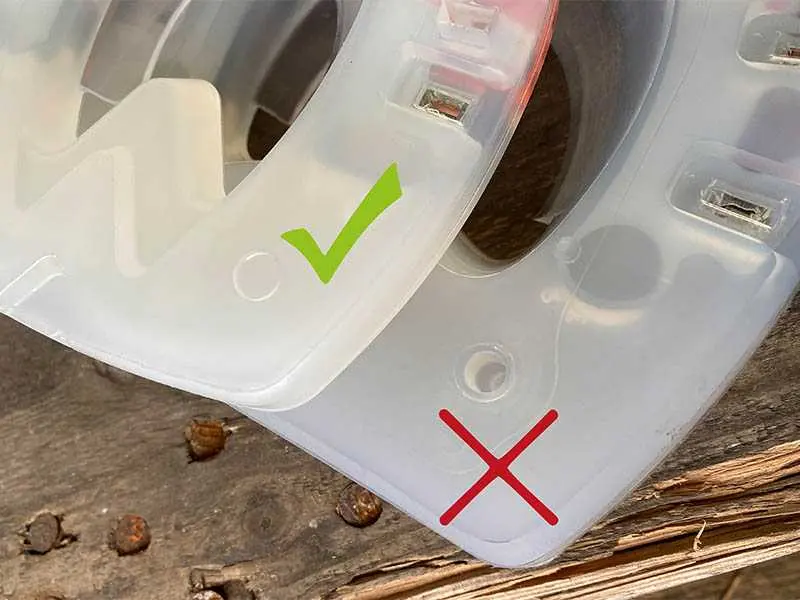
Flat Dimples for Spikes vs. Production-Related Holes
Depending on the model version, our newer horseshoes already have small flat dimples which are meant for the application of spikes. Please do not confuse these flat dimples with the production-related deeper holes of the earlier model versions, in which the small spikes would literally disappear.
If you have a horseshoe without the small dimples for the spikes application or if you would like to position them in a different place, we advise you to use a marker and a wood drill bit to prepare such a dimple yourself.
Preparation of a Flat Dimple
- Mark the desired location of the quick stud on the horseshoe.
- Use your wood drill bit to drill a flat dimple (about 1 or 2mm) into the synthetic material at the marked positions.
- When placed in this dimple, the quick stud won't slide away so easily when screwed in.
- Deeper predrilling is counterproductive; otherwise the quick stud would no longer have a secure hold in the plastic sheath.
Stud Application
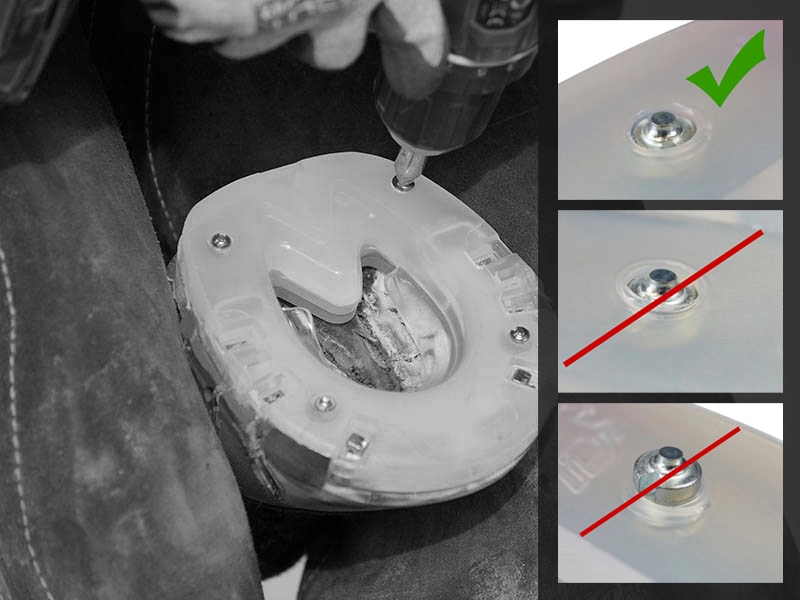
- Then place the quick stud on the adapter. Even if the M spike fits into the L adapter in principle — the devil is in the details because the M spike has a less stable fit in the L adapter. This small instability can cause difficulties when screwing in the spike. The two pegs of the adapter must fully fill the two grooves of the quick stud to ensure that the stud has a secure fit.
- After that, you place the tip of the quick stud in the center of the dimple.
- Slowly and vertically screw the quick stud into the synthetic sheath with moderate pressure and at slow speed. You can stabilize the adapter with the other hand.
- If the quick stud isn't screwed in enough, it will easily get lost and also represents a risk of injury for both human and horse.
- If the quick stud is screwed in too far, it can't provide additional grip. In addition, its tip might break through the hoof side of the horseshoe.
- In order to ensure durability, the quick stud should not be overwound.
- The quick stud fits perfectly and provides additional grip when only the small hard metal head overtops the surface of the horseshoe.
Product Features
| General Data and Shipping Information | |
|---|---|
| Item | spikes, quick studs, small studs for additional grip and application tool |
| Manufactured in | Italy |
| Item Number | Spikes: 000500 (L), 000502 (M) Spike Adapter: 041000 (L), 041001 (M) |
| Packaging Unit | sold individually |
| Exchange and Return |
Possible under certain preconditions within 3 months within the EU. For returns from outside the EU please contact the Customer Service Team. For further details please look at FAQ → Service & Conditions. |
| Function and Areas of Application | |
|---|---|
| Function | Anti-slip protection, wear protection and additional grip for plastic horseshoes, alternative horseshoes, hoof boots and composite horseshoes |
| Application | At your own discretion; adapted to ground conditions, riding discipline and safety within the herd |
| Assembly and Use | With a cordless screwdriver and quick stud application tool — also known as spike adapter — of the appropriate size. |
| Safety Instructions | |
|---|---|
| General Information |
Use only the appropriate adapter for installation. Ensure the spikes are positioned correctly and screwed in properly. |
| Online Safety Instructions |
Please note the additional information regarding the use of spikes in our safety instructions.
These can be found online under FAQ → Safety Instructions. |
| Safety Instructions as PDF Download | PDF Download |
| Risk of Injury |
Even though the additional risk of injuries in a herd situation when using spikes is
usually many times lower than with studs, you should always take this into consideration when
equipping a horseshoe with spikes. We cannot be held liable for any damage that may occur. No matter how well you retrofit a horseshoe, there is always a possibility that a horse may still slip. Therefore, always ensure an appropriate speed. |
Tipps & Tricks
At this point, we would like to use this opportunity to give you some additional information that we
find helpful in everyday life.
If you would like to contribute something yourself, you are
welcome to leave us a review and tell others about your experience.
Quick Studs as an Additional Protection against Abrasion
In the first place, of course, quick studs provide additional grip and thus serve as anti-slip protection. In addition, they also contribute to the durability of the horsehoe because they act as an additional abrasion protection.
Facilitated Application through Heating
Especially (but not only) in winter, at lower temperatures, the application of quick studs can be a challenge. The solution is very simple: The quick studs can be effortlessly screwed into the plastic sheath if you heat their tip slightly beforehand.