Horseshoes for Endurance Riding – Wear, Durability and Model Selection
Especially in endurance riding, factors such as dry ground conditions or very high temperatures play a major role. When competition day falls on a hot summer day, peak performance is required not only from horse and rider, but also from the horseshoe. In case of a composite or pure urethane shoe, the base temperature of the coating increases with every kilometre covered.
From time to time, there is speculation about whether we have changed our material in recent years or reduced the quality of the granulate used. We would like to clarify that the plastic used in our horseshoes has not been changed. As part of our Innovations test range, we have tested different materials in the past and will continue to do so in the future. We always communicate these tests openly, as we place great value on feedback and practical experience from riders, horse owners, farriers and hoof care professionals.
Endurance sport places considerable demands on the horse. This is certainly one of the reasons why shock- absorbing properties are important in endurance riding. The plastic coating should be highly durable, but not too hard, as this may increase the risk of slipping. Finding the right balance between durability, grip and flexibility is challenging. Unfortunately, it is not possible to design one ideal horseshoe that performs equally well for every horse and its individual gait mechanics.
We always appreciate feedback from the endurance community regarding the performance and durability of our composite and plastic horseshoes.
We offer a wide product range so that together we can find the most suitable shoeing solution for your horse. Below, we analyse selected models from the perspective of endurance riding and outline possible advantages and disadvantages.
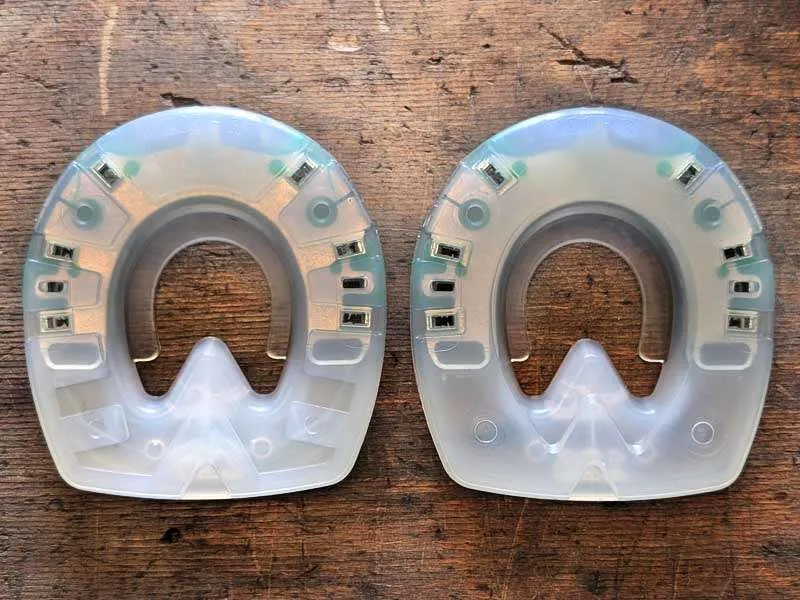
Horseshoes with Deeper Tread Pattern - a Good Choice for Endurance?
Yes and No. The advantage of a deeper tread pattern is obvious: the horseshoe provides additional grip and supports more secure footing.The advantage of a deeper tread pattern is clear: the horseshoe provides additional grip and promotes more secure footing. It works in a similar way to a hiking boot compared to a standard sneaker, offering improved grip on varied Terrain . However, due to the deeper tread patter, slightly less plastic material is present, meaning that abrasion may occur somewhat faster compared to a horseshoe without a deeper tread pattern.
Clipped Duplo without Deeper Tread Pattern
If you choose a non-treaded horseshoe in favour of improved abrasion resistance, but your horse requires additional grip, you may add Spikes . A small side effect of spikes is that, when placed in the toe area, they can also slow down wear in that specific section.
The right plastic compound for endurance riding
Within our range, most composite horseshoes are available as a Standard model and an Extra models .
The Standard horseshoe is slightly softer and may wear faster in extreme summer temperatures. For longer distances and high heat, we would therefore generally consider the Extra model. The harder compound can often withstand very high temperatures and continuous friction for longer compared to the softer Standard version.
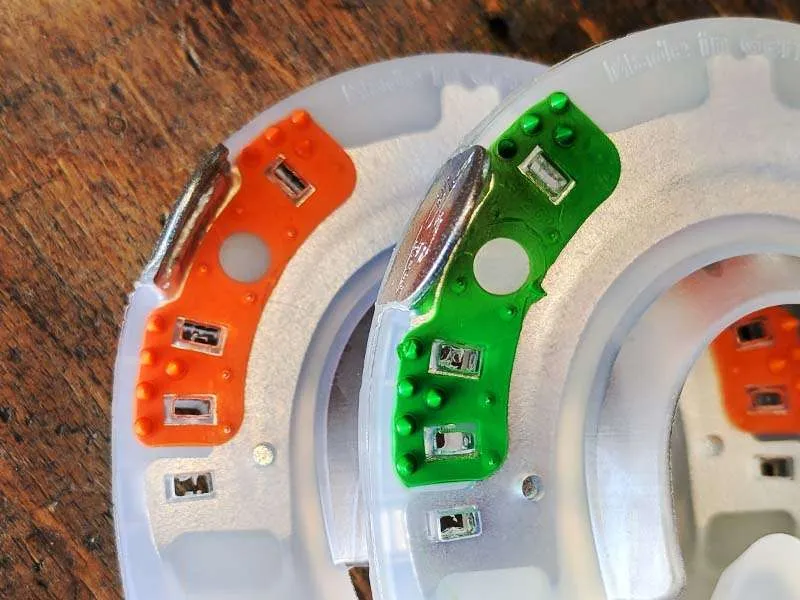
The Arizona Horseshoe — a Misunderstood Model
The Arizona model is often chosen when the metal core of a composite horseshoe becomes visible too quickly and greater abrasion resistance is expected. However, this decision is based on a common misunderstanding.
Originally developed for leisure and trail riding on rocky terrain and for horses that place increased
stress on the toe due to their gait mechanics, the Arizona can be a suitable option when the plastic of
a composite horseshoe tends to break out in the toe area. It is not intended to address general abrasion
issues or to provide overall increased wear resistance. The reinforced steel edge at the toe will
usually become visible relatively quickly — this is a design feature, not a sign of excessive wear.
For further
details about the steel edge, please refer to the product description.
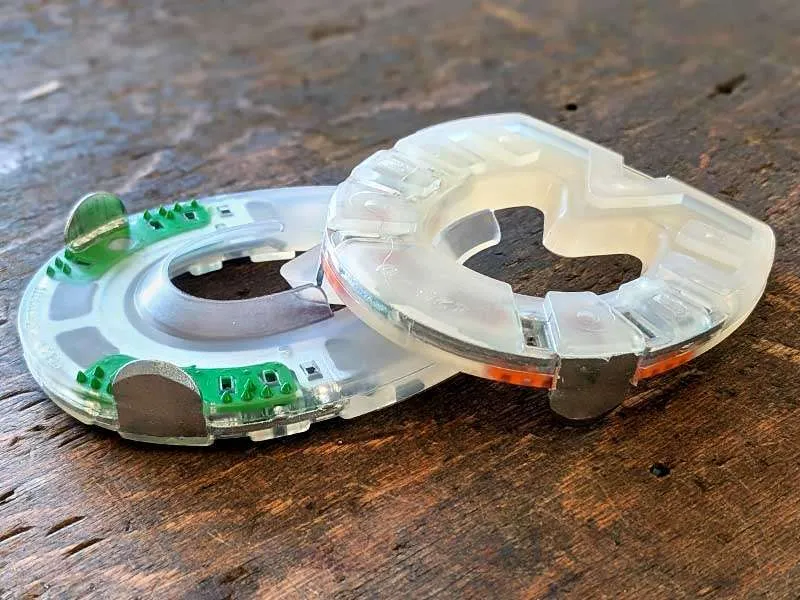
The Heavy Duty horseshoes — a Possible Alternative for Endurance Riders?
The Heavy Duty range was originally developed for draft and hard-working horses. Therefore, they are not always considered as horseshoes for endurance horses. However, endurance horses also cover long distances under demanding conditions and require durable, abrasion-resistant hoof protection. For this reason, we consider the HDS a possible alternative for endurance riders.
The plastic coating on the ground surface of the Heavy Duty horseshoe is approximately 0.5 cm thicker than on other models. This means that despite the deeper tread pattern, there is more plastic material overall, which can be advantageous in terms of durability and abrasion-resistance.
Due to the additional plastic material, the weight of the Heavy Duty horseshoes is slightly higher, even in smaller sizes, compared to regular composite horseshoes. We are aware that weight plays an important role in endurance riding, and we want to address this transparently.
Size 126 mm round comparison:
- Clipped Composite Shoe: approx. 290 g
- Clipepd and Profiled Composite Shoe: approx. 282 g
- Clipepd and Profiled Heavy Duty Shoe: approx. 353 g
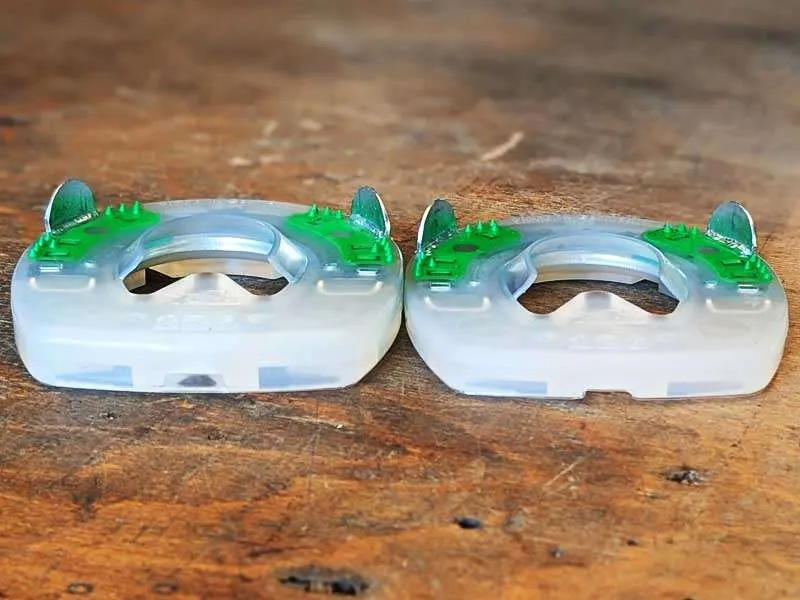
Our Conclusion: Choosing the Right Horseshoes for Endurance Riding
Even in endurance sport, selecting the right horseshoes always depends on the individual horse — how it lands, how it breaks over, and its condition on the day. Ground conditions and ambient temperature during the ride significantly influence wear behaviour due to the long distance and the continuous heating of the plastic coating. As a result, wear can vary considerably from one ride to another. Ultimately, it also depends on the chosen plastic compound and the specific model.
While we cannot provide a universal recommendation, we hope the above information supports you in selecting the most suitable horseshoes for your endurance horse. It goes without saying, that we are also available for personal advice.
We greatly value both positive and critical feedback from endurance riders — as well as riders from all disciplines — as it supports the ongoing development of our products. Please feel free to share your experience with us directly