


Open-Toed Horseshoes - Support in Rehab Cases, Laminitis and Therapeutic Shoeing in General
Our commitment to offering a suitable alternative horseshoeing solution for nearly every horse naturally extends beyond healthy hooves — it also applies when a condition such as laminitis requires an individually adapted solution. That’s why our product range includes a range of open-toed horseshoes .
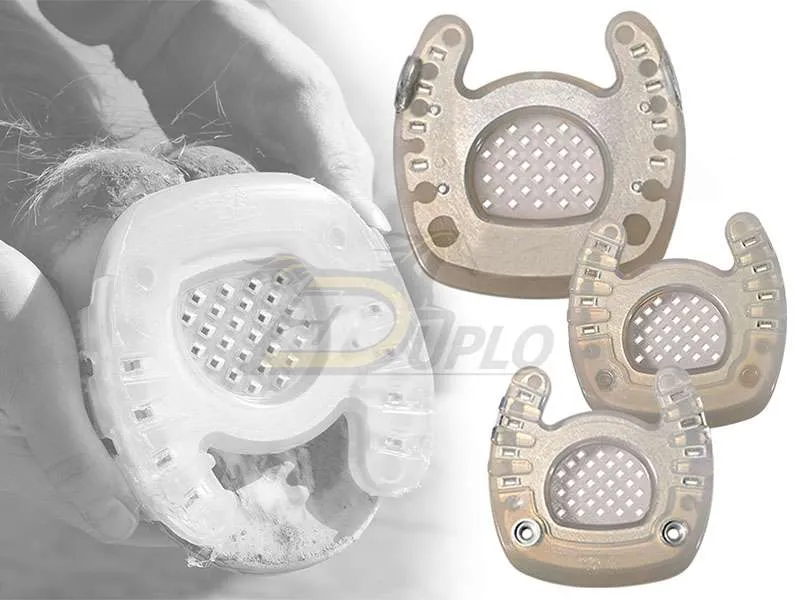
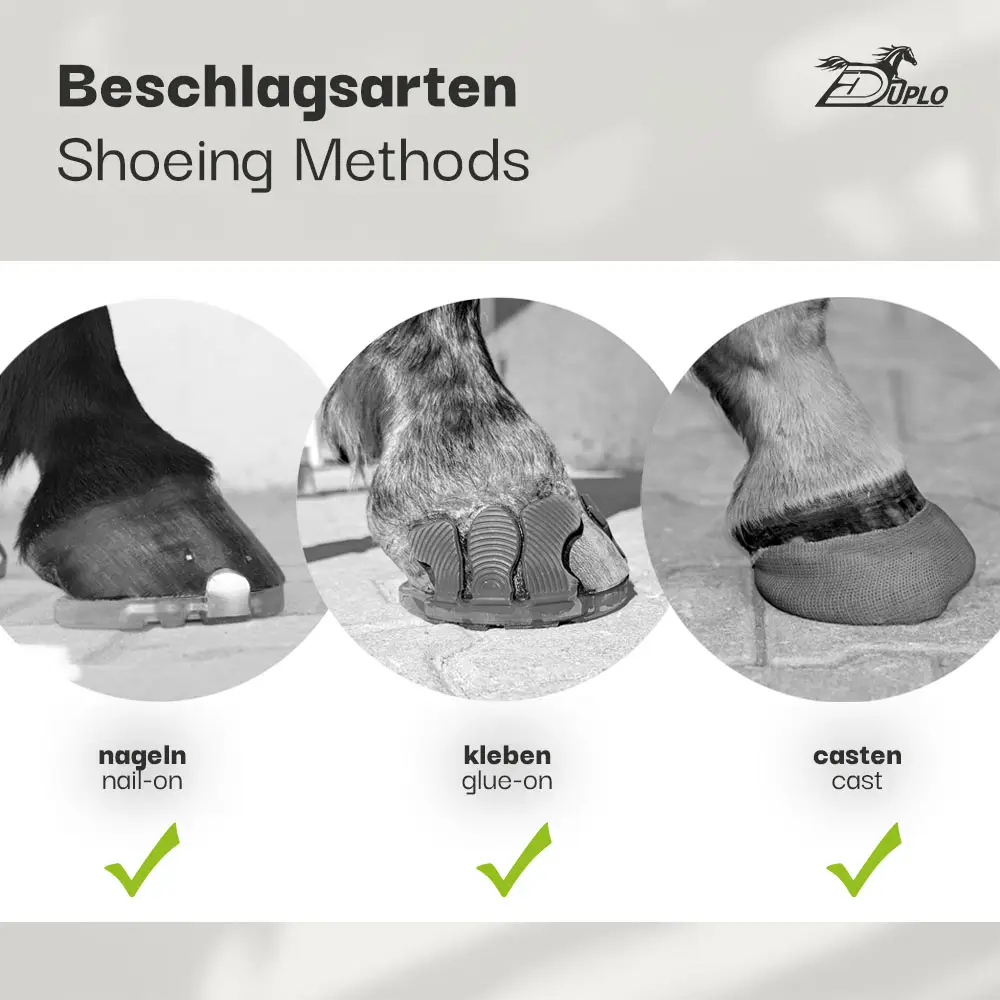
There are many use cases for an open-toed horseshoe, which relieves pressure on the toe wall, can be combined with padding material, and is suitable for use as a nailed, glued, or even as a cast shoe . Originally developed in collaboration with Wolfgang Busch for shoeing in case of laminitis, our open-toed horseshoe was long referred to as a 'laminitis horseshoe'. Since then, it has been used on numerous horses with chronic laminitis, as well as in a variety of other medical cases.
For this reason, we deliberately do not limit the use of our open-toed horseshoes to chronic laminitis alone. In cases of conditions such as navicular disease , Palmar Foot Syndrome, or similar hoof issues where therapeutic horseshoes are often required, we continue to see that no single solution works equally well for every horse. That’s why we intentionally refrain from listing an exhaustive range of possible hoof or tendon conditions that might benefit from a horseshoe with an open toe area. As a manufacturer, our role is to provide clear, transparent information about the features of our products. The decision as to whether an open-toed horseshoe is the right choice for a particular horse lies with the trained professionals on site.
Special Features of our Open-Toed Horseshoes
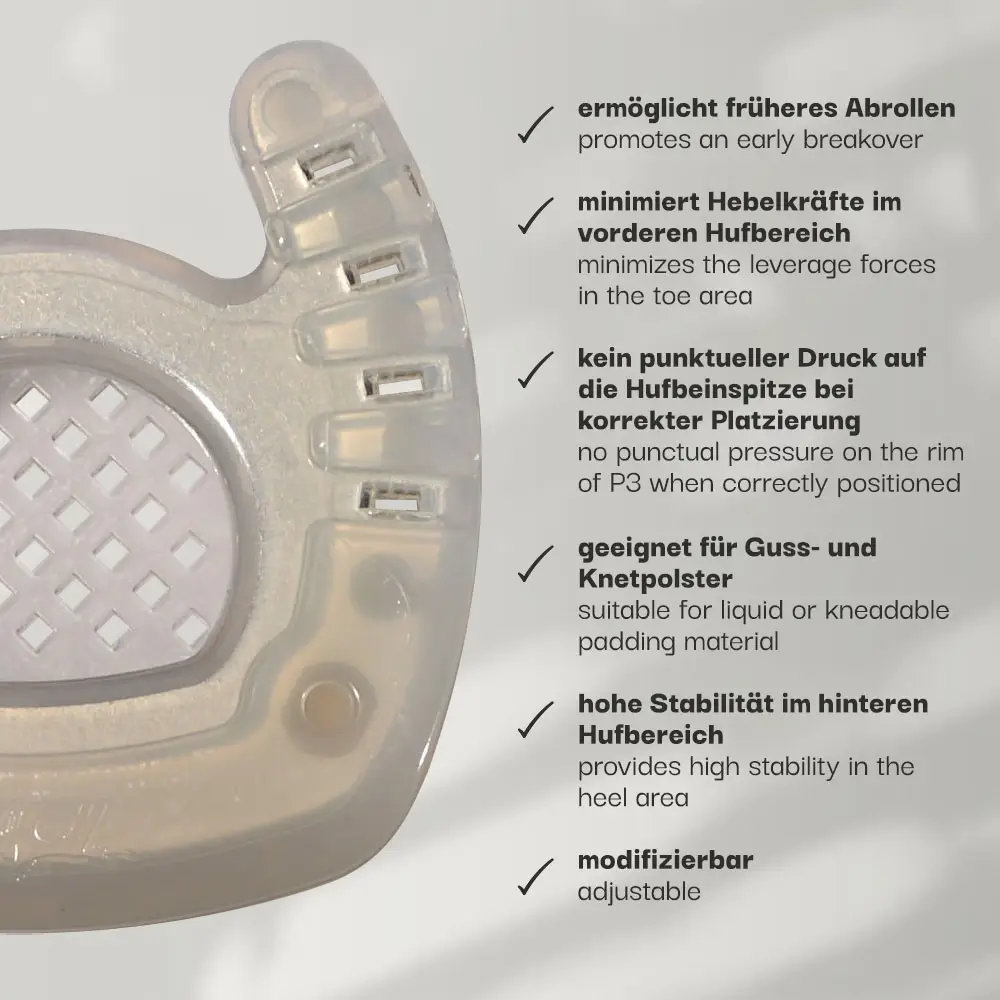
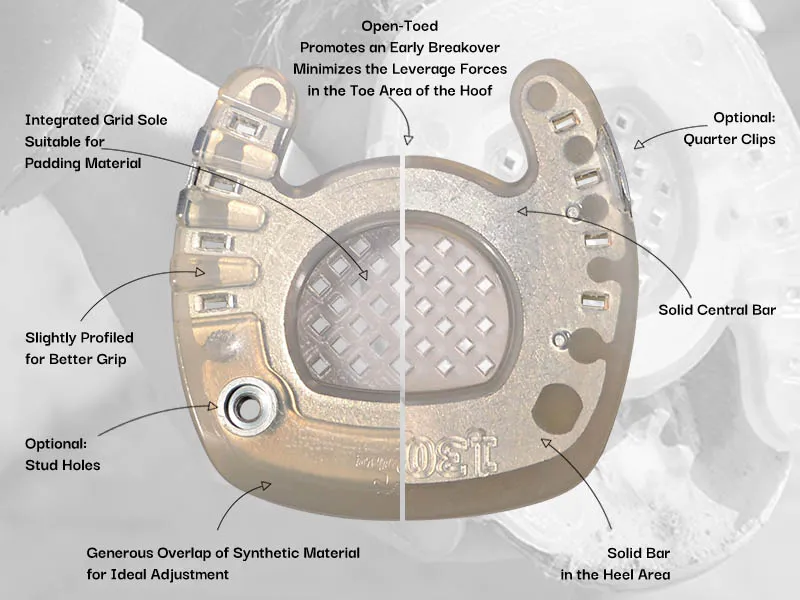
- The open toe area of the horseshoe promotes an early breakover and minimizes the leverage forces in the toe area of the hoof.
-
The front / central bar is shaped like the dorsal rim of P3
.
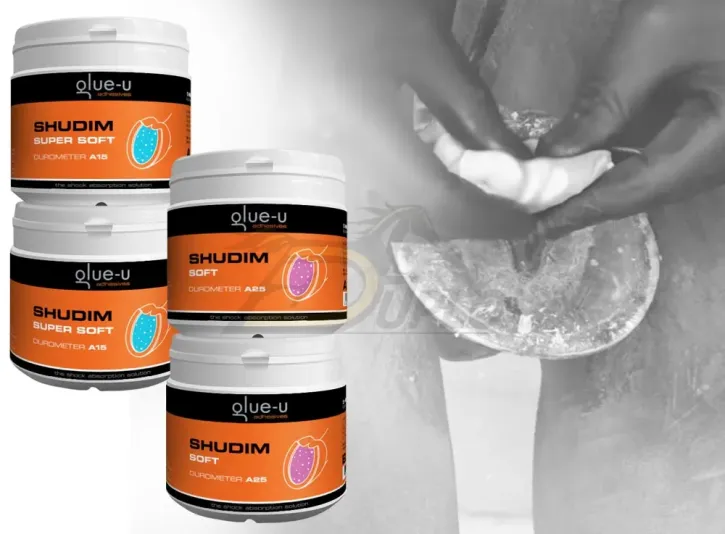
Like this, there won't be any painful punctual pressure exerted on the rim of P3 if the horseshoe is correctly placed on the hoof. - Every open-toed horseshoe is equipped with an integrated synthetic grid sole and can be used with several liquid or kneadable padding materials. Spare padding material can exit through the holes of the grid and won't exert uncomfortable pressure on the sensitive hoof sole .
- Usually, in rehab cases or diagnosis like laminitis, for example, often there is no need to protect the horseshoe from twisting on the hoof; however, if this should be a concern, you can buy a clipped open-toed shoe.
- Thanks to the generous overlap of synthetic material around the metal inlay, the open-toed horseshoe can easily be adjusted to the individual hoof shape.
Your Choice of Open-Toed Horseshoes - a.k.a. Laminitis Shoe
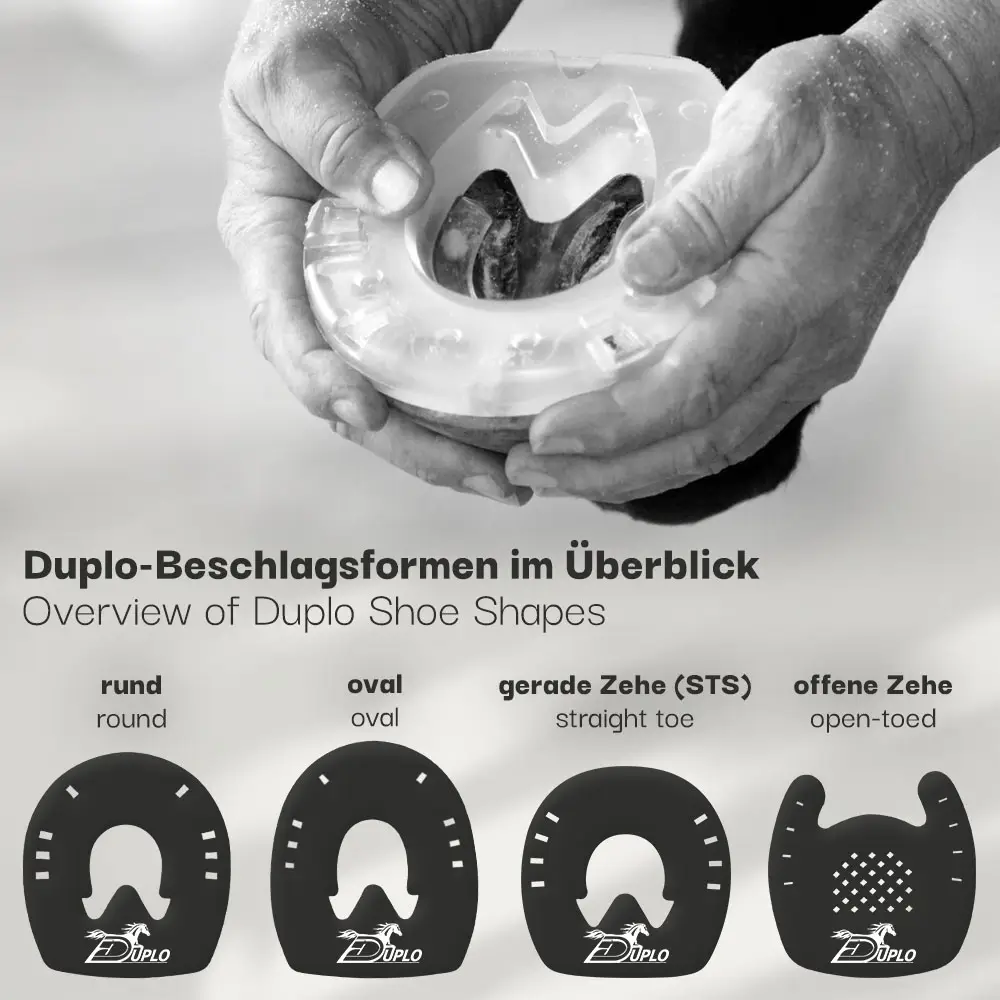
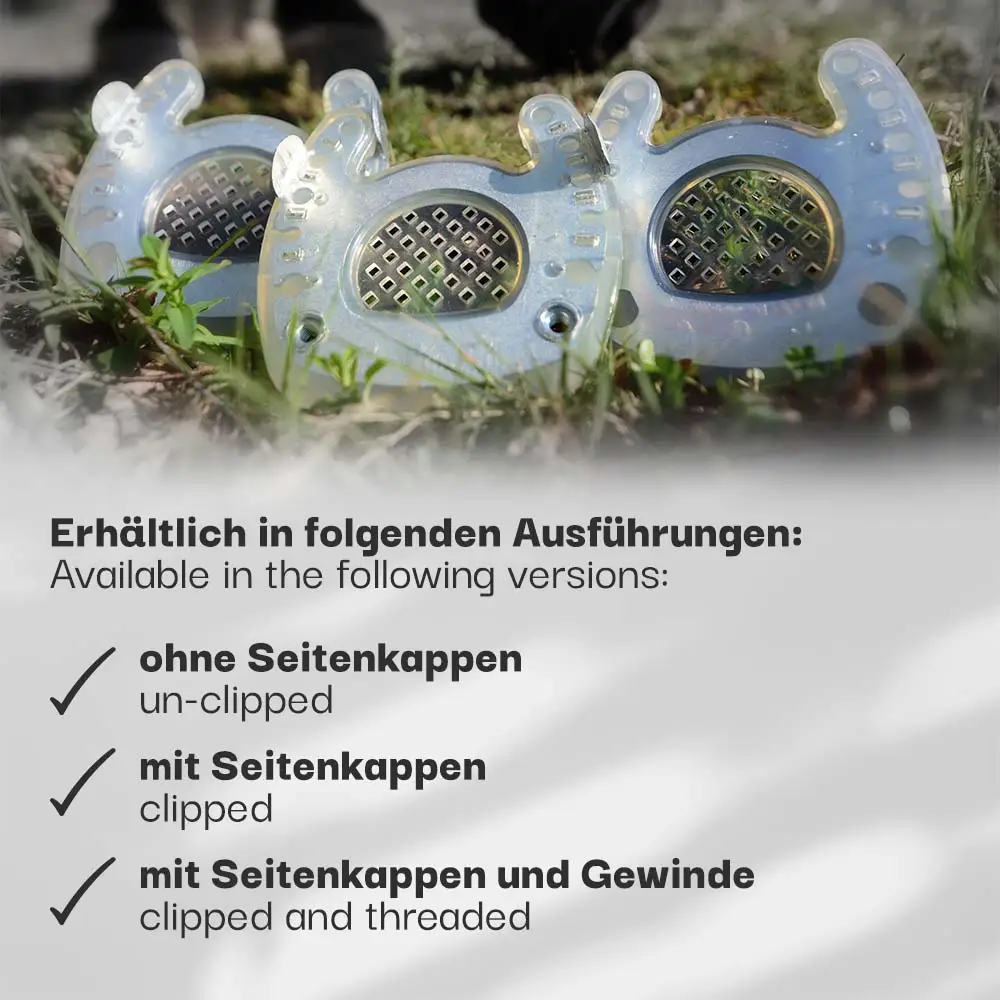
Just like our other composite horseshoes , the open-toed shoes are available in different versions. Here too, you can choose whether you prefer a horseshoe with or without quarter clips.
Improved Grip
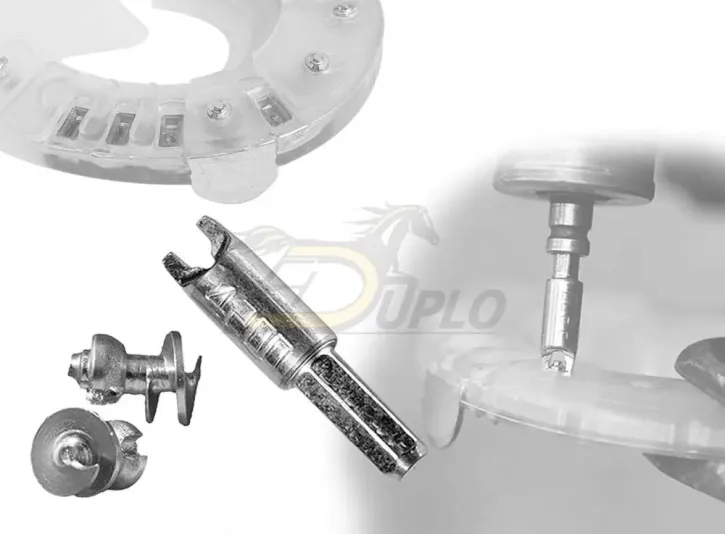
The ground surface of all open-toed shoes is slightly profiled, making the models inherently relatively slip-resistant. However, in certain situations, the use of studs may be advisable even for an open-toed shoe. For such cases, there is a threaded model available. If you are using the open toe shoe with studs, please consider our safety guidelines regarding the use of studs.
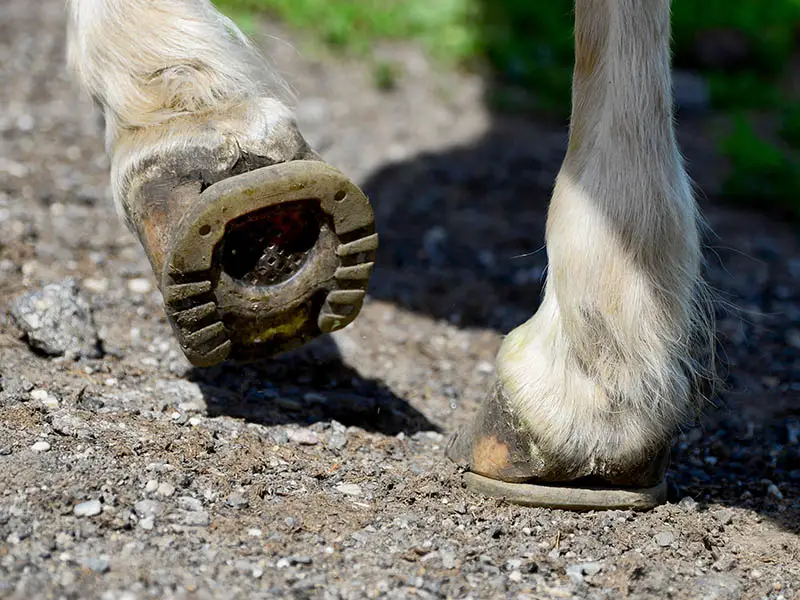
Open-Toed Horseshoes - Fotos
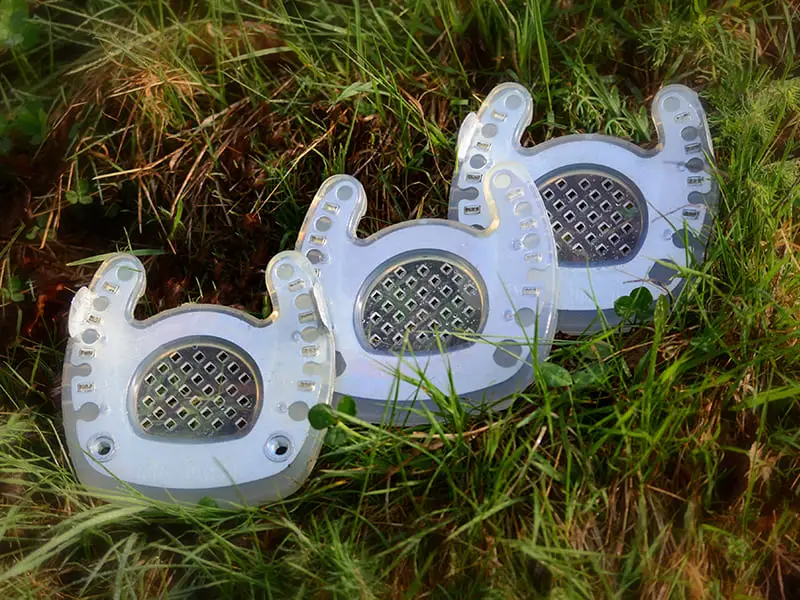
The open toe shoes are often referred to as laminitis horseshoes due to their use in cases of laminitis. We offer an un-clipped a clipped , as well as a clipped and threaded version.
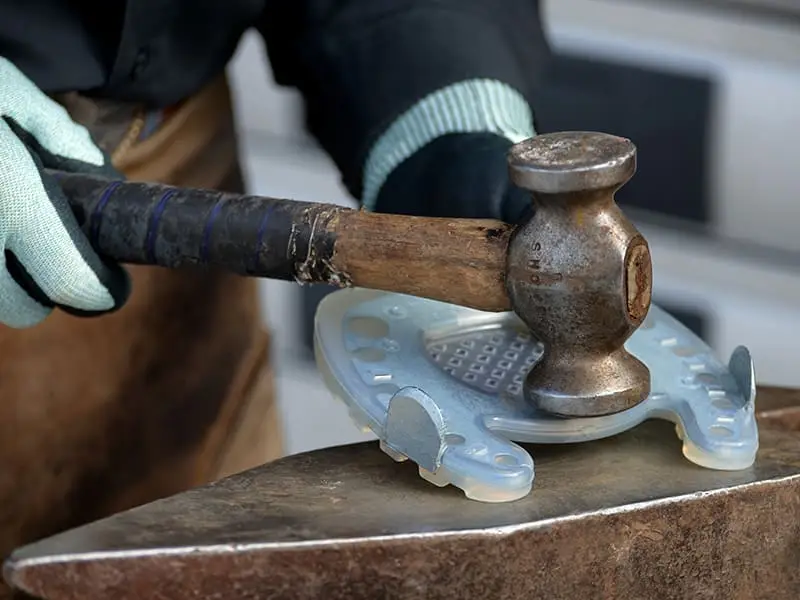
In cases of laminitis, the rotation of the coffin bone can lead to a highly arched sole. To relieve pressure on the deeper coffin bone, the central bar can be modified.
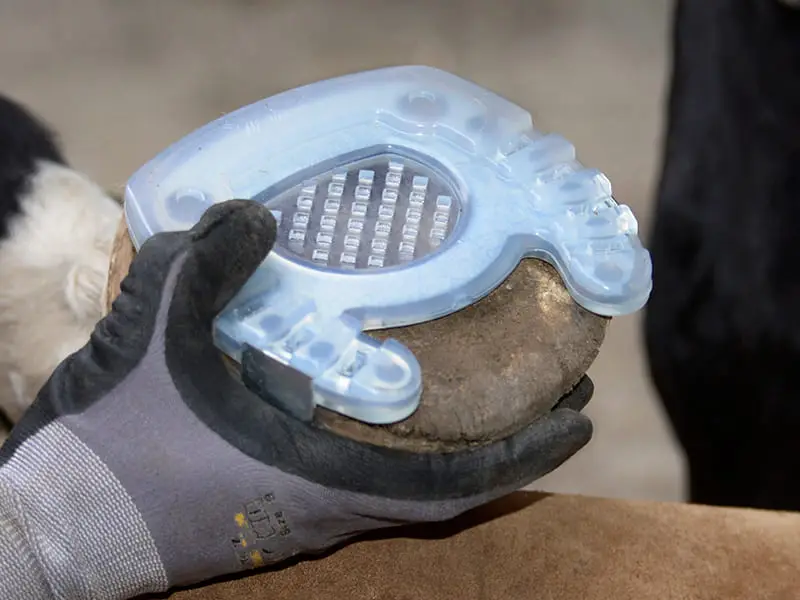
Especially with therapeutic shoeing, such as in the case of chronic laminitis, achieving optimal fit and customization to the hoof is crucial.
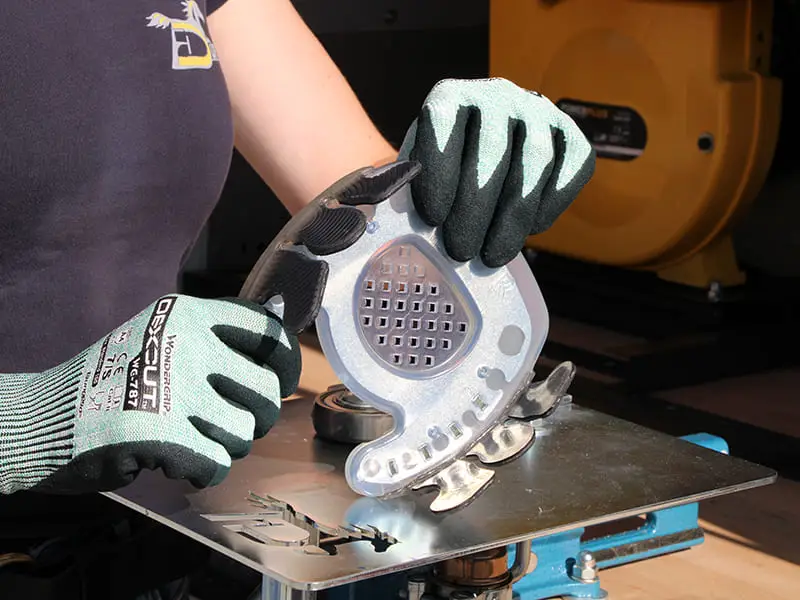
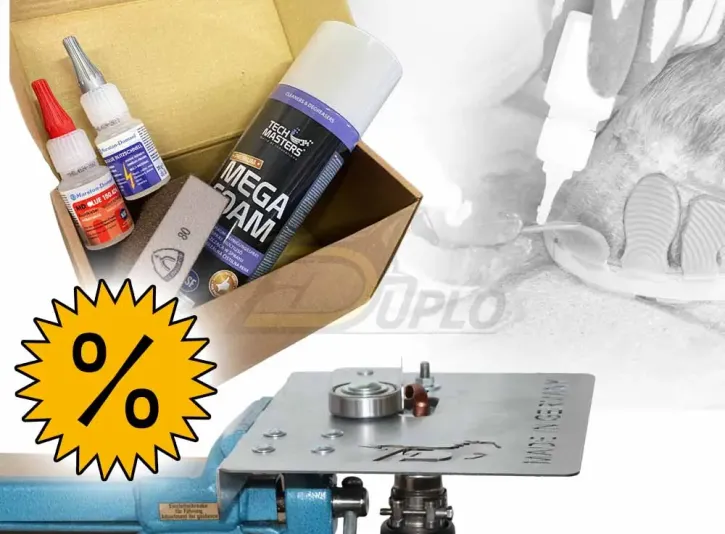
If you intend to glue-on the open-toed horseshoe, we recommend to use our welding device to achieve stable welding seams.
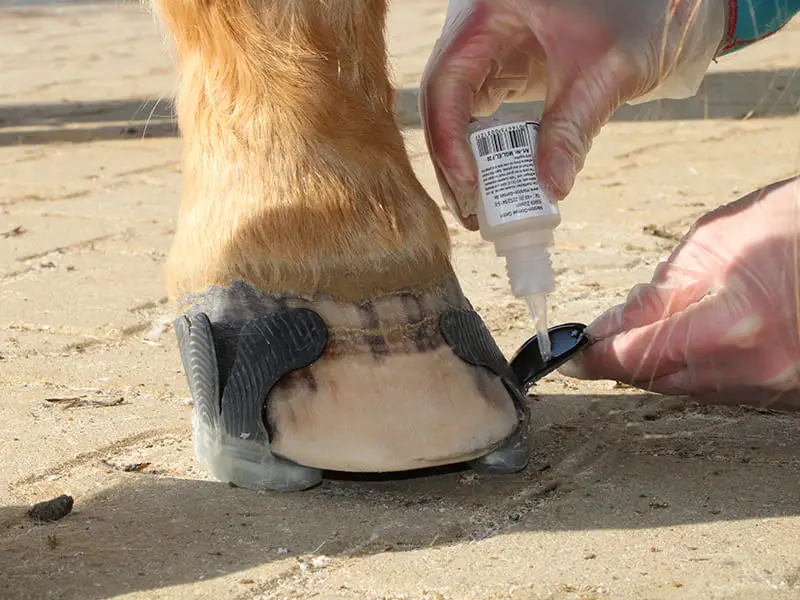
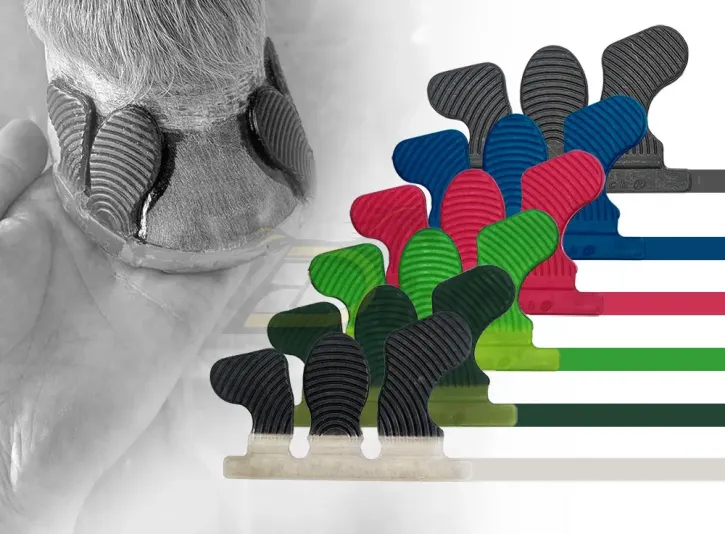
In combination with our open-toed shoe, the Wolf Busch® adhesive tabs work best. Especially in cases of laminitis, a glue-on shoe can be a good alternative.
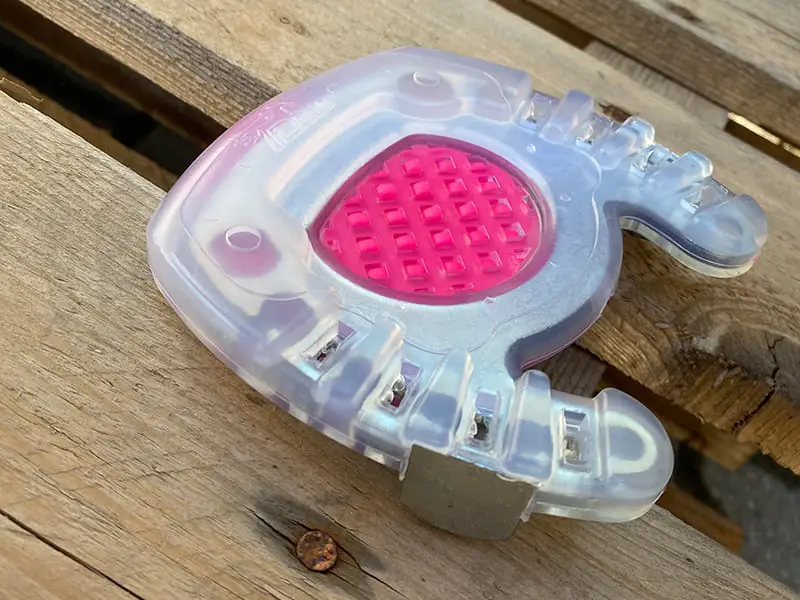
The advantage of the integrated grid sole is that excess padding material can escape easily through the grid.

A clipped open-toed horseshoe, prepared with cast hooks before applying the cast bandage.
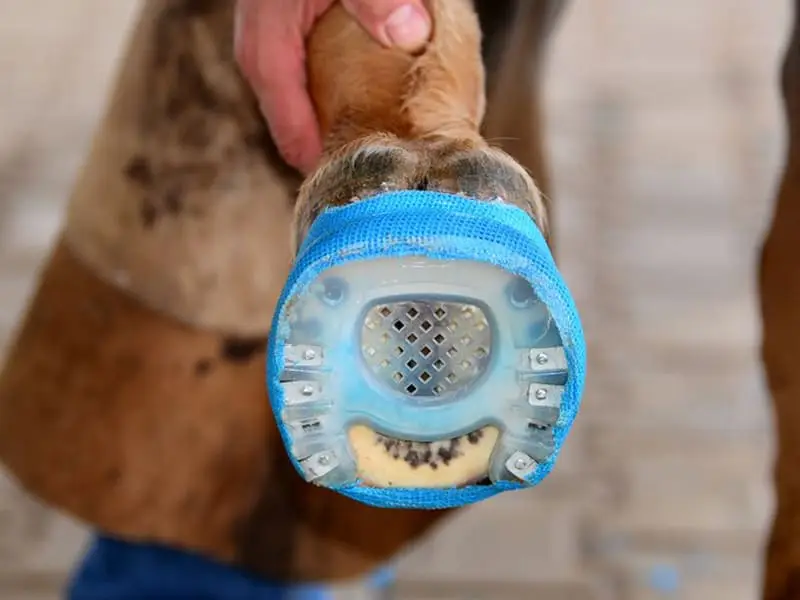
The advantage of our 'cast horseshoe' is that the outsole of the shoe is not covered by the cast bandage.

Please be careful - the coronary band and the heel bulbs must remain uncovered of the cast bandage.
Open Toe Horseshoes - Glue-on, Nail-on and Cast Application Instruction and Safety Information - Video
When using our open-toed horseshoes please pay attention to our safety instructions. Our products are not intended to diagnose or cure any medical condition. Nevertheless, the targeted application of a composite shoe, in coordination with the farrier and/or veterinarian, for example, as part of therapeutic shoeing, can support the recovery process. If you intend to use the open-toed shoe for acute or chronic laminitis, we strongly recommend participating in a training course and cooperating with the responsible veterinarian. Make sure to position both the rear and the central bar correctly when working with the open-toed horseshoe to avoid unwanted pressure on sensitive areas of the hoof.
The Advantages of Composite Horseshoes in case of Therapeutic Shoeing
A composite shoe combines the benefits of a traditional steel shoe and a pure plastic shoe in one horsehoe.
The metal parts of the open toe composite shoe are very stable and thus resistant to torsion. They support the hoof precisely where it is necessary. The surrounding plastic shell acts as a shock absorber, thereby partially relieving the sensitive tendons and ligaments of the horse.
Function and Benefits of a Composite Horseshoe
Reduced Weight
A significant advantage, especially in therapeutic shoeing, is the lower weight of the open-toed composite shoe compared to a steel shoe with a central / front bar and a synthethic insole. The reduced weight relieves both the musculoskeletal system and the hoof wall. Additionally, our open-toed horseshoes eliminate the need for elaborate forging work to customize the shoe to the horse's individual needs.
Nailed Application of Open Toe Horseshoes
The rectangular nail holes are positioned at 90 degrees to the white line. That way, you can place the nails further towards the center or the rim of the hoof and individually react to irregular hoof shapes.
In our general shoeing video tutorial , Stephan Becker explains the basic application of our shoes.
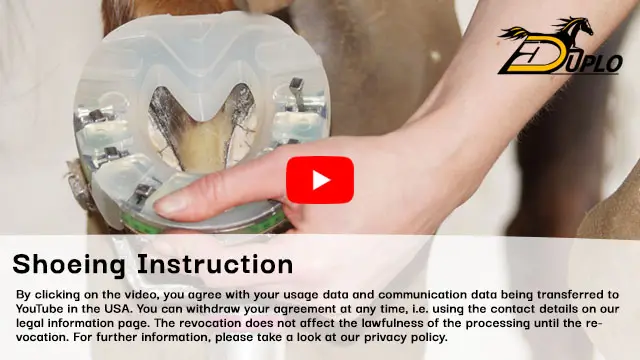
Nail-on Shoeing Instrution for Composite Horseshoes
Glued Application of Open Toe Horseshoes
If you intend to glue-on a horseshoe and use padding material, avoid excess padding material protruding laterally: Contact between the adhesive tabs and the padding material could compromise the stability of the glued connection between hoof and glue-on tabs.
An area where we prefer to glue-on an open-toed horseshoe is, for example, in the case of chronic laminitis. Wolf Busch® adhesive tabs work particularly well for gluing an open-toed horseshoe.
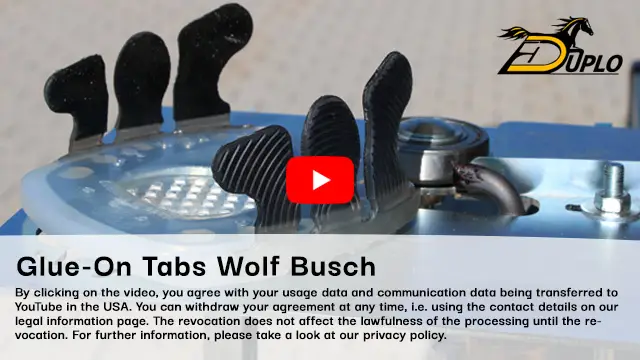
Glue-on Application Guide
Cast Application of Open Toe Horseshoes
If you cannot nail nor glue a horseshoe, and the hoof capsule needs to be completely immobilized and stabilized, a cast shoe might be an alternative.
The advantage of our solution for a cast shoe is that the outsole of the urethane shoe is not covered by the cast bandage. This usually extends the durability of the cast shoe. The application of the open-toed horseshoes combined with cast hooks and bandage has demonstrated its effectiveness numerous times.
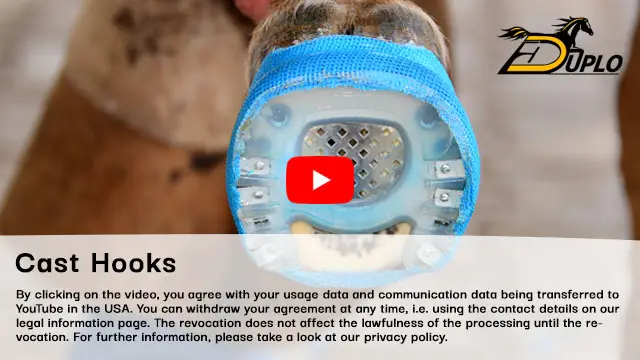
Application Guide - Cast Hooks
Every Product Is Only As Good As Its User
The correct application of our composite shoes and accessories is easy if you have the necessary knowledge of and competence in professionally nailing and riveting or gluing horseshoes and if you consider certain aspects while doing this.
In the field of therapeutic shoeing, for example, in cases of laminitis, every detail usually matters.
Therefore, we advise that when using our horseshoes as supportive therapeutic shoeing, especially in
cases of chronic laminitis, you attend relevant training courses and further education, and closely
collaborate with the local veterinarian.
We strive to provide you with as much information and tips regarding the application of our horseshoes. However, all the information provided by us can never replace the direct evaluation of the horse and its hooves by the on-site professional, to decide, what kind of shoeing is necessary for the horse.
Product Specifications
| General Data and Delivery Information | |
|---|---|
| Model | Open Toe Horseshoe with Integrated Grid Sole |
| Additional Title | laminitis horseshoe, open-toed horseshoe, founder shoe |
| Brand | Duplo |
| Manufactured in | Germany |
| Item Numbers | 730, 740, 750 |
| Packaging Unit | sold individually |
| Returns and Exchanges | Possible under certain conditions within 3 months within the European Union (EU). For returns from outside the EU, please contact our customer service. All details can be found under FAQ → Service & Conditions |
| Function and Application | |
|---|---|
| Function | (alternative) hoof protection, shock absorbtion, supportive as therapeutic shoeing, for example in the case of laminitis (founder), integrated grid sole for use with padding material |
| Riding Styles and Disciplines | Most often, a horseshoe like the toe-open is not intended for use as a riding shoe, especially when apllied with cast hooks and bandage. Of course, our toe-open shoe (nailed of glued-on) is generally suitable for riding when the horse's situation allows for it. However, this applies more to leisure riders than high-performance sports. |
| Season / Hardness Level | The open-toed horseshoe can generally be used year-round. During the colder months, we recommend using the model with stud holes—depending on your needs and the individual hoof condition—or equipping another open-toed shoe with spikes to provide the horse with additional grip on slippery surfaces if needed. |
| Measurements, Shapes, Sizes, and Weight | |
|---|---|
| Available Shapes | round (usually fits front hooves) |
| Size Determination | Depending on the size – you’ll find an overview of the exact dimensions of the open-toed horseshoes at the end of the product description. Especially in case of therapeutic shoeing—for example, in cases of laminitis—the correct fit is crucial. |
| Sizes (=Width) | 110mm, 114mm, 118mm, 122mm, 126mm, 130mm, 134mm, 138mm, 142mm, 146mm, 150mm, 154mm, 158mm, 162mm, 166mm, 170mm |
| Size Intervals | in 4mm steps |
| Length | Depending on the size – you’ll find an overview of the exact dimensions of the open-toed horseshoes at the end of the product description. |
| Thickness | 15mm |
| Weight | depending on the size from 230g up to 650g |
| Material and Construction – Special Features | |
|---|---|
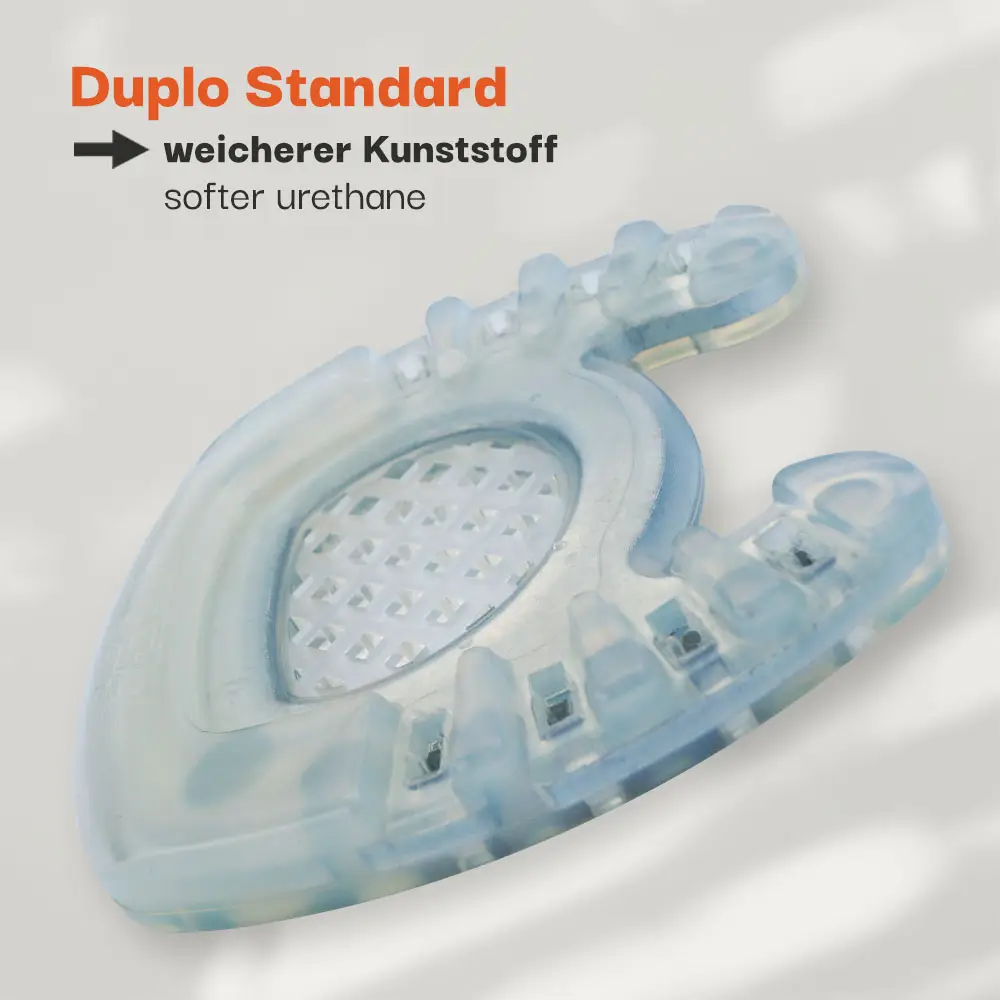
| Plastic Coating | The soft plastic coating has a shock-absorbing effect. |
| Hoof Mechanism | The solid bar restricts the mobility of the hoof capsule in the heel region. |
| Sole Area | The open-toed horseshoe is equipped with an integrated grid sole. It can be used with various types of pad material. Excess padding can escape through the grid, preventing pressure from building up on the sensitive sole. . |
| Grip | For additional slip protection, you can use spikes or, depending on the individual
hoof
condition and ground surface, choose the open-toed horseshoe with stud holes. Depending on the
size, the horseshoe is equipped with either an M8 or an M10 thread—please refer to the product
name or check the table at the end of the product description for details. If you're using the horseshoe for riding always adjust riding speed according to the ground conditions, especially on slippery surfaces. |
| Knobs | horsesehoe without knob arrays |
| Metal Core | The metal core enhances durability and helps avoid unwanted pressure on the hoof. |
| Bar Shoe | The open-toed horseshoe features two bars, both reinforced with a solid metal core. The bar in the heel area provides additional stability. Thanks to the central bar, which follows the contour of the front edge of the coffin bone, no pinpoint pressure is applied to the bone when positioned correctly. |
| Nailing Slots | The shoe features 6 to 8 nailing slots integrated into the metal core, depending on
size.
The optimal nail size varies by hoof condition and size. You’ll find general recommendations in our shop under hoof nails. |
| Quarter Clips | Quarter clips make nailing easier and help prevent the horseshoe from twisting or slipping
during the regular shoeing period. Be careful to adjust the quarter clips to the hoof angle when shoeing. |
| Shoeing and Customization | |
|---|---|
| Application | nail-on shoe, glue-on shoe or cast shoe |
| Shoeing Instruction | can be found unter FAQ → Instructions |
| Therapy Shoe / Rehab | The open-toed shoe is also suitable for supportive use in the orthopedic and therapeutic field. It is commonly used by many, including for cases of laminitis. We expressly point out that our products do not diagnose or cure any diseases and advise for any use with a therapeutic or orthopedic background to work closely with the hoof specialist or veterinarian on site. |
| Customization | Always fit the horseshoe individually to the hoof shape – use an angle grinder, belt
grinder,
hoof nippers, or toeing knife. We strongly advise against using the Extensions
to widen or
lengthen the open-toed horseshoe, as this can negatively affect the position of the solid bars
and may lead to unwanted pressure on sensitive areas of the hoof.
More info available under FAQ → Adjustment to the Hoof. |
| Accessories | among others Wolf Busch® glue-on tabs, cast hooks , cast bandage , studs, padding material and more |
| Safety Instructions | |
|---|---|
| Safety Information | can be found unter FAQ → Safety Information |
| Safety Instructions as PDF Download | PDF Download |
| Risk of Injuries in Herds | Minimized risk of injuries in herd situations and in case of irregular movements in comparison to a steel shoe or the sharp-edged border of a bare hoof - please also read our safety information; the quarter clips must be monitored. |
| Studs | The use of studs always increases the risk of injury within the herd. Please refer to the additional information on using studs in our safety guidelines. |
Tipps & Tricks - What Are Your Experiences With the Open-Toed Horseshoes
Laminitis, issues concerning the deep digital flexor tendon (DDFT) or its accessory ligament, chronic navicular syndrom, pain in the area of the coffin bone, palmar foot pain, or else... The application areas for the various specialized shoeing methods and types of horseshoes available on the market are diverse and their use should always be discussed individually in close collaboration with the farrier and/or local veterinarian.
Even though every hoof situation is unique in its own way and it's not possible to provide remote diagnoses, it is often invaluable, especially in these specialized areas, to be able to exchange information with others.
We have already received many positive testimonials regarding the use of our open-toed horseshoe in cases of chronic laminitis. However, laminitis shoeing is not the sole application area where the supportive use of our open-toed shoes has proven its worth. We would appreciate it if you could leave us a review at this point, providing others with the opportunity to benefit from your experiences.
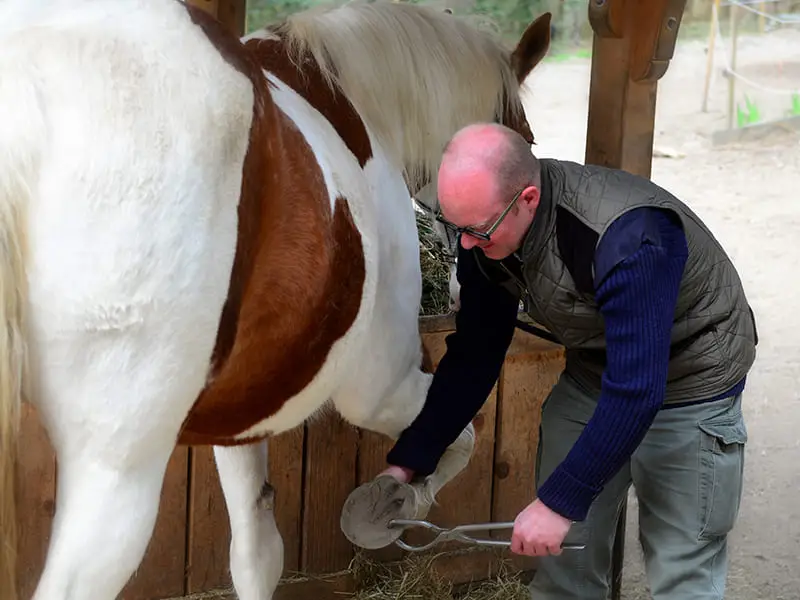
Size chart and thread sizes of open-toed horseshoes with shock-absorbing synthetic coating
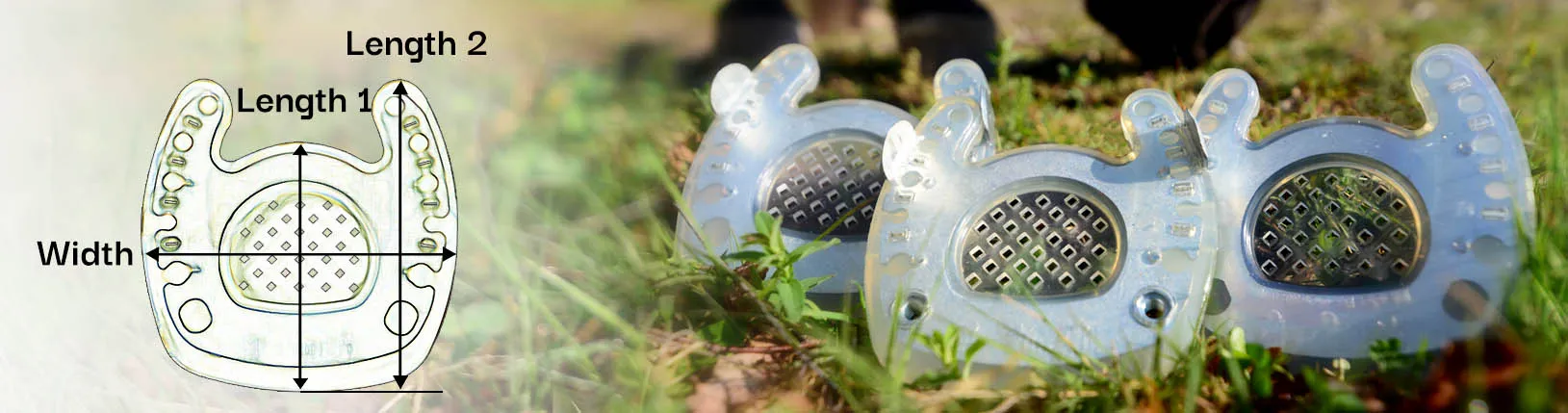
| Horseshoe Size (=Width) | Length 1 | Length 2 | Thread Size - Stud Holes |
|---|---|---|---|
| 110mm / 4.33 inch | 88mm / 3.47 inch | 110mm / 4.33 inch | M8 thread |
| 114mm / 4.49 inch | 91mm / 3.58 inch | 114mm / 4.49 inch | M8 thread |
| 118mm / 4.65 inch | 95mm / 3.74 inch | 118mm / 4.65 inch | M8 thread |
| 122mm / 4.80 inch | 98mm / 3.86 inch | 122mm / 4.80 inch | M8 thread |
| 126mm / 4.96 inch | 101mm / 3.98 inch | 126mm / 4.96 inch | M8 thread |
| 130mm / 5.12 inch | 104mm / 4.09 inch | 130mm / 5.12 inch | M8 thread |
| 134mm / 5.28 inch | 107mm / 4.21 inch | 134mm / 5.28 inch | M10 thread |
| 138mm / 5.43 inch | 111mm / 4.37 inch | 138mm / 5.43 inch | M10 thread |
| 142mm / 5.59 inch | 113mm / 4.45 inch | 142mm / 5.59 inch | M10 thread |
| 146mm / 5.75 inch | 117mm / 4.61 inch | 146mm / 5.75 inch | M10 thread |
| 150mm / 5.91 inch | 120mm / 4.72 inch | 150mm / 5.91 inch | M10 thread |
| 154mm / 6.06 inch | 124mm / 4.88 inch | 154mm / 6.06 inch | M10 thread |
| 158mm / 6.22 inch | 127mm / 5.00 inch | 157mm / 6.18 inch | M10 thread |
| 162mm / 6.38 inch | 130mm / 5.11 inch | 161mm / 6.34 inch | M10 thread |
| 166mm / 6.54 inch | 133mm / 5.24 inch | 164mm / 6.46 inch | M10 thread |
| 170mm / 6.69 inch | 136mm / 5.35 inch | 168mm / 6.61 inch | M10 thread |

Manufacturer in accordance with the Regulation (EU) 2023/988 on General Product Safety (GPSR)
Manufacturer in accordance with the Regulation (EU) 2023/988 on General Product Safety (GPSR)
Name: H. Frank Kunststofftechnik GmbHElectronic Address: info@duplo-frank.de
Physical Address: Vorderfreundorfer Straße 20
ZIP Code: DE-94143
City: Grainet
Country: Deutschland
Phone: +49 (0)8585/96926-0
Responsible Person in accordance with the Regulation (EU) 2023/988 on General Product Safety (GPSR)
Name: H. Frank Kunststofftechnik GmbHElectronic Address: info@duplo-frank.de
Physical Address: Vorderfreundorfer Straße 20
ZIP Code: DE-94143
City: Grainet
Country: Deutschland
Phone: +49 (0)8585/96926-0