


Duplo Arizona – for Rocky Terrain, Gait Optimization, and as Horseshoes for Bone Spavin
The Duplo Arizona is both a misunderstood and underestimated all-rounder in our product range . Misunderstood because many assume that choosing the Arizona automatically means selecting generally more abrasion-resistant horseshoes. Underestimated because the wide range of possibilities offered by the integrated steel edge is often overlooked.
Let us start at the very beginning – the journey takes us to Arizona in the USA, the namesake of our this special horseshoe. This state is world-famous for its desert landscapes and canyons. The legendary Grand Canyon and Monument Valley are known around the globe. Anyone picturing these landscapes quickly understands the unique demands placed on horseshoes: high summer temperatures, extreme dryness, sandy ground, and often rocky trails. A terrain that requires both reliable grip , effective shock absorption , and outstanding material stability.
After traveling to Arizona with his wife Edeltraud, Hubert Frank—the inventor of Duplo composite horseshoes—developed the Duplo Arizona in cooperation with the Miller Ranch in Scottsdale.
During riding under the demanding local conditions, a key issue became apparent: the plastic frequently tore out prematurely in the toe area of the horseshoe. To counteract exactly this type of wear, the protective steel edge was developed.
In the following sections, we take a closer look at the Arizona horseshoes – with special focus on...
- ... the steel edge as protection against plastic tearing in the toe area
→ Features and advantages of the Arizona horseshoes
→ Abrasion and durability of the Arizona horseshoes - ... the steel edge and its influence on gait mechanics
→ The Arizona in the gaited horses sector
→ The Arizona as horseshoes for bone spavin
The Steel Edge as Protection Against Plastic Tearing in the Toe Area
Features and Advantages of the Duplo Arizona
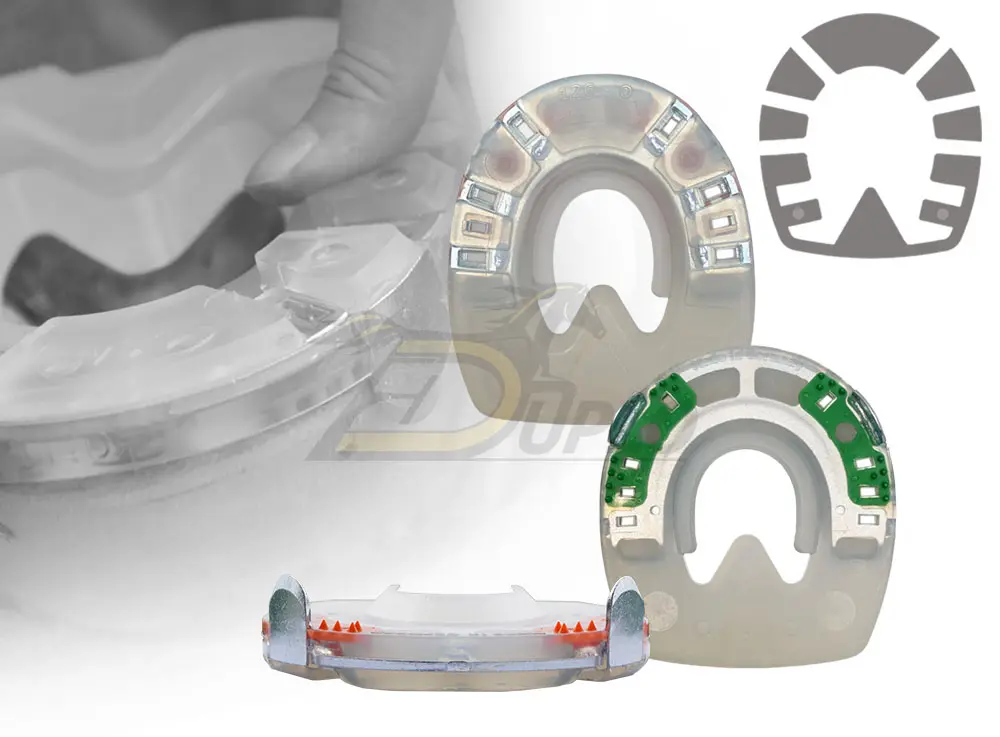
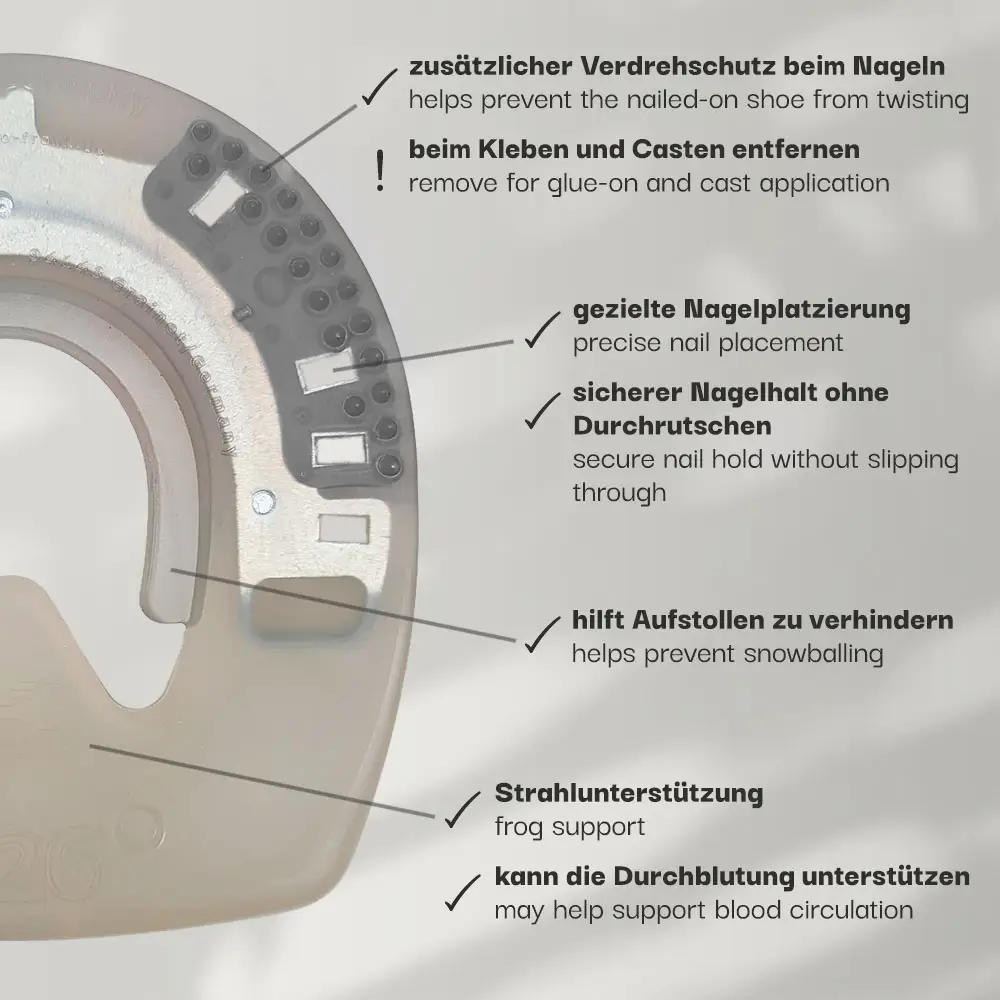
Like our other composite horseshoes , the Arizona horseshoes feature a strong metal core in the area of the bony hoof structures, combined with a shock-absorbing plastic outer layer. In addition, the shoe includes frog support with a flexible plastic bar, which can help stimulate blood circulation within the hoof. Thanks to the open sole area, the hoof sole and frog can breathe properly. An integrated debris guard helps to prevent snowballing under the horseshoes.
The model-specific special features of the Arizona include:
- a steel edge in the toe area that protects the plastic in this zone from premature tearing, thereby increasing the durability of the horseshoes with regard to this aspect.
- quarter clips that make nailing easier and help prevent twisting or shifting of the horseshoes during the regular shoeing cycle.
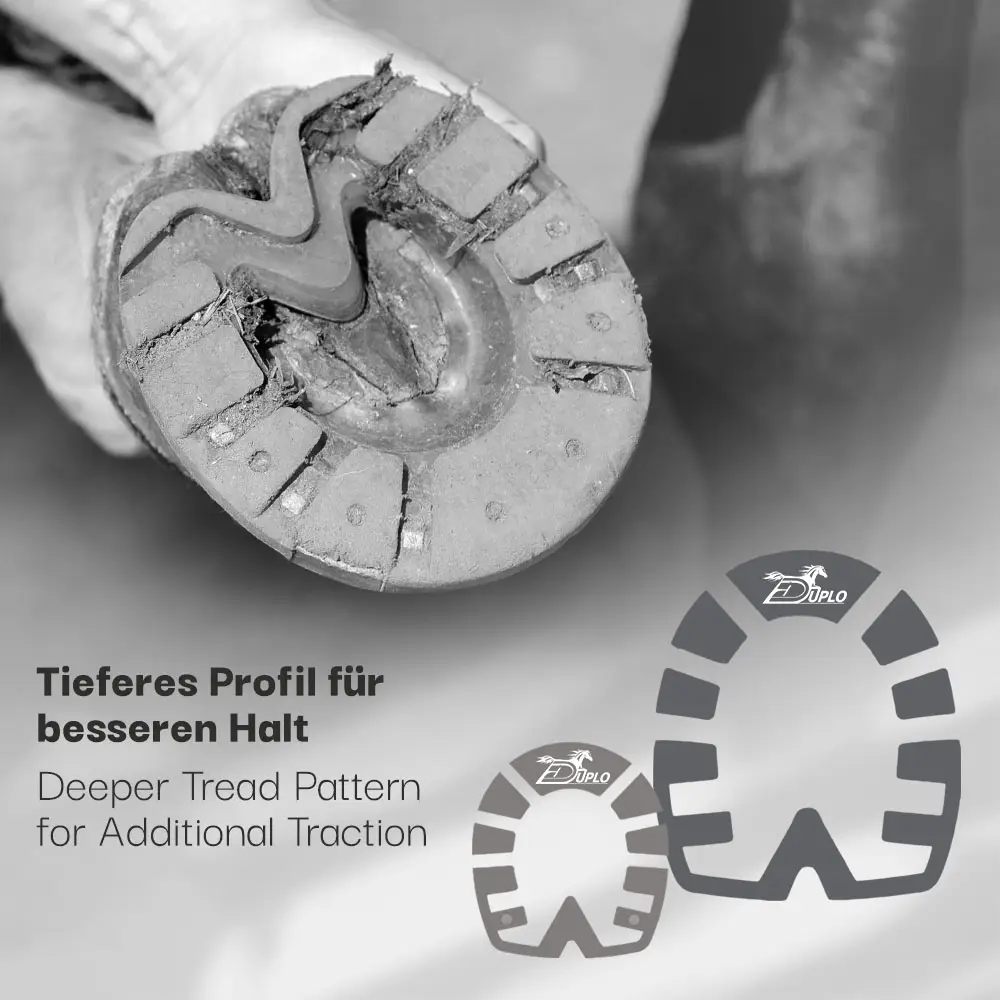
- a deeper tread pattern for improved grip – comparable to a hiking boot as opposed to a regular sneaker.
Abrasion and Durability of the Arizona
In terms of normal wear, the Arizona is not more abrasion-resistant than other horseshoes in our product range – even though this misconception is quite common. The integrated steel edge in the toe area serves a clearly defined purpose: it protects the plastic in this area from premature chipping or tearing. However, this does not significantly change the overall abrasion behavior of the horseshoes compared to other models with a deeper tread made from the same plastic material.
If you are looking for horseshoes with overall higher abrasion resistance, we recommend taking a look at our range of Heavy Duty Shoes. In cases of increased abrasion, we generally advise first switching to our harder Extra models if you are currently using a Standard model. If ground conditions and your riding discipline allow, choosing a model without a deeper tread pattern may also be advisable, as profiled versions are slightly more prone to abrasion compared to horseshoes without a deeper tread pattern.
However, if your main issue is that the plastic in the toe area tears out quickly, the Arizona is the right choice.
Please note that the steel edge is only coated with a thin layer of plastic. As a result, it usually becomes visible after a short period of use. At first glance, this may look like significant wear – but it is characteristic of the model and not a quality defect.
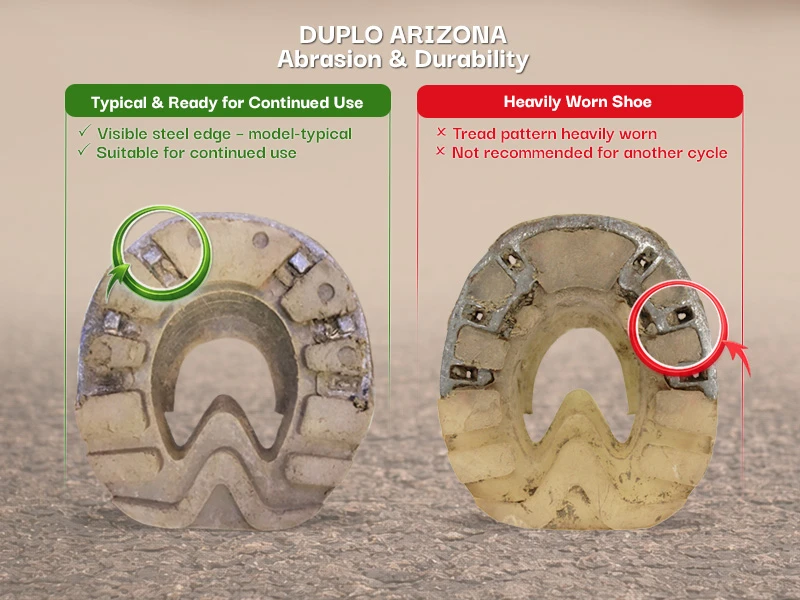
Model-Typical Steel Edge vs. Heavy Wear – Photo Comparison
To take a closer look at the topic of wear, we have prepared and compared two photos of used Arizona horseshoes.
On the left side of the image, the steel edge of the Arizona is clearly visible – a typical feature of this model and therefore generally not a reason to remove the horseshoes from the hoof. The steel edge does exactly what it is designed to do: it protects the plastic behind it from premature tearing. The plastic outer layer of these horseshoes continues to provide shock absorption. Under normal circumstances, this horseshoe could even be used for another shoeing period.
On the right side of the image, you can see an Arizona horseshoe that also shows the steel edge. However, this horseshoe is already worn to such an extent that parts of the tread pattern are no longer present. The horseshoe does not necessarily need to be removed immediately; however, we do not recommend reusing it for another shoeing cycle.
The Steel Edge and Its Influence on the Horse's Gait Mechanics
The Arizona Horseshoe for Gaited Horses
When examining the influence of weight and breakover point on a horse’s gait performance, we consulted closely with Janis Neurand from the NBvH and would like to thank him for the valuable insights he shared.
A horse’s gait can be influenced in different ways, including through weight distribution as well as the alignment and positioning of the horseshoe on the front and hind hooves.
The forehand or hindhand can be slowed down by adding weight and reducing the breakover, for example by using a less pronounced toe rocker. In this case, the hoof leaves the ground later and remains in the stance phase slightly longer. To increase the speed of a limb axis, the horseshoe can be set back and the toe rocker made more pronounced. With an earlier breakover, the hoof transitions into the swing phase more quickly.
In this context, the Duplo Arizona can also be used strategically with the appropriate expertise without adding excessive additional weight. Compared to a steel shoe of a similar size and features, the Arizona has a lower overall weight. This can help support the horse’s natural movement while avoiding unnecessary strain on the musculoskeletal system.
Options for Gait Optimization – Using the Icelandic Horse as an Example
To better understand the effects of different shoeing solutions, it is helpful to look at the basic mechanics of equine gait. Using the Icelandic horse as an example, typical applications can be clearly illustrated. Essentially, the forehand may move too quickly or too slowly in relation to the hindhand. As a result, the gait may shift toward pace or toward trot.
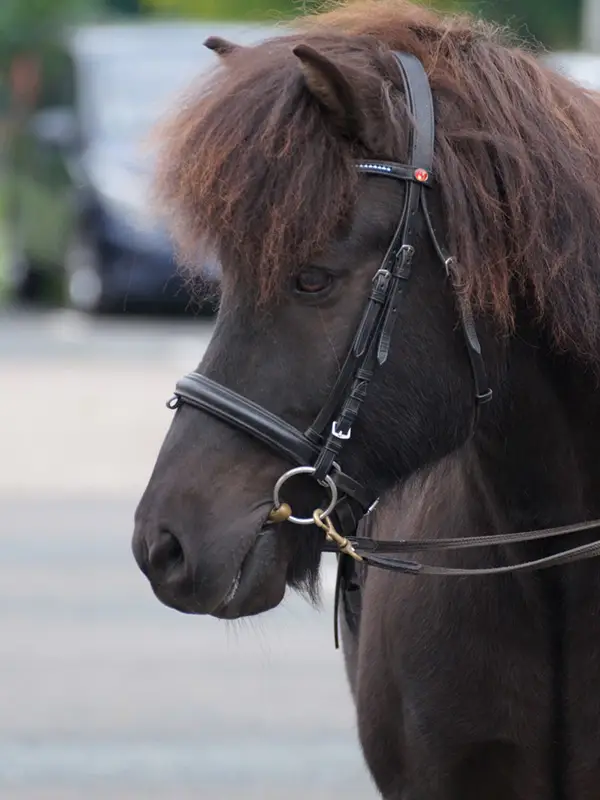
Pace-inclined Icelandic Horse
In horses with a strongly pace-dominant gait pattern (pace), it can be beneficial to deliberately support the transition toward tölt or trot. Slightly slowing the forehand while encouraging a more active, faster hindhand can help the horse achieve a more even and balanced movement pattern.
- Forehand: horseshoe applied without setting it back, combined with moderate additional weight
- Hindhand: horseshoe set back and/or adjusted toe rocker, combined with a lighter shoe compared to the forehand
Trot-inclined Icelandic Horse
If an Icelandic horse shows a strong tendency toward trot, it may be helpful to make the forehand slightly more active, meaning faster, while minimally slowing the hindhand in order to support the development of a clear tölt.
- Forehand: horseshoe set back and/or adjusted toe rocker, using a lighter horseshoe compared to the hindhand
- Hindhand: horseshoe applied without setting it back, combined with additional weight
As a general rule, all adjustments should always be made carefully and in small increments. Subtle modifications are often more effective than major interventions and help promote a harmonious, horse-friendly movement pattern.
The Right Type of Horseshoe for Your Needs
Compared to our regular horseshoes, our product range includes models that can be used to support gentle optimization of gait mechanics. The Arizona is slightly heavier in the toe area than a regular Duplo horseshoe, while the Straight Bar horseshoes carry more weight in the heel area. The HDS models are heavier overall but distribute the additional weight evenly across the entire horseshoe. In addition, the Classic glue-on horseshoe is an especially lightweight option without a metal core.
Depending on your specific requirements regarding weight distribution for the optimal horseshoe, we are confident that a suitable combination can be found within our range.
The development and improvement of gaits are still based primarily on correct riding and targeted training. Horseshoes can support this process effectively but do not replace solid, professional training. At this point, we would also like to quote Janis Neurand: “With every modification, the ability of both horse and rider must be assessed. The horse must not be harmed or overburdened by these modifications. Any adjustments may only serve the natural improvement of the gait.” (translated from German)
The Arizona as a Horseshoe for Bone Spavin
One aspect we as a manufacturer had not initially considered was the use of the Arizona as a horseshoe for bone spavin . This clearly highlights how valuable professional exchange can be and how important it is for us as a manufacturer to remain in close dialogue with farriers.
Bone Spavin – Causes and Early Signs
Bone spavin can affect horses of any age, as it may result from various underlying causes. In addition to uneven limb conformation and excessive strain, such as in show jumping or driving, a so-called juvenile bone spavin can also occur at a young age due to inherited malformations or developmental disorders.
Bone spavin often begins invisibly with a loss of cartilage tissue in the affected area. As the condition progresses, painful bony enlargements (spavin exostoses) may develop. Eventually, so-called spavin lameness can occur, which is particularly noticeable after periods of rest. At the beginning of movement, the horse appears stiff and shows pronounced difficulty in getting started. As exercise continues, for example after warming up under saddle, the lameness may improve significantly once the horse has loosened up. Horses affected by bone spavin often tend to drag their toes. The hooves show increased wear at the toe and gradually develop a blunter shape.
Horseshoes for Bone Spavin
Depending on the severity of the bone spavin condition and the presence of so-called spavin exostoses, various treatment options are available. If the disease has not yet progressed significantly and surgical intervention is not required, the targeted use of an orthopedic horseshoe can provide supportive benefits. The interaction between horseshoe positioning, breakover point, and horseshoe weight also offers a way to influence the horse’s movement pattern in cases of bone spavin.
The Arizona for Horses with Bone Spavin
The decision as to which horseshoe is suitable as a bone spavin horseshoe in each individual case lies with the farrier on site. At this point, we would simply like to mention the Arizona as an option with slight additional toe weight, especially since it is still a comparatively lesser-known horseshoe.
We were therefore particularly pleased to hear, through discussions with Janis Neurand, about his positive experiences using the Arizona for horses with bone spavin. Thanks to the reinforced toe section, the toe is better protected against the well-known toe dragging of the hind limbs. In addition, the Arizona’s increased toe weight contributes to a slightly higher lift of the hoof and, during forward movement, encourages a flatter landing due to the increased centrifugal force generated.
This effect can also be utilized in cases involving issues with the digital extensor tendon.
As always in horseshoeing, such experiences cannot be generalized: what works well for one horse may not necessarily apply to another. Every hoof situation should be assessed individually in order to find the most suitable solution for the specific horse.
Our products are not intended to diagnose or cure diseases. However, the targeted use of composite horseshoes, in coordination with your farrier and/or veterinarian, can support the recovery process, for example as part of a therapeutic horseshoeing approach in cases such as bone spavin. If you intend to use the Arizona as a horseshoe for bone spavin, we strongly recommend close cooperation with the attending veterinarian as well as careful and regular monitoring of the horse’s development.
Alternative Horseshoe with Reinforced Toe – Photos
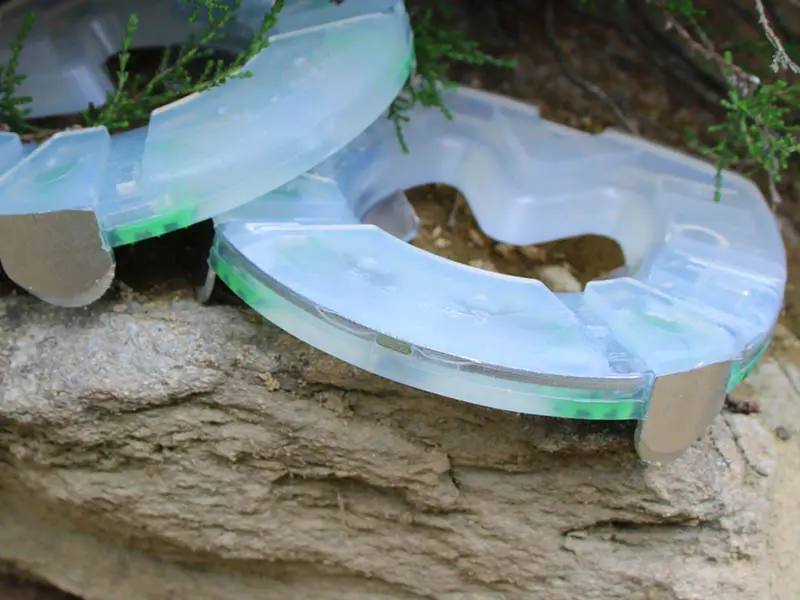
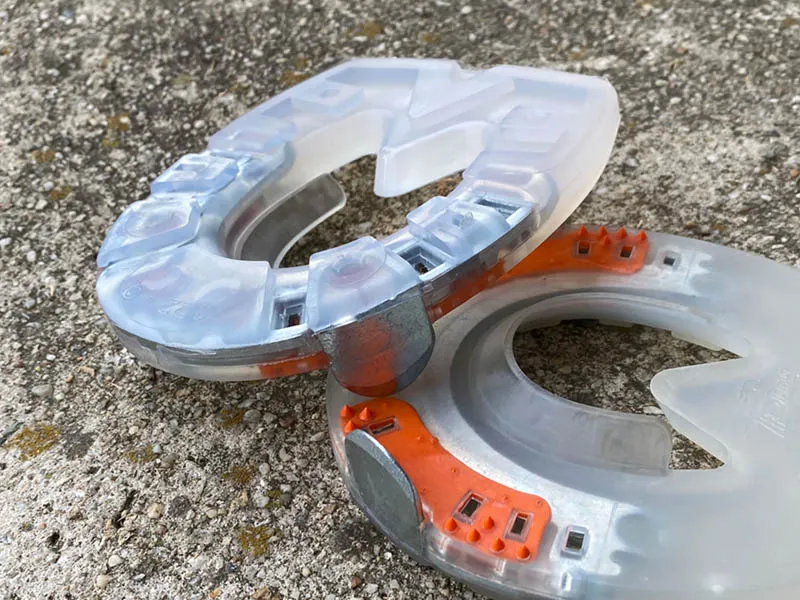
In direct comparison with a regular horseshoe, the protective steel edge in the toe area is clearly visible.
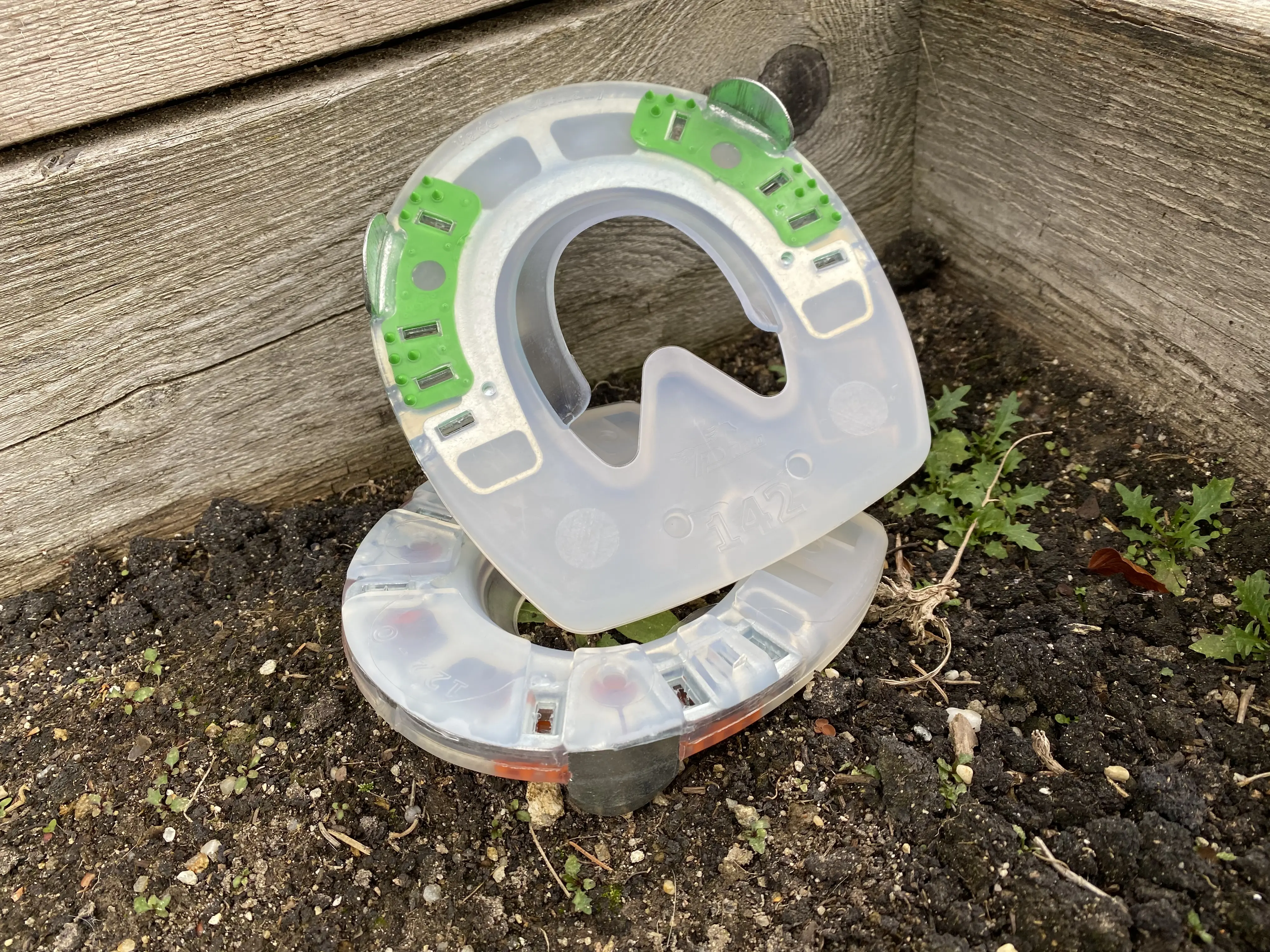
The Arizona – our clipped and treaded horseshoe with a reinforced steel edge in the toe area – is available in both material hardness options.
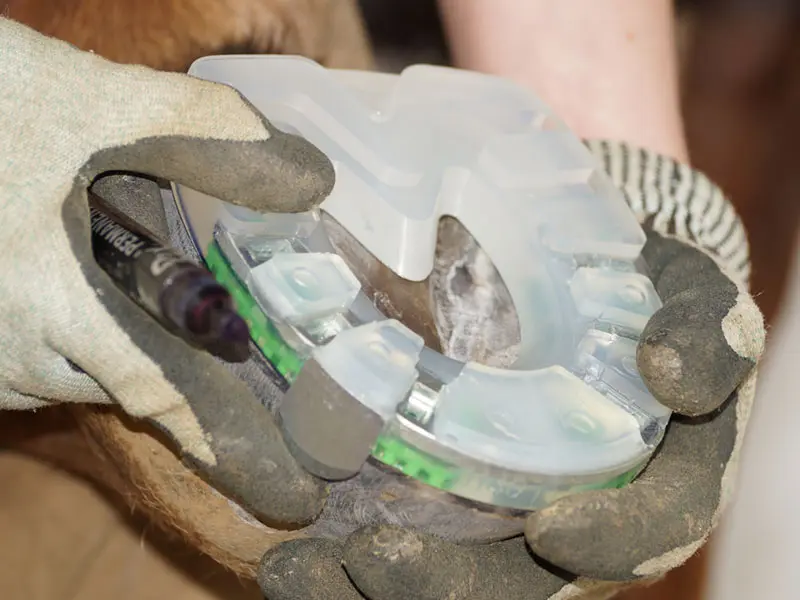
As with any horseshoe, it is important to fit the Arizona as precisely as possible to the individual hoof.
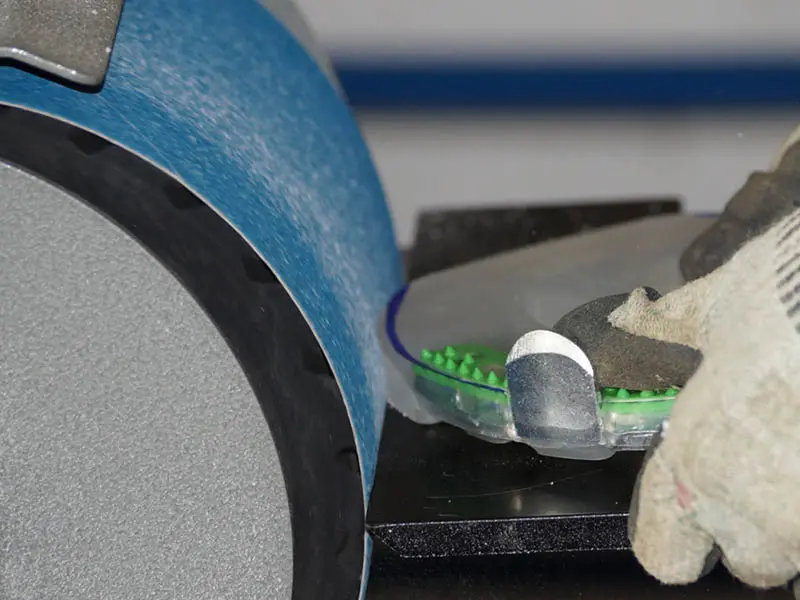
If you come into contact with the steel edge while grinding, round off any sharp edges that may have formed toward the bottom.
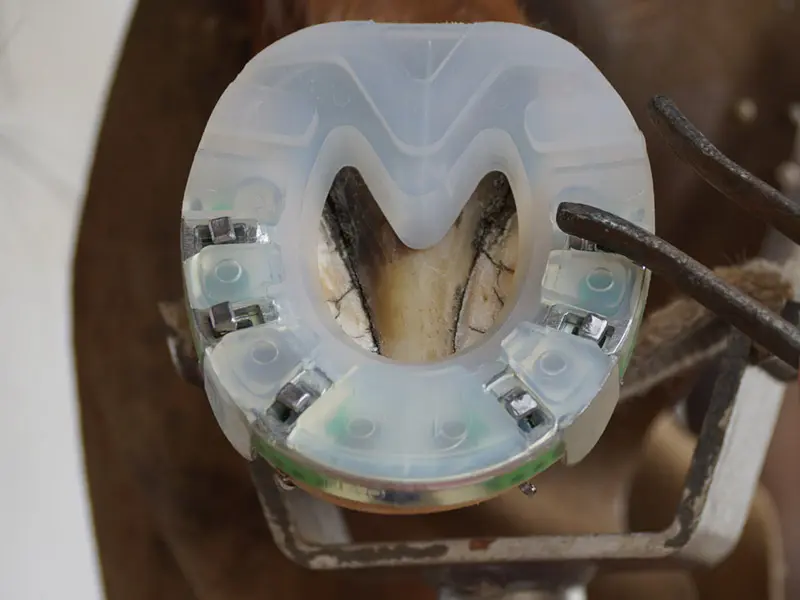
To properly seat the nail despite the lower-positioned nailing slot, you can use pliers for assistance.
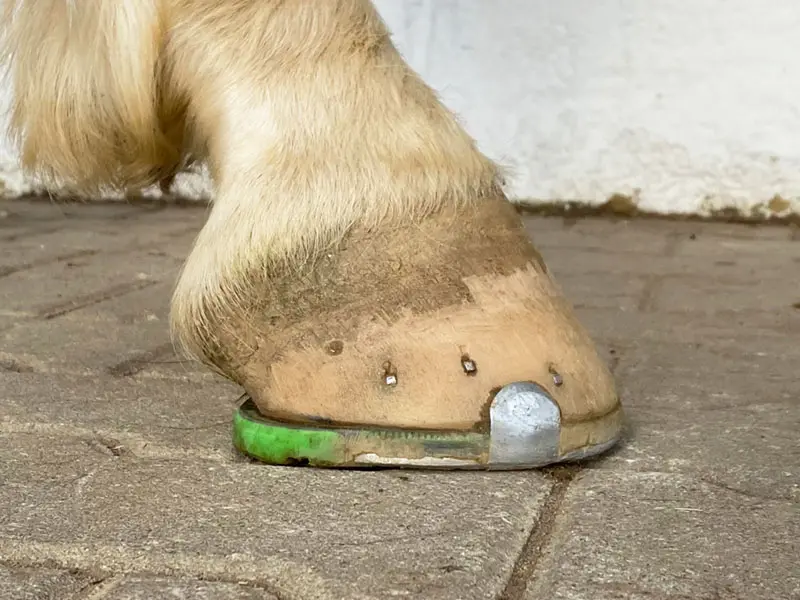
The finished result on the hoof: a horseshoe with quarter clips and a steel edge, accented with green color stripes.
Application and Safety Instructions for the Arizona Specialty Horseshoe – VIDEO
The toe area of the Arizona is reinforced with an additional steel edge. Since this steel edge is only covered with a very thin layer of plastic, it becomes visible relatively quickly. This is not a sign of wear. However, due to the exposed steel edge, the risk of injury within a herd is higher compared to our regular models.
The Arizona as a Nailed Horseshoe
To use the Arizona as a nailed horseshoe, you need the same level of professional expertise required for all other models in our product range, including proper barefoot trimming as well as correct nailing and riveting.
Please observe our safety instructions for the application and use of our horseshoes. Because the steel edge of the Arizona becomes visible relatively quickly, the risk of injury within a herd is higher compared to our regular models. As stated in our safety guidelines, regular inspection of the horseshoes is the responsibility of the horse owner.
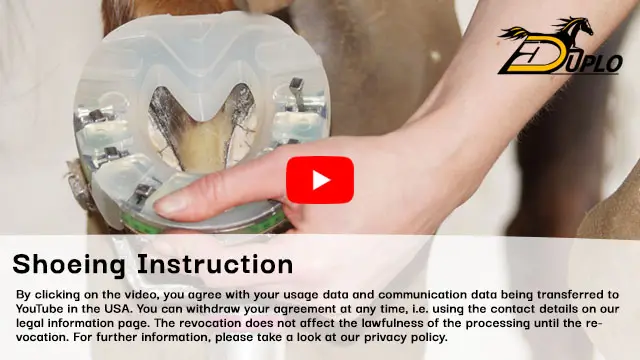
Fitting Instructions for Composite Horseshoes
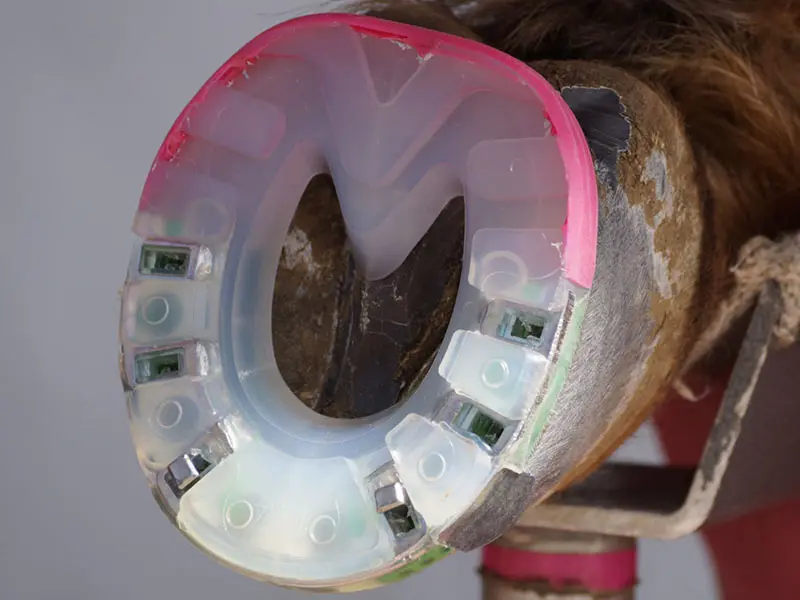
Lateral Adjustments in the Area of the Steel Edge
As with any other horseshoe, correct fitting to the hoof is a decisive factor for successful shoeing. With this model as well, adjustments to the hoof shape can easily be carried out using an angle grinder or belt grinder.
When making lateral adjustments to the Arizona, it is quite possible that you may come into contact with the steel edge. This is not a problem and does not impair the protective function of the horseshoe. The only important point is to round off any edges that may have formed in order to minimize the risk of injury.
Not Suitable as a Glue-On Horseshoe
The Arizona cannot be used as a glue-on horseshoe, as there is not enough plastic material in the area of the steel edge to create a welded bond with glue-on tabs.
Product Specifications
| General Data and Delivery Information | |
|---|---|
| Model | Clipped and Profiled Composite Horseshoe with Steel Edge in the Toe Area |
| Additional designation | Arizona |
| Brand | Duplo |
| Manufactured in | Germany |
| Item Numbers | 160, 161, 450, 451 |
| Packaging Unit | sold individually |
| Returns and Exchanges | Possible under certain conditions within 3 months within the European Union (EU). For returns from outside the EU, please contact our customer service. All details can be found under FAQ → Service & Conditions |
| Function and Application | |
|---|---|
| Function | alternative hoof protection, horseshoe, shock absorption, stimulation of the hoof mechanism , additional grip thanks to reinforced tread, toe protection, toe weight, horseshoe for bone spavin, gait optimization |
| Riding styles and disciplines | including leisure riding, trail riding and endurance rides, endurance riding , western riding, dressage , gaited horse riding, classical riding, groundwork, cross-country riding, Working Equitation |
| Horse Breeds | among others: Warmblood, Thoroughbred, Quarter Horse, Paint Horse, Haflinger, Icelandic Horse, Arabian, Friesian, Andalusian, Hanoverian |
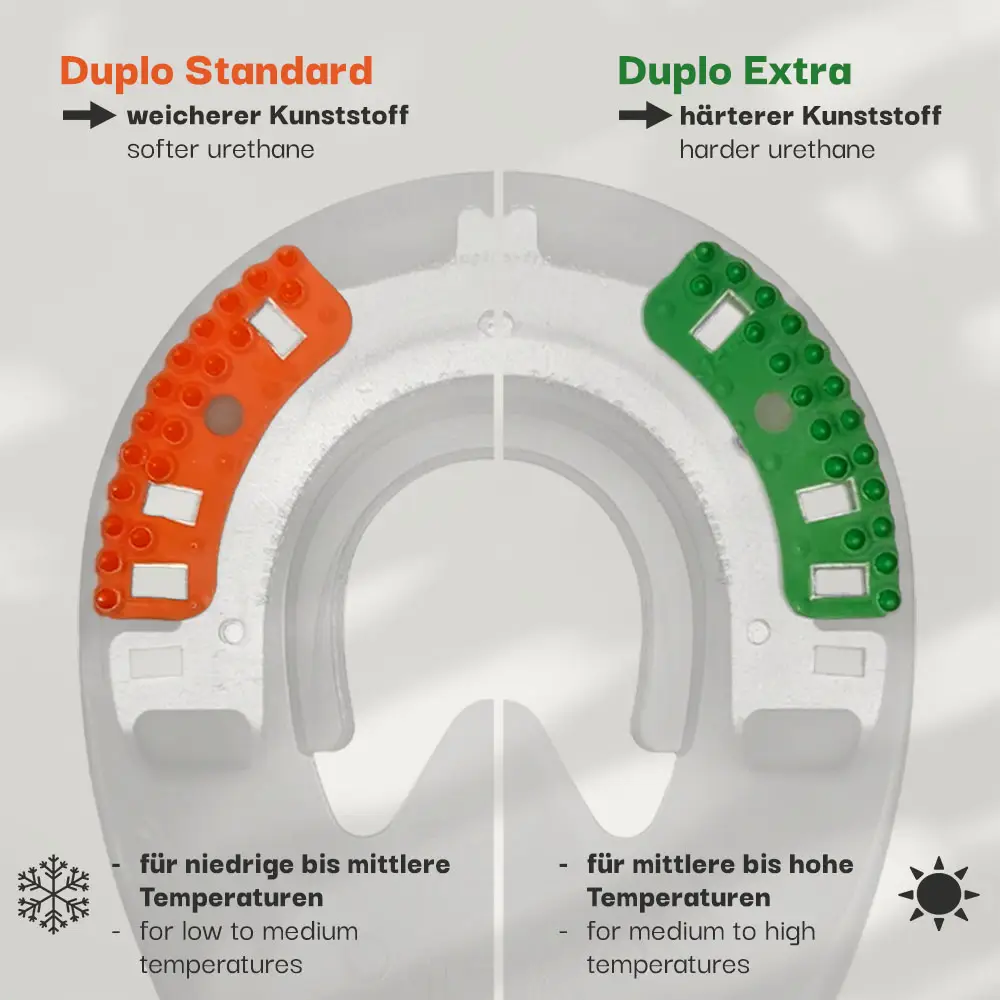
| Season / Hardness Level | Available in both hardness levels and suitable for year-round use. During colder months, we recommend the slightly softer Standard horseshoes. In warmer temperatures, the slightly harder Extra version has proven to be more abrasion-resistant. |
| Measurements, Shapes, Sizes, and Weight | |
|---|---|
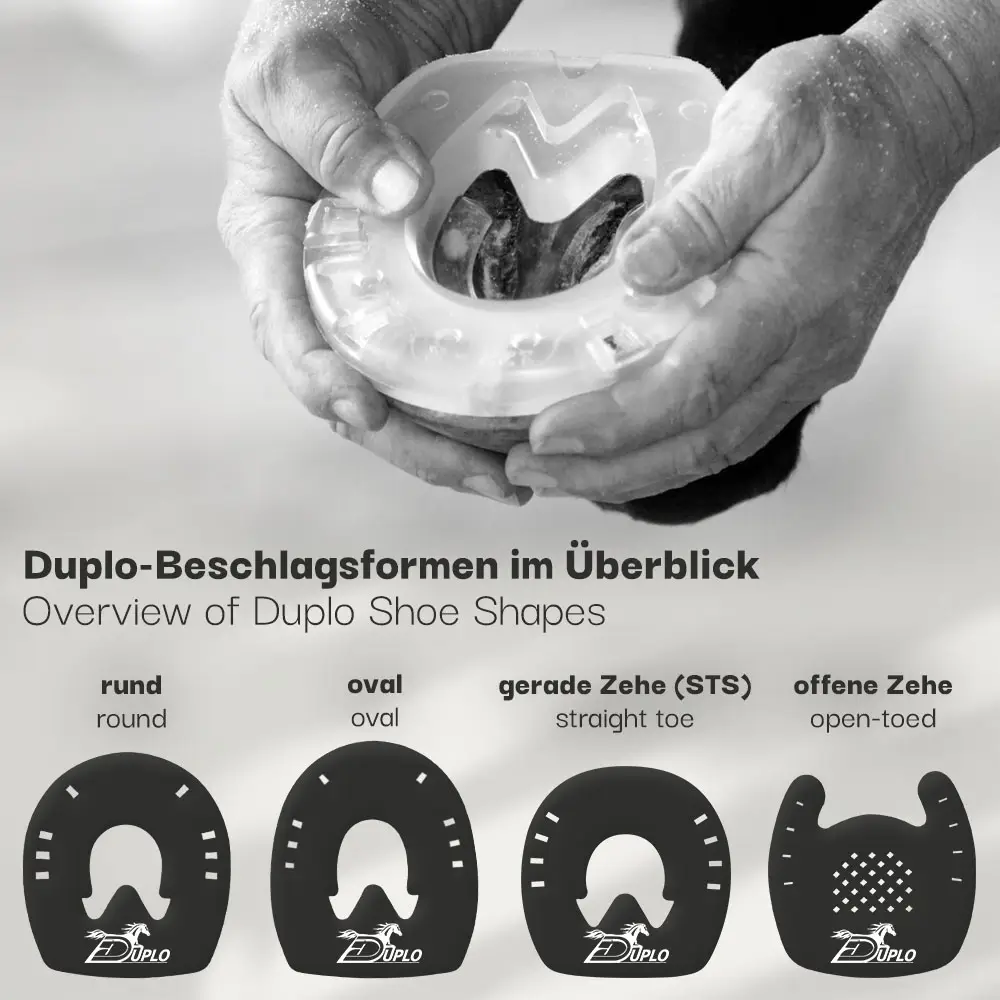
| Available Shapes | round (usually fits front hooves) / oval (usually fits hind hooves) |
| Size Determination | Based on hoof shape and the widest part of the hoof (after proper trimming), or, if
necessary,
the size of the previous steel shoes. Feel free to use our free template. |
| Sizes (=Width) | 110mm, 114mm, 118mm, 122mm, 126mm, 130mm, 134mm, 138mm, 142mm, 146mm |
| Size Intervals | in 4mm steps |
| Length | varies by size – for details please visit FAQ → Sizes and Shapes |
| Thickness | 15mm |
| Weight | depending on size: 270g to 490g |
| Material and Construction – Special Features | |
|---|---|
| Plastic Coating | The soft plastic coating has a shock-absorbing effect. The bar made of plastic material can improve the blood circulation of the hoof. |
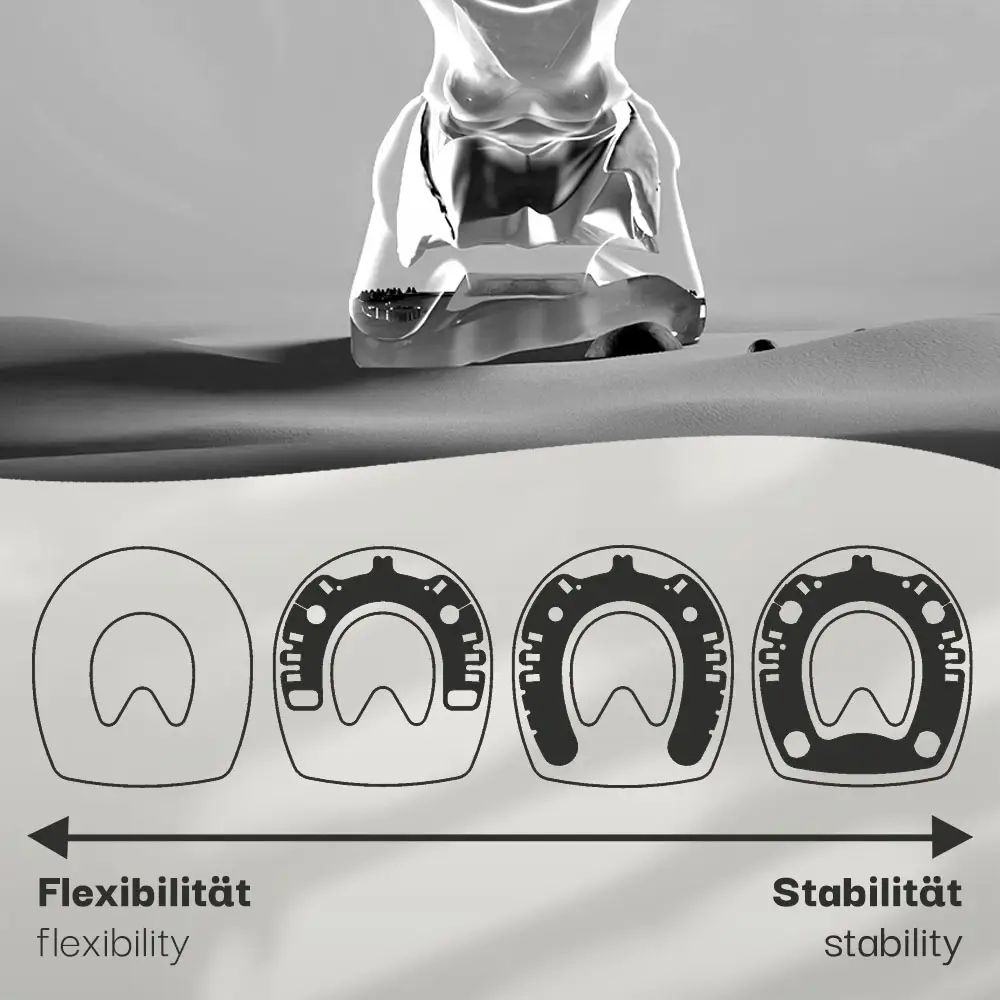
| Hoof Mechanism | The flexible synthetic material encourages the mobility of the elastic hoof structures. |
| Sole Area | The open sole design offers breathability to the hoof
sole
and the frog
. The molded synthetic lip, acts like a debris guard. It helps to reduce the amount of snow and debris balling up . |
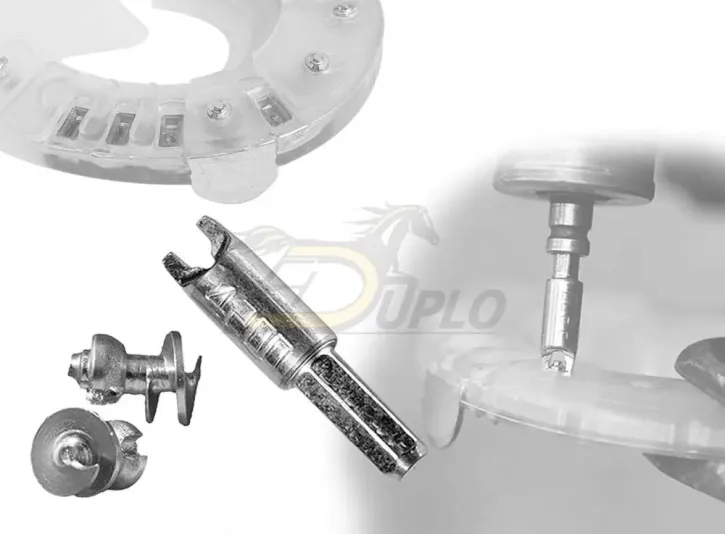
| Grip | This model features a deeper tread pattern. For added traction, spikes can be used. Always adjust riding speed according to the ground conditions, especially on slippery surfaces. |
| Knobs | The knobs are impressed into the weight-bearing surface of the hoof wall and help the
nail-on horseshoe keep its position on the hoof. When used as a cast shoe, the knobs must be ground down before attaching the cast hooks to the shoe. |
| Metal Core | The metal core enhances durability and helps avoid unwanted pressure on the hoof. |
| Steel edge | The steel edge adds slightly more weight in the toe area and protects the plastic outer layer from premature tearing in the toe area. |
| Nailing Slots | The shoe features 6 to 8 nailing slots integrated into the metal core, depending on
size.
The optimal nail size varies by hoof condition and size. You’ll find general recommendations in our shop under hoof nails. |
| Quarter Clips | Quarter clips make nailing easier and help prevent the horseshoe from twisting or slipping
during the regular shoeing period. Be careful to adjust the quarter clips to the hoof angle when shoeing. |
| Shoeing and Customization | |
|---|---|
| Application | nail-on shoe, cast shoe; not suitable as a glue-on horseshoe |
| Shoeing Instruction | can be found under FAQ → Instructions |
| Therapy Shoe / Rehab | This model is also suitable for supportive use in orthopedic and therapeutic applications. There
is positive experience, for example, with horses affected by bone spavin. We expressly point out that our products do not diagnose or cure diseases, and for any use with a therapeutic or orthopedic background, we recommend working closely with the farrier or veterinarian on site. |
| Customization | Always fit the horseshoe individually to the hoof shape – use an angle grinder, belt
grinder,
hoof nippers, or toeing knife. Advanced modifications (at your own discretion) are possible: narrow, widen, lengthen the shoe or close the sole area; you may also bend or grind a Toe Rocker . More info available under FAQ → Adjustment to the Hoof. |
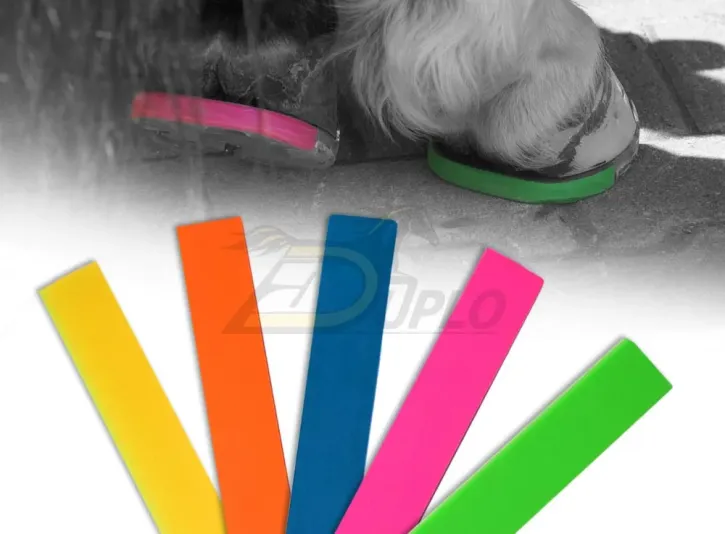
| Accessories | Extensions (for lengthening only, not for widening in the area of the steel edge), Hoof Sole Protector , wedge , color stripes, cast hooks, Spikes and more. |
| Safety Instructions | |
|---|---|
| Safety Information | can be found under FAQ → Safety Information |
| Safety Instructions as PDF Download | PDF Download |
| Risk of injury in Herds | The risk of injury within the herd is closer to that of a hoof shod with steel shoes than to the risk associated with a purely plastic horseshoe or a regular composite horseshoe. Please also observe our safety instructions. The quarter clips must also be monitored. |



Manufacturer in accordance with the Regulation (EU) 2023/988 on General Product Safety (GPSR)
Manufacturer in accordance with the Regulation (EU) 2023/988 on General Product Safety (GPSR)
Name: H. Frank Kunststofftechnik GmbHElectronic Address: info@duplo-frank.de
Physical Address: Vorderfreundorfer Straße 20
ZIP Code: DE-94143
City: Grainet
Country: Deutschland
Phone: +49 (0)8585/96926-0
Responsible Person in accordance with the Regulation (EU) 2023/988 on General Product Safety (GPSR)
Name: H. Frank Kunststofftechnik GmbHElectronic Address: info@duplo-frank.de
Physical Address: Vorderfreundorfer Straße 20
ZIP Code: DE-94143
City: Grainet
Country: Deutschland
Phone: +49 (0)8585/96926-0