
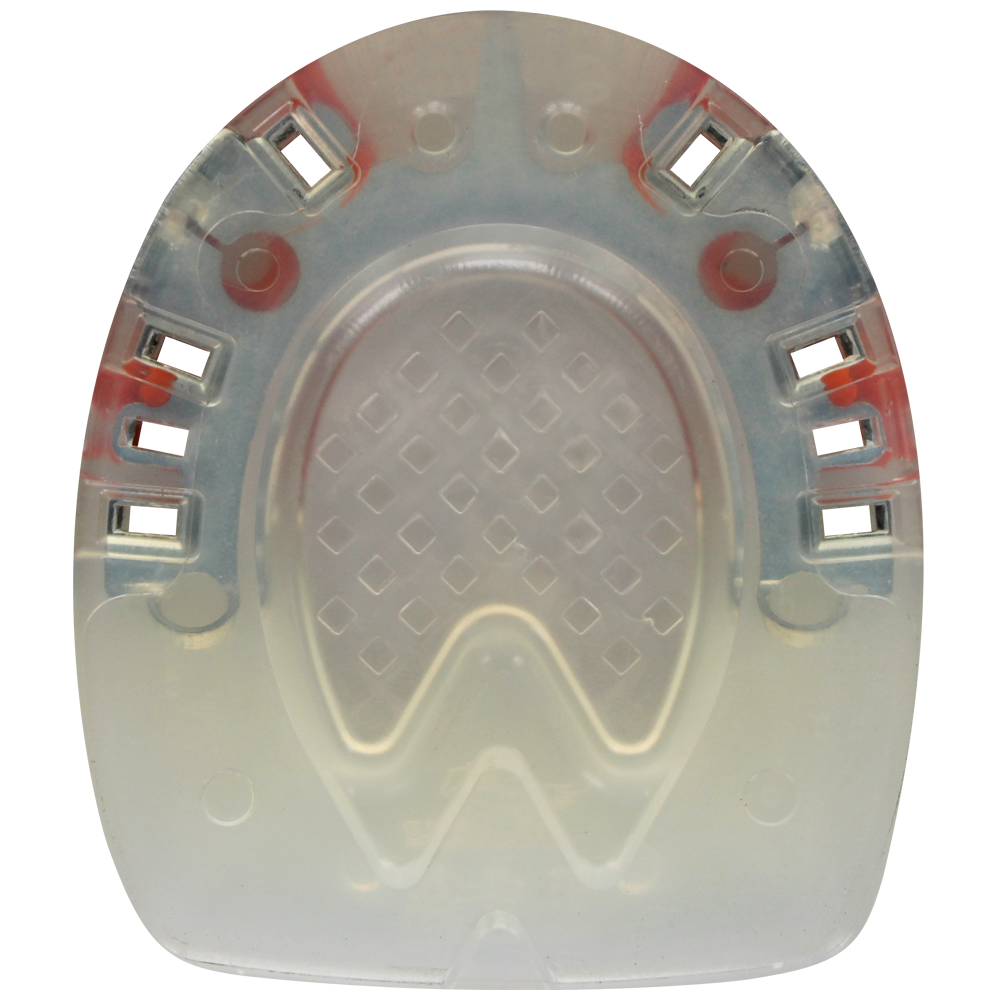
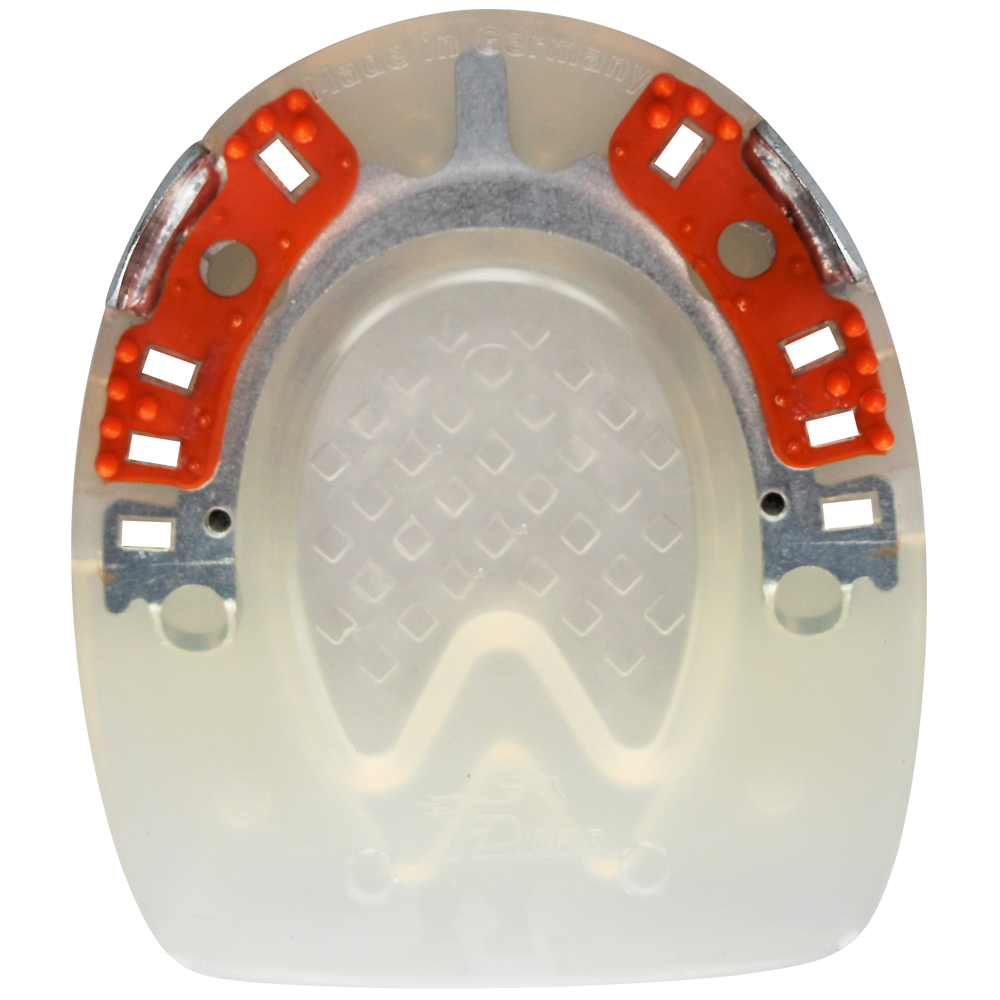

Duplo Clipped with Closed Sole Area (Standard / oval / 122mm)
Item No.: 171122
Manufacturer/Brand: Duplo Verbundbeschläge
19,31 EUR - 20,84 EUR
incl. 19 % VAT
Scaled Prices
| Quantity | Unit Price |
|---|---|
| 1-7 | 20,84 EUR |
| >= 8 -1,53 EUR | 19,31 EUR |
-

- delivery time 3-5 Werktage (*)
- weight 0,28 kg
Are you already benefitting from our commercial conditions? Please contact us!
Clipped Horseshoe with Closed Sole Area — Ideal for Padding Material
Special situations require special measures, and the same applies to horseshoeing.
Typically, the hoof sole remains exposed with a horseshoe. However, there are situations where it is necessary to enclose and protect the sole area of the hoof using a horseshoe with hoof pad and/or padding material.
In these situations, a hoof pad made of leather, plastic, rubber, or even felt is often placed
between the hoof and the horseshoe.
In our range, you can buy horseshoes with a pre-closed sole area for various applications
that require a hoof pad and / or padding material.
Shock-Absorbing Composite Horseshoe with Integrated Hoof Pad — Photos
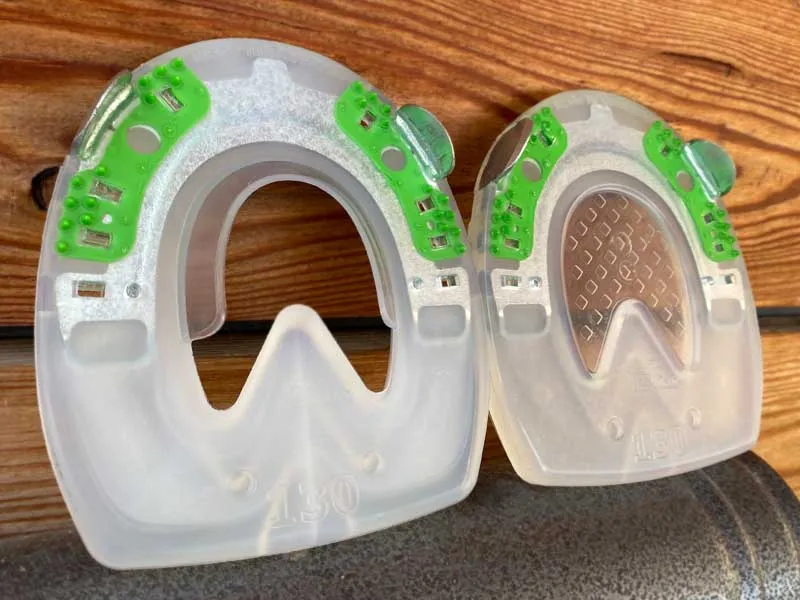
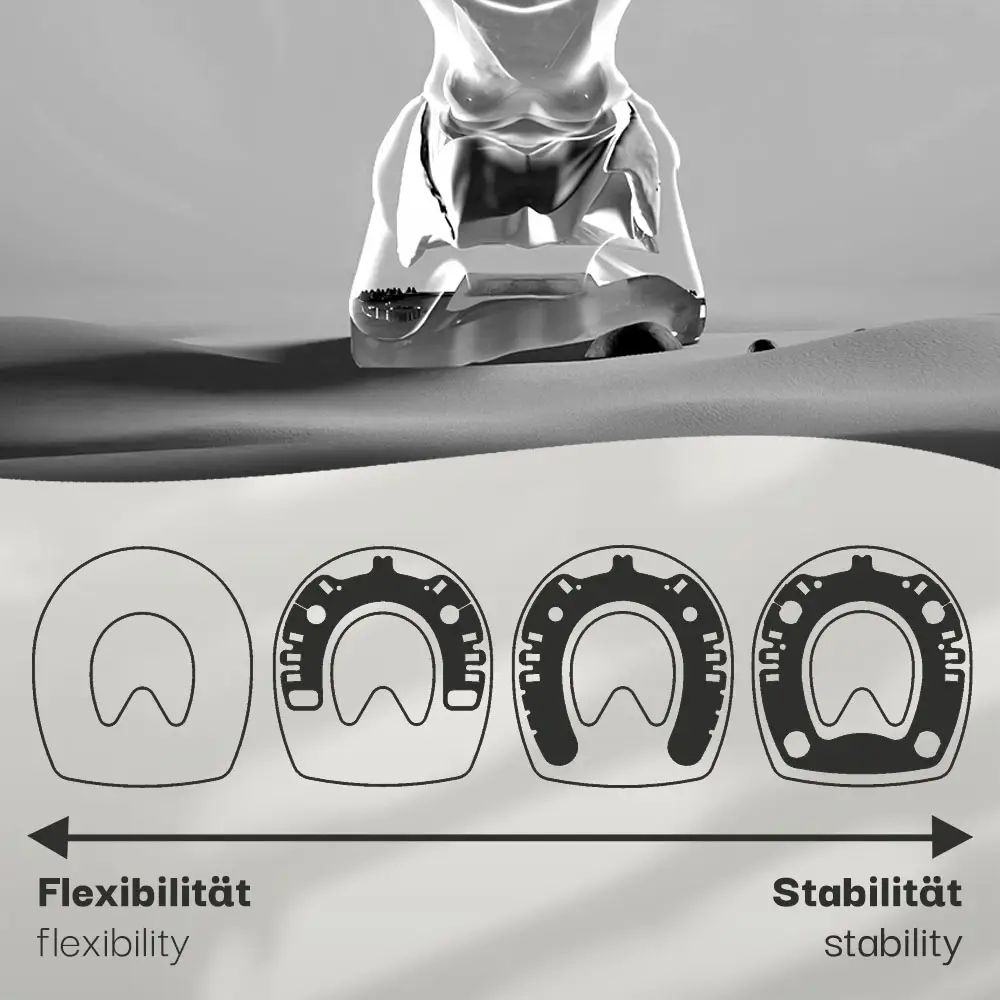
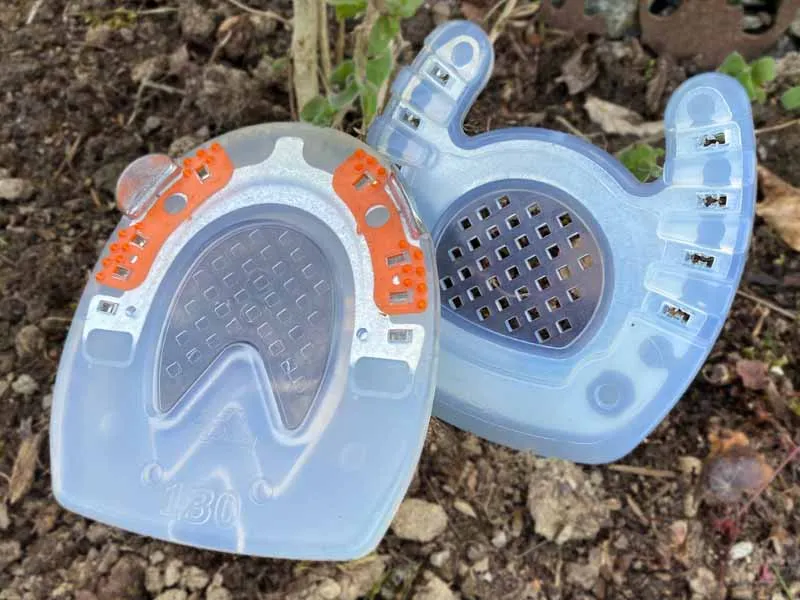
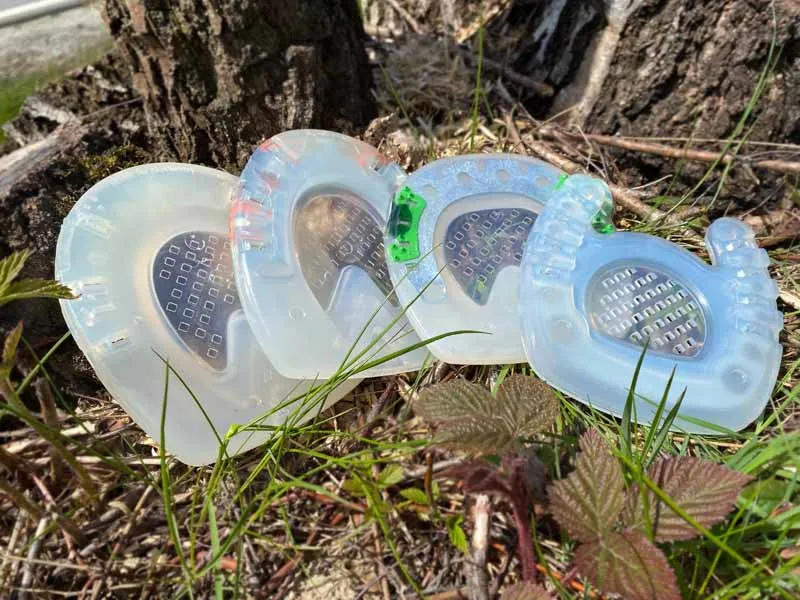
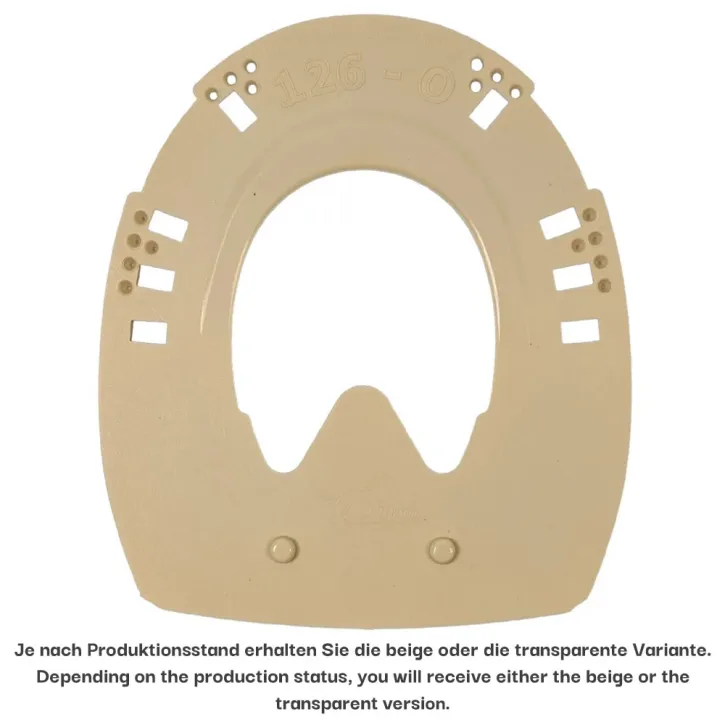
In comparison: clipped composite horseshoes with open and closed sole area.
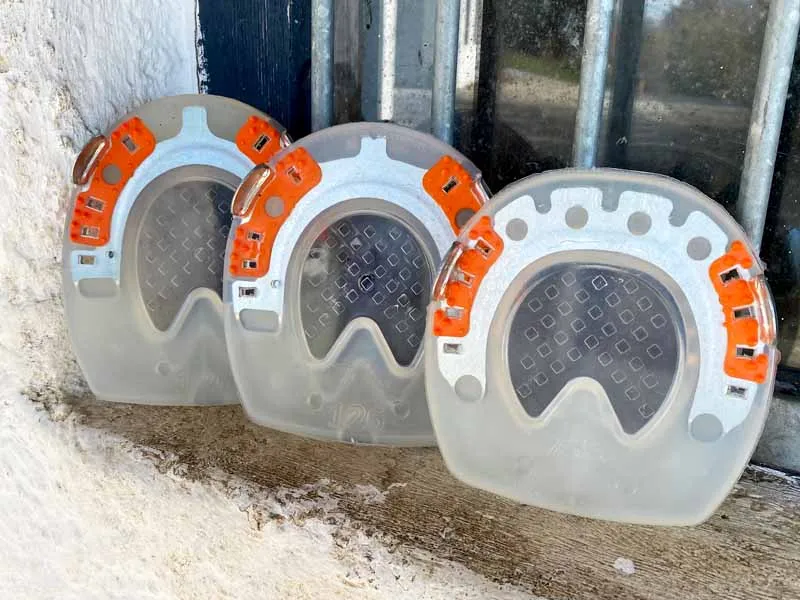
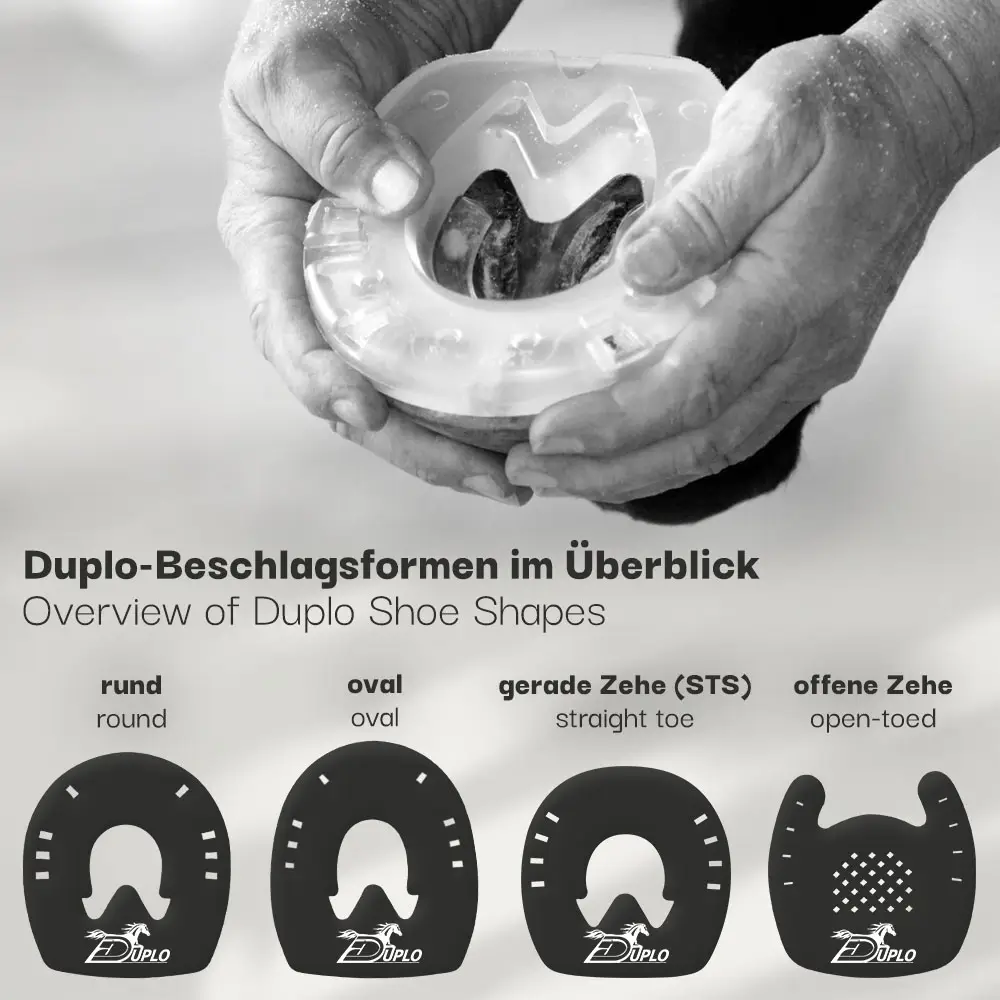
Our horseshoe with closed sole area is available in oval, round and STS shapes.
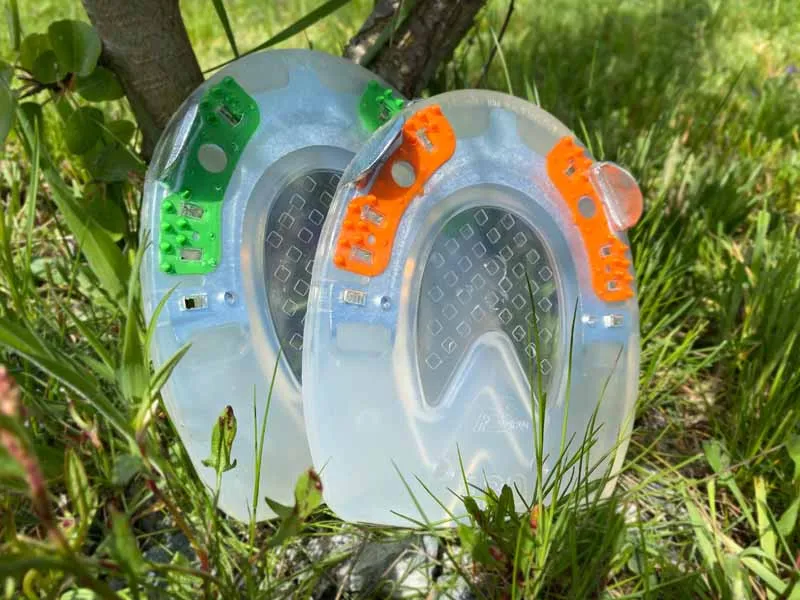
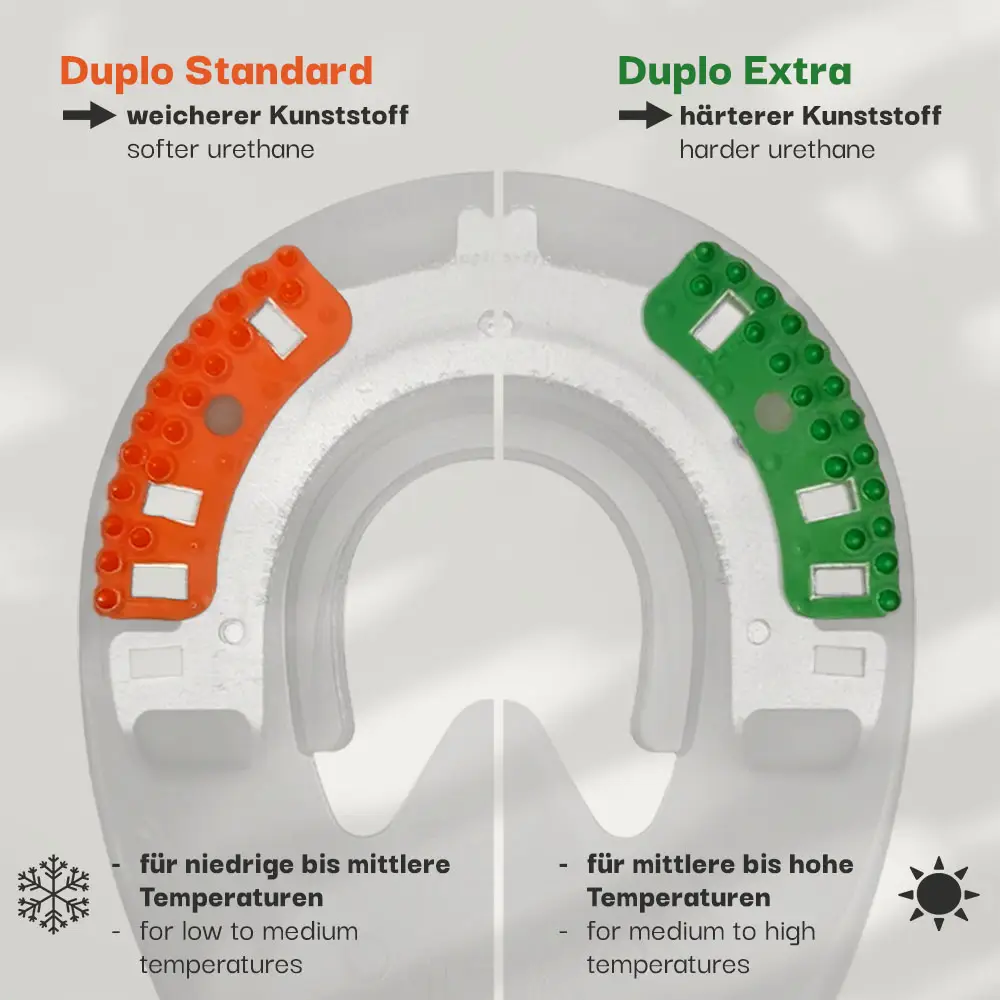
Our clipped horseshoe with a closed sole area is available in both the slightly harder Extra version and the softer Standard version.
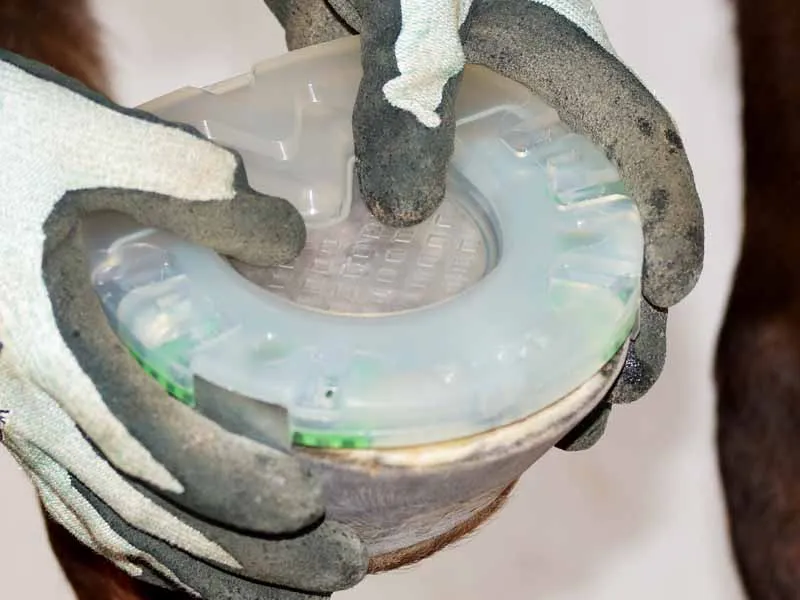
If you have a model with a completely closed sole area, you can easily drill one (or more) holes in the closed sole area if needed, allowing excess padding material to escape.
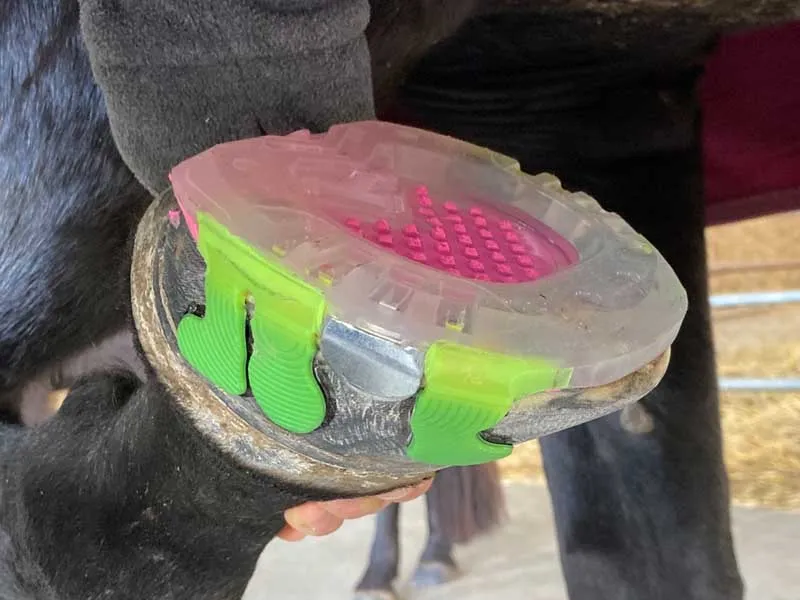
Horseshoes with closed sole area are also suitable for glue-on application. However, make sure that the padding material does not seep out laterally, as this could negatively affect the stability of the adhesive bond.
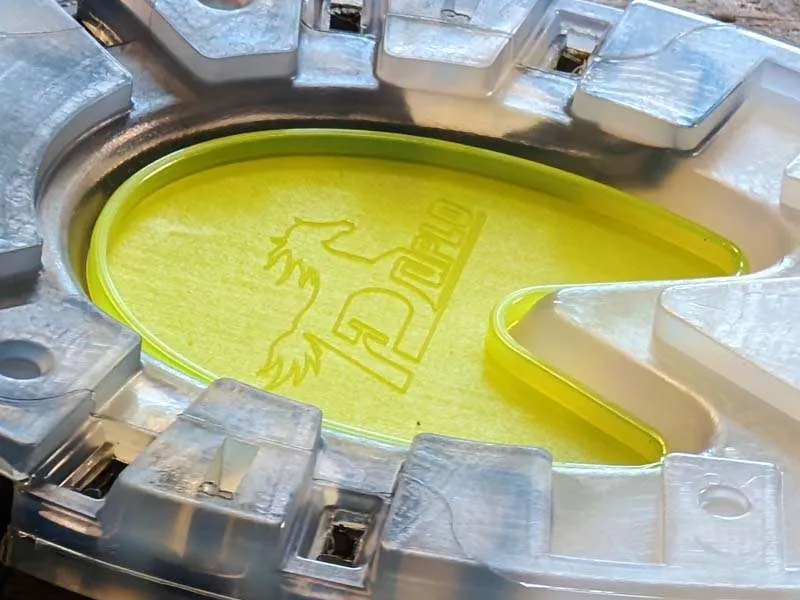
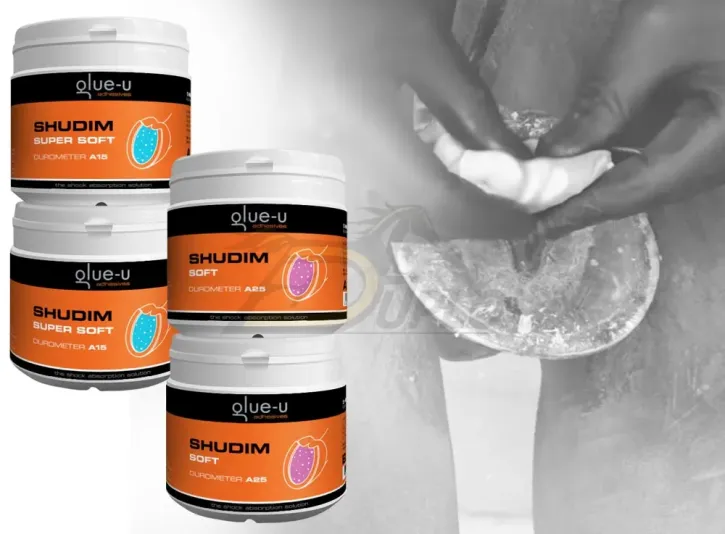
If you do not have a horseshoe with an integrated hoof pad at hand, or if additional features such as a threaded insert are required, the sole area can be closed afterwards—for example with our Hoof Sole Protector or Glue-U MESH, depending on the padding material you plan to use.
Application and Safety Guidelines when Shoeing with Padding Materials — VIDEO
Shoeing Instruction
Whether you intend to use the shoe with integrated hoof pad as a therapeutic shoeing solution or utilize the closed sole area for improved protection against snow balling up or to protect the hoof sole from small stones, proper application is crucial. Ultimately, any product is only as good as its user.
With the necessary knowledge of correct barefoot trimming and proper nailing and riveting of a horseshoe, or gluing for a glue-on shoe, along with some craftsmanship, you can generally work effectively with our products.
However, there are some aspects you should consider when using a composite shoe. For this purpose, we have compiled a general shoeing guide for you.
Please make sure that excess padding material can escape to avoid any unwanted pressure on the hoof.
Shoeing Instruction
Application as Therapeutic Shoe
With expert knowledge, the model with a closed sole area is suitable for supportive use in orthopedic and therapeutic applications.
Please note that our products are not intended to diagnose or cure diseases. We advise close collaboration between horse owners, hoof care professionals, and potentially local veterinarians for any usage with therapeutic or orthopedic intentions.
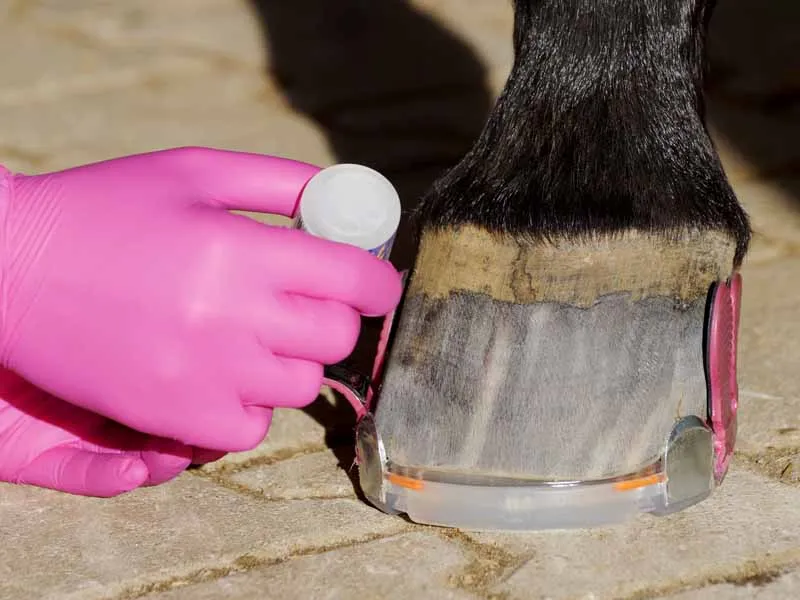
Padding Material for a Glue-On Shoe
Of course, it is also possible to glue-on a horseshoe with a closed sole area.
For a glue-on application, it's crucial to ensure that the padding material does not protrude laterally towards the glue-on tabs. Otherwise, it could negatively impact the stability of the adhesive bond between the tab and the hoof.
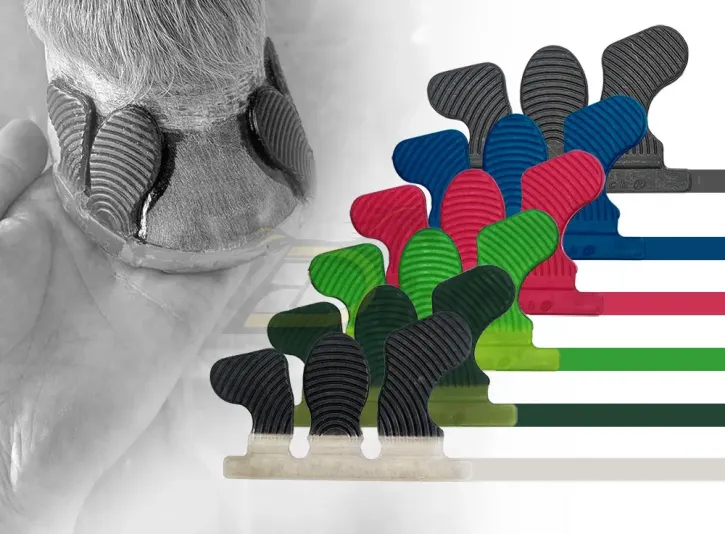
Since our horseshoe with integrated hoof pad is equipped with quarter clips, we recommend using the Wolf Busch® glue-on tabs for its glued application. Even if you remove the quarter clips, it is not possible to achieve a stable weld seam in this area. Cut through the glue-on tabs and place the largest tab in front of the quarter clips, the other two behind them. For further information on successful glue-on application, please refer to the product information of the glue-on tabs.
Appropriate Padding Material
When you have choices, you have dilemmas: There are various padding materials available on the market.
The right padding material for your horseshoe depends on various factors.
- Shall the horseshoe provide reliable protection against stones for a sensitive hoof sole?
- Should the horseshoe provide more support to the frog and the hoof sole?
- Is the padding solely intended for complete sealing to prevent very muddy snow from getting under the shoe and freezing or causing snowballing?
- Should the closed sole with padding material, provide better pressure distribution?
- Should the padding material cover a wound and have a disinfectant effect?
Depending on the reason you've chosen our model with closed sole area are and the function you want the padding material to serve, various padding materials are available to you:
- Raw wool
- Tow (coarse, short interweaved fibres of flax, hemp or jute)
- Silicone packing material
- Polyurethane hoof pads (PU filling) in various shore hardnesses
In principle, you can use all the padding materials listed above in our horseshoes with closed sole area.
Depending on the shape and size, the horseshoe may feature either a fully closed sole area or a grid sole.
If you are using a kneadable or liquid padding material, we recommend cutting a small hole in the fully closed sole area. This allows excess padding material to escape through the hole, preventing unwanted pressure on the hoof.
Unfortunately, it is not possible for us to go into detail on the various applications and specificities of each padding material.
The correct choice and proper application of the hoof padding material are the responsibility of the local farrier. Please refer to the instructions provided by the manufacturers of the padding material for all aspects relevant to your safety and the horse's health.
Using a Clipped Horseshoe with Closed Sole Area as Winter Horseshoe
Our composite horseshoes have (almost all) an integrated synthetic debris guard, which in winter should serve a similar function to a snow insert. In theory, thanks to the debris guard, the snow should fall off the horseshoe and not freeze on it. This way, the dangerous snowballing is largely avoided.
However, unfortunately, there are situations in which simply nothing seems to work, and it's not possible to prevent snow accumulation, becoming a risk for both the horse and possibly the rider.
Possible Reasons for the Debris Guard not Working Properly
It may be that the snow insert doesn't have enough room to move and remove the snow from the horseshoe or shoe. Depending on the shape of the hoof, this may occur at the beginning of the shoeing period or develop over time as the hoof grows.
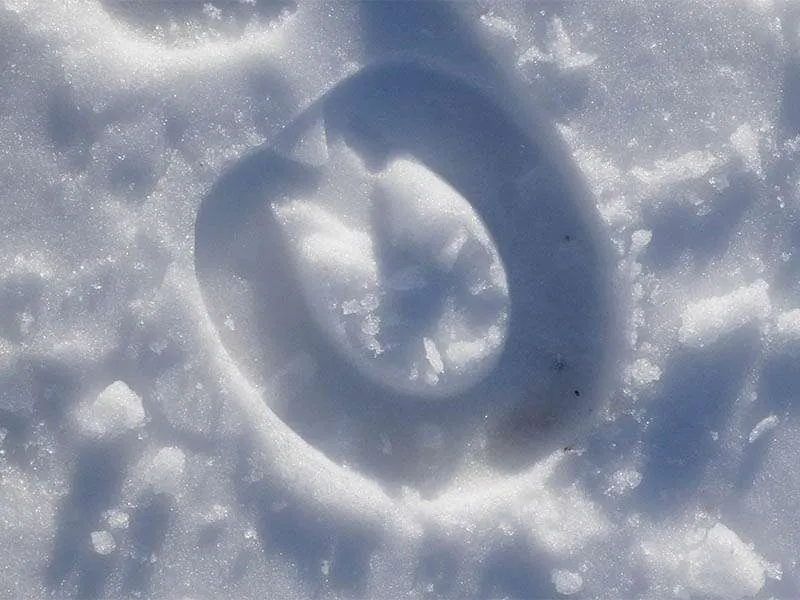
On the other hand, it could simply be that the snow is too slushy, and consequently, the 'snow ball' under the hoof can become larger.
In unfavorable weather conditions, very slushy snow, or for hoof shapes unsuitable for the debris guard, the best solution ultimately is to use a horseshoe with a closed sole area. With the help of the closed sole area and suitable cushioning material, the entire area is completely sealed to prevent snow from penetrating and balling up.
In this case, we consider a kneadable or liquid padding material to be the most suitable, as it typically spreads very reliably over the entire area under the hoof. This is the only way it can largely prevent snowballing, even in very slushy snow.
Product Specifications
| General Data and Delivery Information | |
|---|---|
| Model | Clipped Horseshoe with Closed Sole Area (Integrated Hoof Pad) |
| Brand | Duplo |
| Manufactured in | Germany |
| Item Numbers | 170, 171, 460, 461, 850, 950 |
| Packaging Unit | sold individually |
| Returns and Exchanges | Possible under certain conditions within 3 months within the European Union (EU). For returns from outside the EU, please contact our customer service. All details can be found under FAQ → Service & Conditions |
| Function and Application | |
|---|---|
| Function | (Alternative) horseshoe, shock absorption, stimulation of the hoof mechanism, use with padding material, hoof pad |
| Riding Styles and Disciplines | among others: leisure riding and orienteering, western riding, dressage , driving, gaited horses riding, baroque riding, ground work, cross-country riding, endurance riding , Eventing , Working Equitation |
| Horse Breeds | among others: Warmblood, Thoroughbred, Quarter Horse, Paint Horse, Haflinger, Icelandic Horse, Arabian, Friesian, Andalusian, Hanoverian |
| Season / Hardness Level | Available in both hardness levels and suitable for year-round use. During colder months, we recommend the slightly softer Standard horseshoes. In warmer temperatures, the slightly harder Extra version has proven to be more abrasion-resistant. |
| Measurements, Shapes, Sizes, and Weight | |
|---|---|
| Available Shapes | round and STS (usually fits front hooves) / oval (usually fits hind hooves) |
| Size Determination | Based on hoof shape and the widest part of the hoof (after proper trimming), or, if
necessary,
the size of the previous steel shoes. Feel free to use our free template. |
| Sizes (=Width) |
|
| Size Intervals | in 4mm steps |
| Length | varies by size – for details please visit FAQ → Sizes and Shapes |
| Thickness | 15mm |
| Weight | depending on the size from 182g up to 574g |
| Material and Construction – Special Features | |
|---|---|
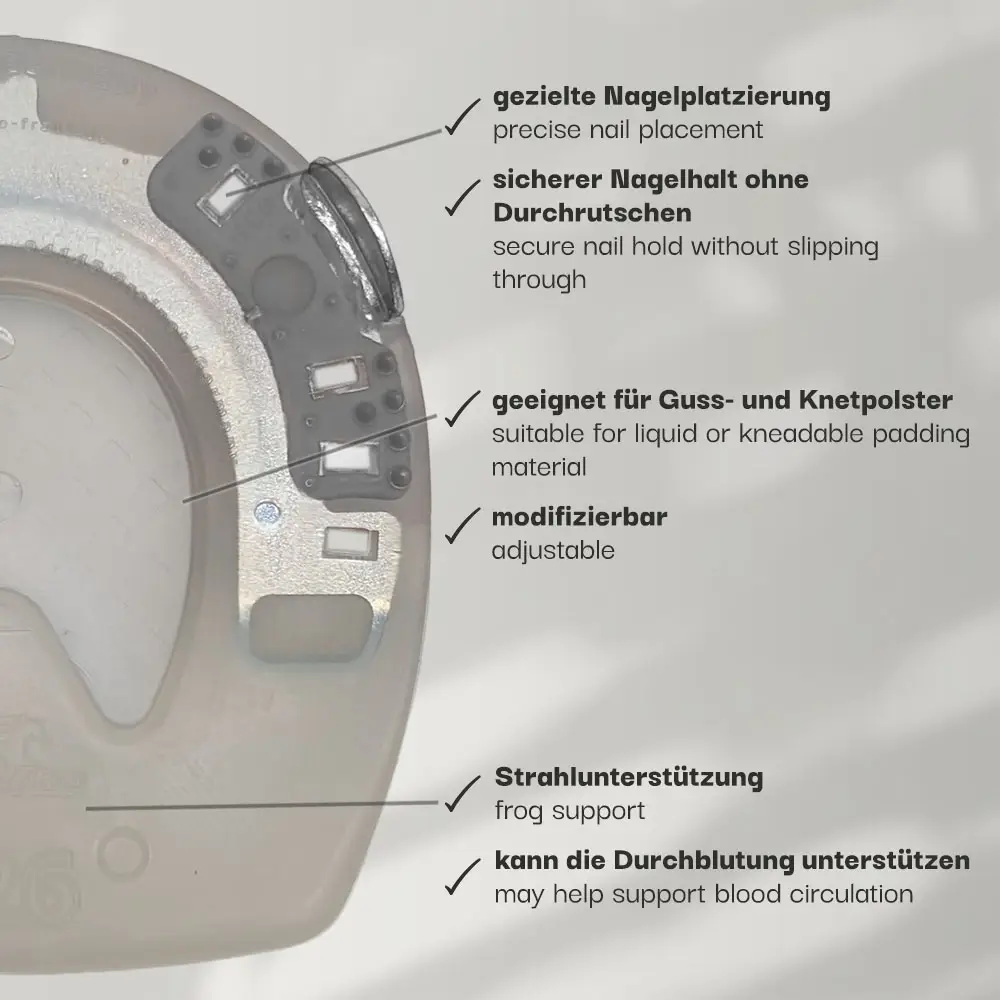
| Plastic Coating | The soft plastic coating has a shock-absorbing effect. The bar made of plastic material can improve the blood circulation of the hoof. |
| Hoof Mechanism | The flexible synthetic material encourages the mobility of the elastic hoof structures. |
| Sole Area | closed sole area |
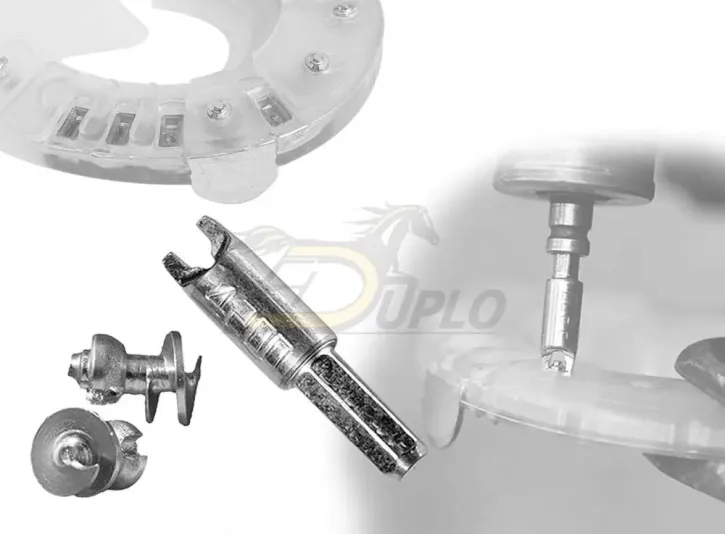
| Grip | To improve the grip of the shoe you may add a deeper thread pattern and / or spikes. Always adjust riding speed according to the ground conditions, especially on slippery surfaces. |
| Knobs | The knobs are impressed into the weight-bearing surface of the hoof wall and help the
nail-on horseshoe keep its position on the hoof. When used as a cast or glue-on shoe, the knobs must be ground down before attaching the cast hooks / before plastic-welding the glue-on tabs to the shoe. |
| Metal Core | The metal core enhances durability and helps avoid unwanted pressure on the hoof. |
| Nailing Slots | The shoe features 6 to 8 nailing slots integrated into the metal core, depending on
size.
The optimal nail size varies by hoof condition and size. You’ll find general recommendations in our shop under hoof nails. |
| Quarter Clips | Quarter clips make nailing easier and help prevent the horseshoe from twisting or slipping
during the regular shoeing period. Be careful to adjust the quarter clips to the hoof angle when shoeing. |
| Shoeing and Customization | |
|---|---|
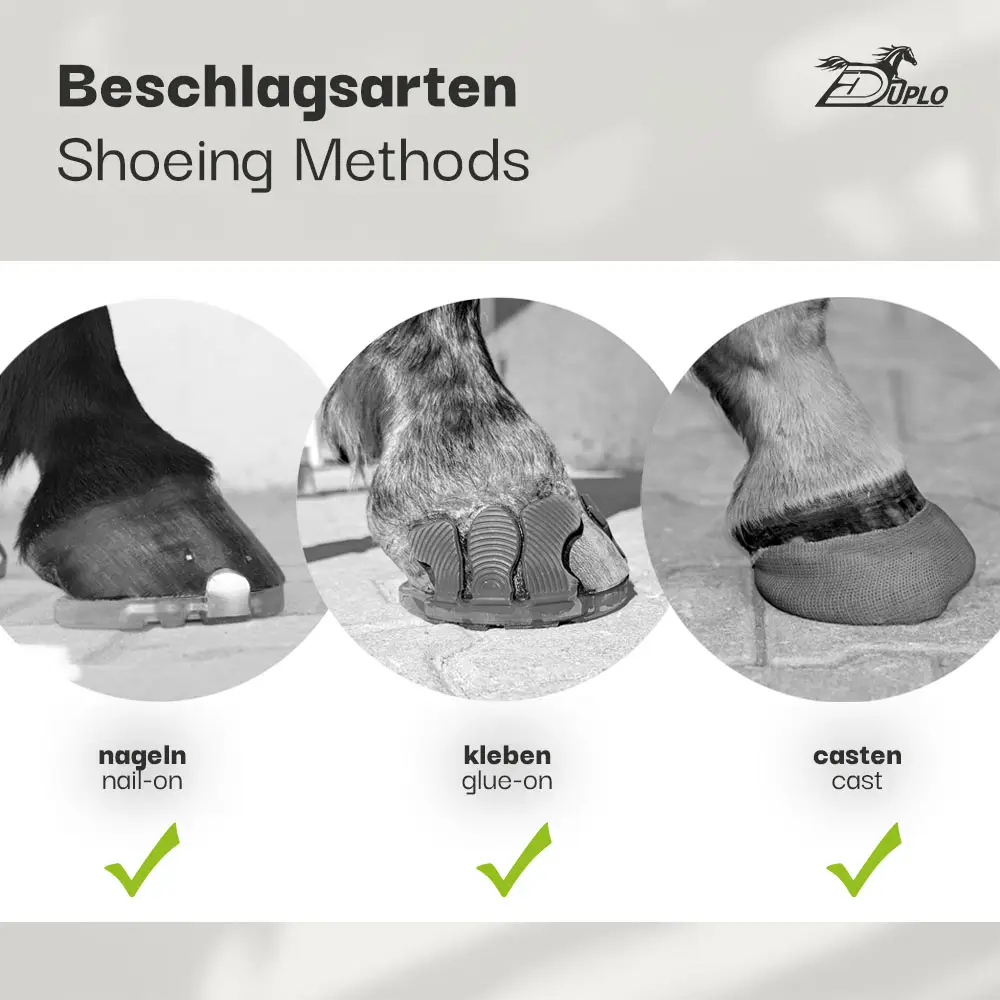
| Application | nail-on shoe, glue-on shoe or cast shoe |
| Shoeing Instruction | can be found unter FAQ → Instructions |
| Therapy Shoe / Rehab | The model is also suitable for supportive use in the orthopedic and therapeutic field. We expressly point out that our products do not diagnose or cure any diseases and advise for any use with a therapeutic or orthopedic background to work closely with the hoof specialist or veterinarian on site. |
| Customization | Always fit the horseshoe individually to the hoof shape – use an angle grinder, belt
grinder,
hoof nippers, or toeing knife. Advanced modifications (at your own discretion) are possible: narrow, widen, lengthen the shoe or close the sole area; you may also bend or grind a Toe Rocker . More info available under FAQ → Adjustment to the Hoof. |
| Accessories | among others Wolf Busch® glue-on tabs, Extensions , wedge , colored stripes, cast hooks, Spikes, padding material |
| Safety Instructions | |
|---|---|
| Safety Information | can be found unter FAQ → Safety Information |
| Safety Instructions as PDF Download | PDF Download |
| Risk of Injuries in Herds | minimized risk of injuries in herd situations and in case of irregular movements in comparison to a steel shoe or the sharp-edged border of a bare hoof - please also read our safety information; the quarter clips must be monitored. |
Tips and Tricks:
Sheep's Wool
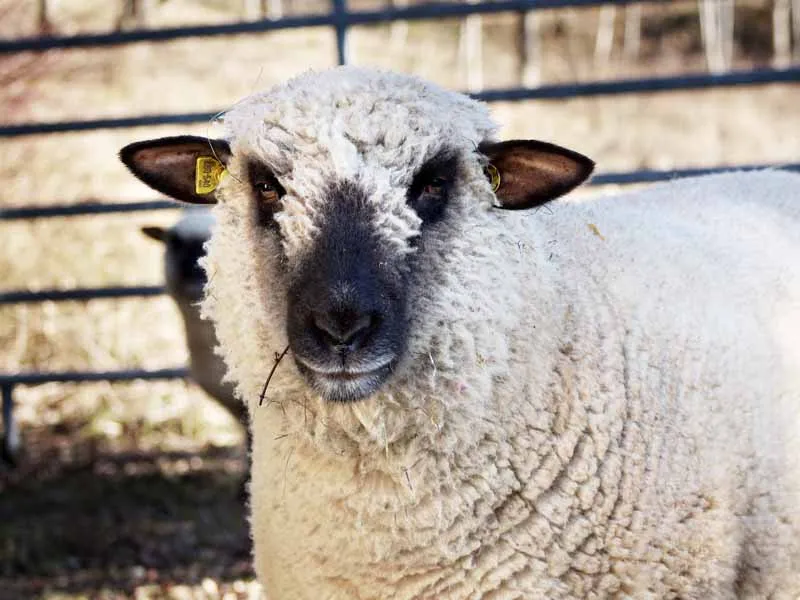
We like to use sheep's wool in combination with Magic Cushion® as padding material whenever the application allows it. On one hand, sheep's wool is 100% natural and environmentally friendly; on the other hand, lanolin has moisturizing and anti-inflammatory properties.
It is important that the wool is only gently cleaned and otherwise left in its natural state.
Due to Sandy Frank owning their own small flock of sheep, which is located next to our company premises in the Bavarian Forest, we are naturally close to the source. Perhaps there is also a possibility for you in your area to obtain untreated sheep's wool as padding material?!
Other Horseshoes with Closed Sole Area
In our online shop, you can currently buy various horseshoes with a closed sole area.
- The described composite shoe with a metal core, shock-absorbing urethane coating, and closed sole area for use with padding material.
- A pure urethane horseshoe without a metal core.
- Our open-toed horseshoes, which have proven particularly effective for use as laminitis shoes, all feature a grid sole.
Further detailed information about the various horseshoes with closed sole area can be found in the respective product descriptions. Of course, our customer service team is also available to provide guidance and assistance.
Application in Case of Thrush
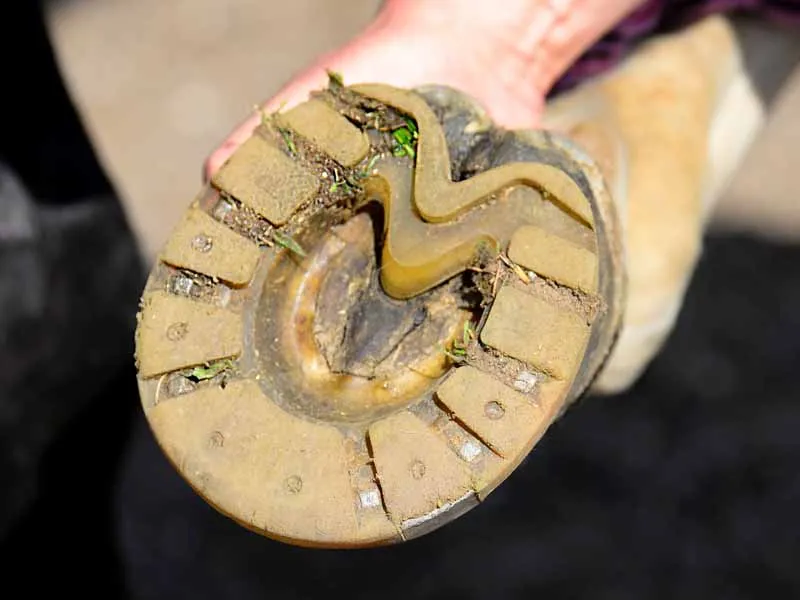
When using a horseshoe with a closed sole area and padding material, you must consider that the shoe may negatively affect existing thrush.
We therefore recommend treating any thrush appropriately first before using a horseshoe with closed sole area. Especially if a horse is prone to thrush or if the thrush has just healed, it is important to prevent dirt from getting under the shoe. This should be taken into account when choosing suitable padding material.
Prejudices Regarding Thrush in Urethane Shoes with Integrated Frog Support
Due to the fact that most urethane and composite horseshoes are closed over the frog, limiting air circulation to the affected areas, some farriers have general concerns about using these horseshoes in cases of thrush. The pathogens causing decay then find ideal conditions in the absence of air circulation. Depending on whether other conditions favoring thrush are present, the thrush could then spread more easily.
If you have concerns because your horse is prone to thrush, we can reassure you to some extent.
Of course, one cannot generalize, but experience shows that very few horses develop thrush while using our composite horseshoes. There are even reports of horses that have shown improvement in their condition.. And ultimately, thrush is often the result when poor external conditions (wet bedding, damp weather, muddy paddocks) and inadequate hoof care coincide. Other factors such as poor horn quality or insufficient blood circulation in the hoof can also contribute to thrush. The latter is an argument for using a composite horseshoe with frog support, as it can improve blood circulation in the hoof.
Treating Acute Thrush
The treatment options for thrush are diverse. There are various home remedies for treating thrush. From vinegar to tea tree oil to even toothpaste, you can find a lot of comments about this in various forums.
Many swear by the use of hydrogen peroxide or copper sulfate solution, which is pressed into the central sulcus with a soaked cotton ball.
To better treat an existing thrush, modify the crossbar of the shoe before nailing or gluing it so that it leaves a space over the frog grooves.
Please note that this modification applies to the use of a regular horseshoe without closed sole area. In cases of severe thrush, it may be necessary to involve a veterinarian to avoid potential complications.

Manufacturer in accordance with the Regulation (EU) 2023/988 on General Product Safety (GPSR)
Manufacturer in accordance with the Regulation (EU) 2023/988 on General Product Safety (GPSR)
Name: H. Frank Kunststofftechnik GmbHElectronic Address: info@duplo-frank.de
Physical Address: Vorderfreundorfer Straße 20
ZIP Code: DE-94143
City: Grainet
Country: Deutschland
Phone: +49 (0)8585/96926-0
Responsible Person in accordance with the Regulation (EU) 2023/988 on General Product Safety (GPSR)
Name: H. Frank Kunststofftechnik GmbHElectronic Address: info@duplo-frank.de
Physical Address: Vorderfreundorfer Straße 20
ZIP Code: DE-94143
City: Grainet
Country: Deutschland
Phone: +49 (0)8585/96926-0