Duplo and blueline® Products – Safety Warnings and Information
Your safety and that of your (customers') horses is important to us.
Due to the GPSR
, we have comprehensively expanded our safety instructions to provide
you with the best possible information.
- Safety instructions for handling and application can be found from section 1. to 2.14.
- Safety instructions for daily use can be found in section 1 and from section 3. to 3.10.
- As there are overlaps between the areas, we have added cross-references.
We have designed this page to be as complete and accessible as possible. However, if anything remains unclear or if you experience technical difficulties, please feel free to contact our customer service at any time. We are happy to assist you by phone at +49 (0)8585/96926-0 or by email at: info@duplo-frank.de

Information about farrier tools and hoof care products in our range can be found on a separate information page.
Please note that the following safety instructions are not exhaustive. Horses are living and unpredictable animals whose behavior is influenced by numerous factors that we cannot fully predict and certainly cannot fully control.
Part No. 1 - Risks Due to Incorrect or Improper Application or Use of Our Products
If the rider / horse owner does not purchase our products directly, but via the farrier, it is the task of the farrier to discuss these safety-relevant aspects of the use of our products with the rider / horse owner and to provide him with comprehensive information.
NOTICE
Working on the hooves of equids is potentially dangerous and should therefore only be carried out by trained specialists. To minimize the risks, generally ensure a safe workplace, i.e. also check the surroundings and do not work "pressed against the wall".
Also take care to use Personal Protective Equipment appropriate to the work steps, observe the current safety regulations of the employers' liability insurance associations and only use tested equipment and tools.
All products must be used in accordance with the instructions and safety information on our website. Adjustment, modification and application to suit the individual hoof is always at the discretion of the farrier on site. The H. Frank Kunststofftechnik GmbH hereby disclaims all liability for the misuse of products and for any loss resulting from the use of any product described in our catalog or on our website or in our printed or digital instructions.
We accept no liability for damage to persons, animals or property that may occur due to incorrect or careless use, poor craftsmanship, negligence during inspection or risky riding.
Our products are not intended to diagnose or cure any disease.
Part No. 2 - Risks When Working With Our Products:
Advice for the Farrier When Shoeing / Gluing / Casting
The term "farrier" includes all persons who work on the hooves of their equids themselves or who handle or apply our products. All work with an orthopaedic / therapeutic background may only be carried out by trained specialists.
2.1. Risks When Working With Plastic
Personal Protective Equipment
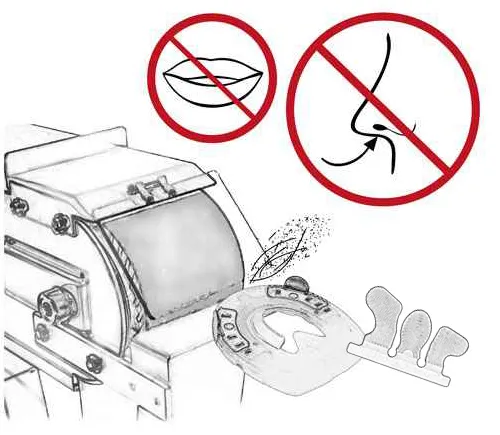
Ensure adequate ventilation and suitable Personal Protective Equipment (PPE) both when grinding plastic and when welding plastic.

NOTICE
Not all plastics are the same. Our products are manufactured using chemical substances and synthetic materials that are harmless to health. Nevertheless, when working with plastic, there are a number of aspects to consider to protect your health.
WARNING
Do not inhale any plastic grinding dust when modifying the
horseshoes or accessories.
Dispose of the grinding residue properly.
To avoid injuries such as burns, remember that plastic can
heat up to 200°C / 400°F when grinding or welding plastic.
Use suitable protective equipment to protect yourself from
potential hazards.
Cooling the weld seams with cold water
is not recommended, as the plastic may become brittle.
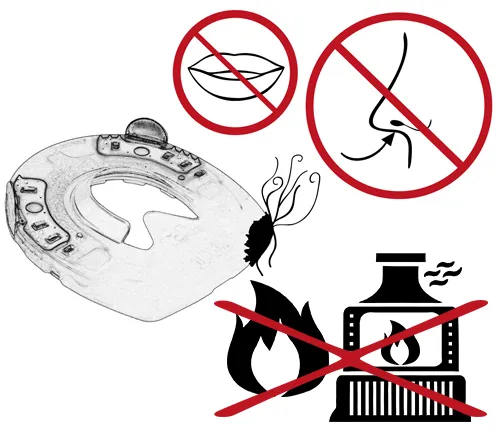
Avoid burning the plastic material so that you do not inhale
any vapors and do not place any plastic products in the
forging furnace.
When carrying out any welding work,
ensure that the weld seams are continuous and stable and
that the weld seam does not exert any pressure on sensitive
areas of the hoof.
REFERENCE
Observe the usual safety precautions when working with the angle grinder, belt grinder or hot air
tool.
There are separate guidelines for our welding devices:
2.2. General Information on Working With Our Products
NOTICE
Only use our products if you have the necessary knowledge
of how to use them correctly.
Observe our shoeing instructions
and safety information .
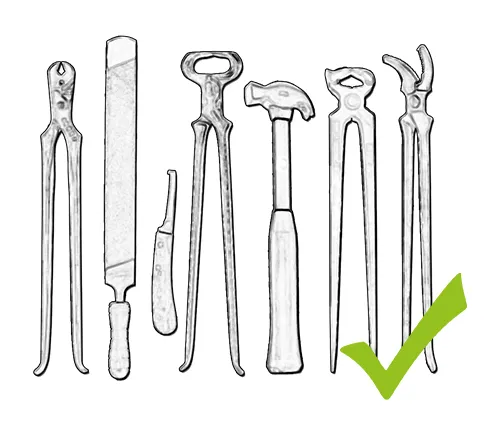
Only use the tools intended for this purpose when working
with our products. Observe the usual safety precautions and
any additional safety and usage instructions provided by the
manufacturer when working with these tools.

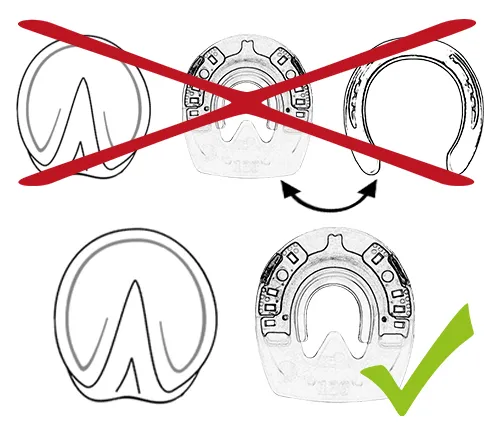
Do not place a horseshoe between the hoof and a
conventional metal horseshoe.
Do not place a horseshoe
underneath a conventional metal horseshoe.
This applies to
both pure plastic shoes and composite
horseshoes
, as well as to
the blueline® evo! dual-material horseshoe.
WARNING
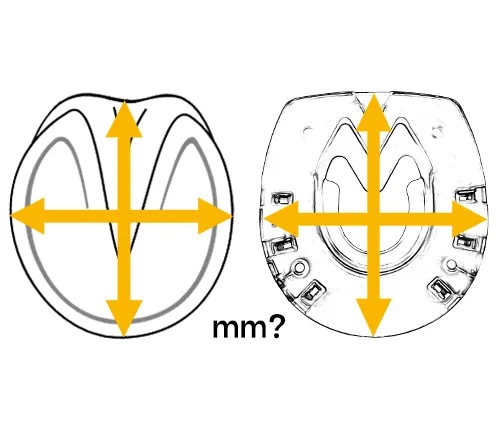
Perform the bare hoof trimming professionally and then select the optimum shoe size. Incorrect shoe sizes or inadequate adjustment of the shoe to the hoof can increase the risk of the horse losing a horseshoe. Whether glued, cast or nailed - lost horseshoes are always a safety risk for your own horse and the entire herd.
REFERENCE
All information on customization and modification can be found online.
2.3. Risk of Injury From Quarter Clips
Personal Protective Equipment
If you use a horseshoe with quarter clips, take care to avoid cuts. We recommend wearing suitable gloves. When grinding / removing the clips, suitable eye protection is required.

WARNING
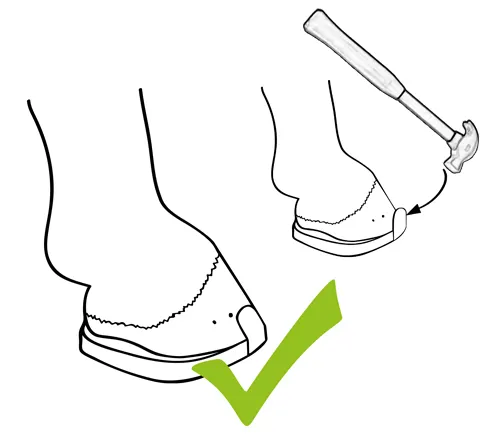
Make sure to adjust the angle of the clips to the hoof
wall
.
Protruding clips increase the risk of injury for the horse and
the herd. This applies to both plastic and metal clips.
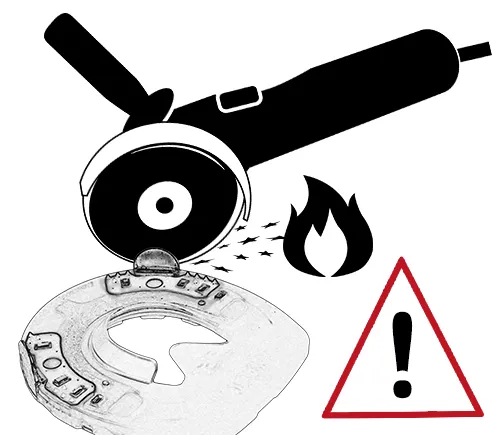
If you are using the "Basic" model, be sure to grind the
quarter clips before shoeing to prevent injuries. When
grinding or removing metal quarter clips, sparks may
occur. Ensure proper safety precautions and appropriate
Personal
Protective Equipment
, especially suitable eye
protection.
2.4. Risk of Pain Due to Incorrectly Positioned Knobs
NOTICE
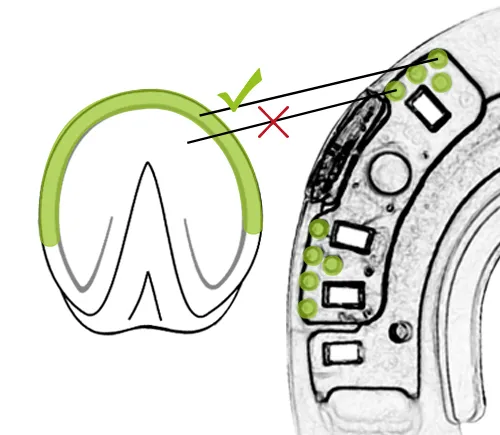
The sturdy colored knobs press into the bearing edge of the hoof wall and help to prevent the nailed horseshoe from twisting on the hoof.
WARNING
If the position of the knobs on the hoof is not ideal, this can lead to pressure on sensitive areas. Therefore, always ensure the correct position of the knobs on the hoof and grind off any incorrectly positioned knobs.
2.5. Additional Risks with a Nailed Horseshoe
WARNING
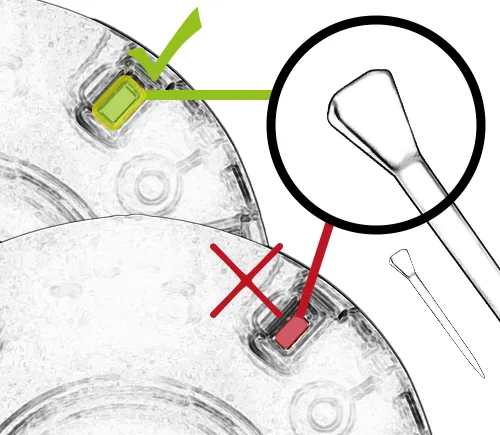
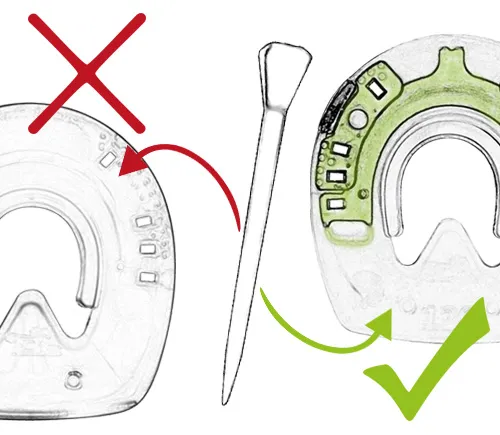
Make sure you choose the right horseshoe nails.
It is important that the nail head cannot slip through
the nail hole in our horseshoe.
Otherwise the risk of the horse losing a shoe increases.
The plastic shoes without core (regardless of the version)
were not designed for nailed application. The risk of losing
the horseshoe and being injured by thenails would be too
high, as the nails would not sit firmly in the plastic.
2.6. Additional Risks with an Adhesive Horseshoe
NOTICE
Our range includes so-called "Practice Kits" for practicing the welding of glue-on tabs and
horseshoes at low cost.
.
Please note that the "dummies" included in the kits are not suitable as hoof
protection.
2.6.1. Increased Health Risk Due to the Adhesive Used
Personal Protective Equipment
No matter which adhesive you use: Make sure you have the appropriate Personal Protective Equipment and adequate ventilation.
WARNING
Read and follow the warnings and safety instructions for the adhesive used. If you purchase the adhesive from us, we will enclose the warning and safety instructions separately with the delivery, unless they are noted on the product itself.
REFERENCE
You can also find the instructions online in the product descriptions of the respective adhesive.
NOTICE
Anyone working with polyurethanes is required to complete training on the safe use of diisocyanates . It is the responsibility of the user to ensure compliance with the applicable regulations.

2.6.2. Minimized Risk of Losing Horseshoes with Correct Working Methods
NOTICE
In order to reduce the risk of losing a glue-on horseshoe, it is important to carefully prepare the bare hoof and the glue-on shoe.
REFERENCE
All relevant information for this type of shoeing can be found in our gluing instruction:
2.6.3. Minimized Risk of Losing Horseshoes With Removed Knobs
NOTICE
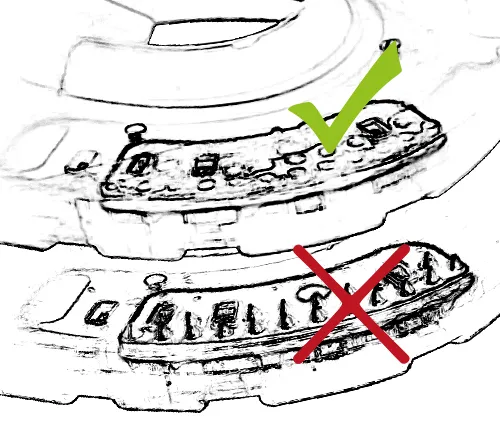
This applies both to the hard knobs of the colored knob inserts and to the soft production-related knobs.
WARNING
Remove all knobs in advance to be on the safe side. If the knobs have not yet fully penetrated the hoof horn when gluing, the tabs may be compressed later, which could have a negative effect on the secure hold of the adhesive horseshoe.
TIPP
All open-toed models , the Basic , as well as our "Base Plate" and the Pony Shoes, have no knobs at all.
2.6.4. Minimized Risk of Losing Horseshoes: Glue-on Tabs and Adhesive Collars
CAUTION
Depending on the glue-on tab or adhesive collar, you can choose between different degrees of hardness. When color is added to the plastic, some properties change slightly — such as melting point and flexibility compared to the transparent version. The degree of hardness of the plastic has an effect on the tear resistance of the product and its flexibility when glued to the hoof. Problems can therefore arise depending on the temperature, hoof wall and riding discipline. The farrier is responsible for deciding which product to use for gluing.
2.6.4.1 The Flexibility of the Tabs
NOTICE
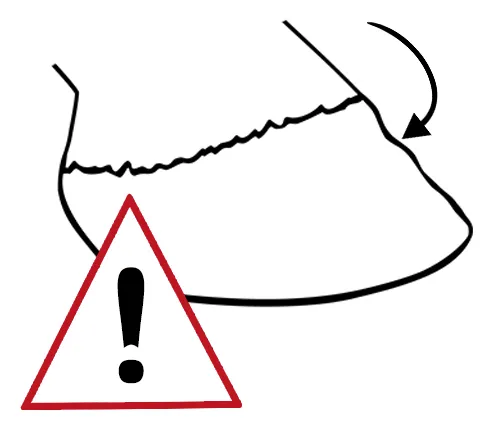
The harder the plastic, the more difficult it is to bend the individual tabs on the hoof. It can therefore make sense to opt for a slightly softer synthetic material, especially if the hoof walls are of an irregular shape.
WARNING
The stronger the forces acting on the adhesive bond, the greater the risk of losing the horseshoe.
TIPP
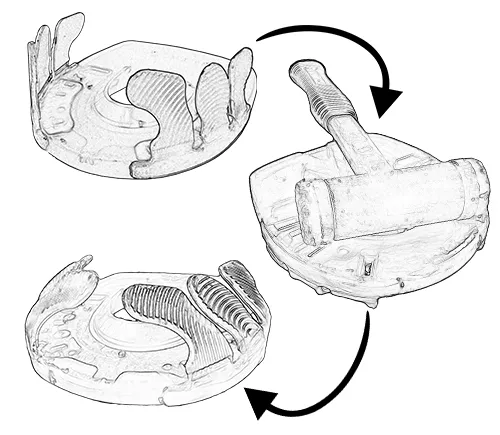
Once the weld seam has completely cooled, you can manually adjust the flexibility of the tabs. To do this, gently heat the tabs that are already welded to the shoe, making sure no heat is transferred to the cooled weld seam. Then place the shoe with the warmed tabs facing downward and weigh it down, for example with a hammer. Let it rest in this position for a few minutes — this will gently pre-bend the tabs in the direction of the hoof wall.
2.6.4.2. The Strain Caused by the Riding Discipline / the Horse‘s Gait Mechanics
WARNING
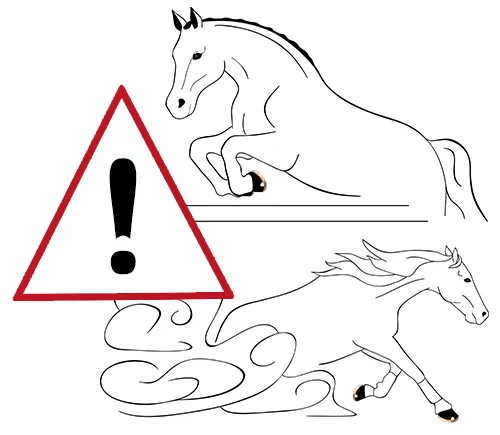
The softer the plastic, the easier the individual tabs can tear. In equestrian disciplines where the hoof protection is exposed to particularly high and shearing movements (e.g. Eventing , show jumping, barrel racing), and with horses with particularly shearing footing, the risk of shoe loss increases as the hardness of the synthetic material used decreases.
2.6.4.3. The Effects of Temperature
WARNING
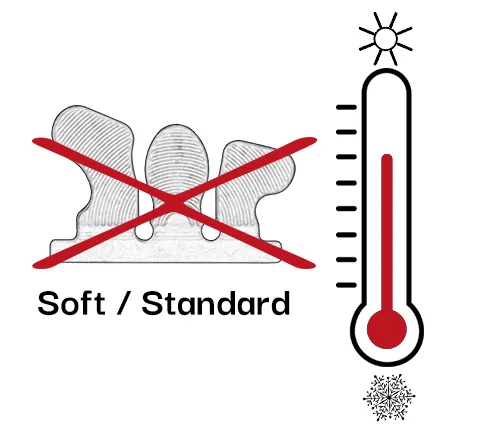
At warmer temperatures, the plastic becomes softer and more flexible. Softer products will therefore tear more quickly in summer than harder ones. At the height of summer, we strongly advise against using the soft or Standard versions. At colder temperatures, the plastic becomes more rigid and less flexible. The harder the product is, the less flexible it is in winter (see also section 2.6.4.1).
2.6.5. Increased Risk of Losing Horseshoes Due to Hoof Care Products
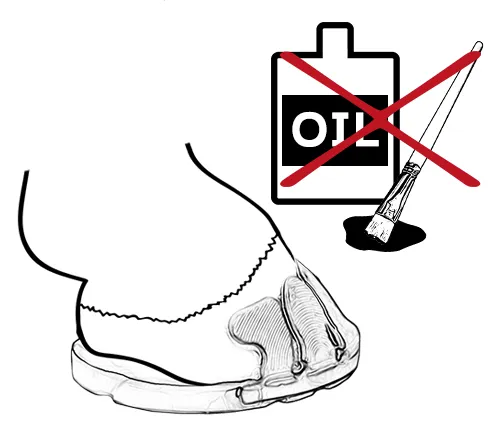
WARNING
Hoof care products containing oil that are applied to the hoof wall can impair the adhesive bond between the glue-on tab and the hoof. This increases the risk of losing the horseshoe.
TIPP
We therefore always recommend interrupting the active treatment with the respective product in good time before applying the adhesive horseshoe.
REFERENCE
See also section 2.7.1.
2.6.6. Increased Risk of Losing Horseshoes Due to Padding Material
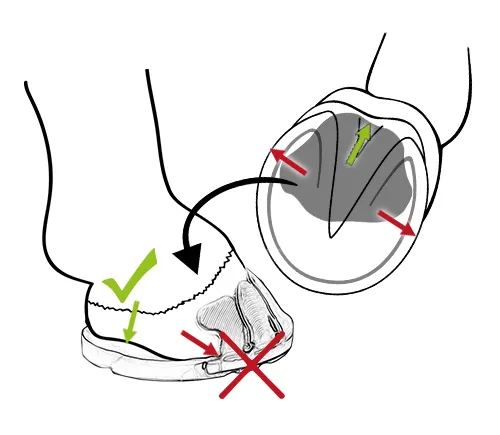
WARNING
Make sure that no padding material escapes sideways towards the glue-on tabs. The padding material could have a negative effect on the stability of the adhesive bond between the tab and the hoof.
REFERENCE
See also section 2.7.1.
2.7. Additional Risks with an Orthopaedic / Therapeutic Horseshoe
CAUTION
Any shoeing with an orthopaedic / therapeutic background requires appropriate expertise.
The wrong hoof protection or a lack of adjustment can worsen the horse's state of health.
NOTICE
Our products are not intended to diagnose or cure any disease.
2.7.1. Use of Hoof Care Products, Padding Material and Hoof Repair Products
Personal Protective Equipment
Many of these products can pose risks to your health and require Personal Protective Equipment such as gloves and mouth and eye protection. Always ensure adequate ventilation.
CAUTION
Observe the manufacturer's safety and usage instructions to protect your health and the health of the horse. Depending on the individual situation, the wrong hoof care product or the wrong degree of hardness of the padding material can worsen the horse's state of health. It is the farrier's responsibility to choose the right product.
REFERENCE
See also section 2.6.5. and 2.6.6.
2.7.2. Risks Associated with Laminitis Horseshoes
NOTICE
Our open-toed models are also often referred to as "laminitis horseshoes". Of course, depending on the horse and individual hoof situation, other horseshoes are also suitable for use as laminitis shoes.
CAUTION
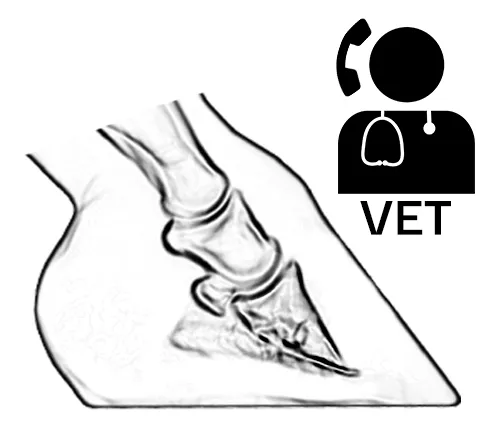
If you wish to use our products for acute or chronic laminitis, we strongly recommend that you attend an appropriate training course and work together with the responsible veterinarian. An incorrect shoe size / model selection or adjustment can aggravate the horse's situation.
2.7.3. Risks Associated with Wedge Horseshoes
NOTICE
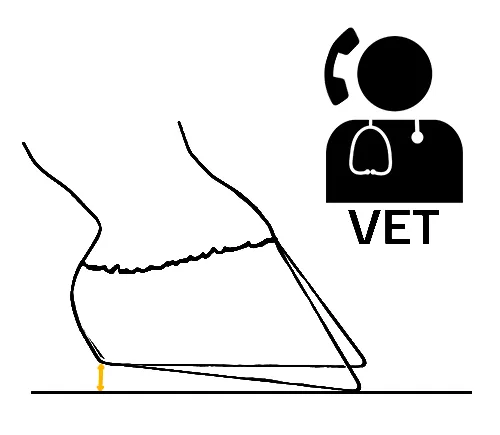
A horseshoe with a wedge
pad is used to change the hoof angle
.
This is an
orthopaedic / therapeutic horseshoe that may only be used by expert farriers.
CAUTION
We recommend that you always discuss the use of a wedge, the angle at which the heels should be raised and the duration of use with your local vet.
WARNING
Without the appropriate specialist knowledge and individually tailored training, this can have a negative impact on the horse's musculoskeletal system and health.
2.7.4. Risks Associated with Immobilization due to Cast Horseshoes
Personal Protective Equipment
If you want to shoe the horse with cast horseshoes , wear suitable protective gloves. When preparing and applying the cast bars, you need protection against the sharp prongs of the cast hooks to prevent cuts. When grinding down the screws, suitable eye protection is required. You will need disposable gloves when working with the cast bandage .
REFERENCE
All relevant information from our side for this style of horseshoe can be found in our cast
instruction.
Please also observe the safety instructions from the manufacturer of the cast bandages. If you
purchase the bandages from us, we will provide you with these instructions, unless they are
noted on the product itself. You can also find them online in the cast instruction.
WARNING
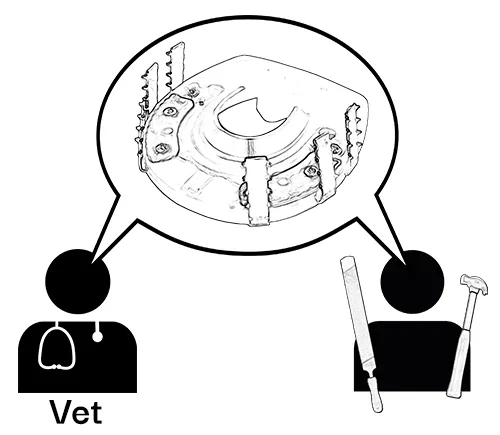
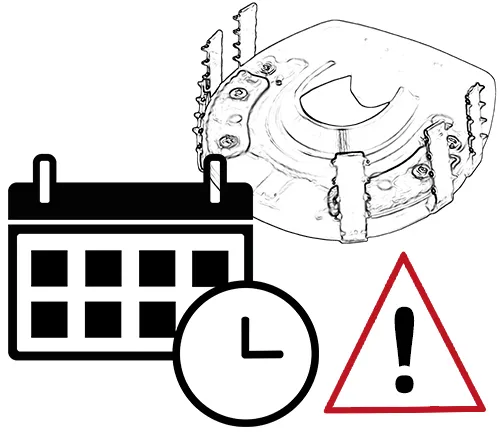
This is an orthopaedic / therapeutic shoeing that may only be carried out by expert farriers (if necessary in cooperation with the vet) to ensure that the cast shoe has no negative health effects on the horse.
Please note that a hoof cast leads to the immobilization of the hoof capsule . The duration of this application should therefore be adapted to the individual situation of the horse.
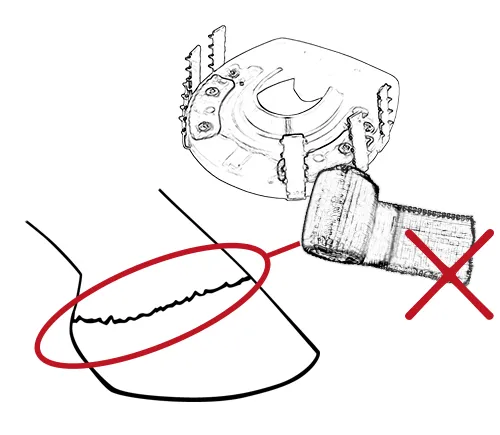
When wrapping the cast bandage around the hoof, you must ensure that the coronary band and the heel bulbs remain free.
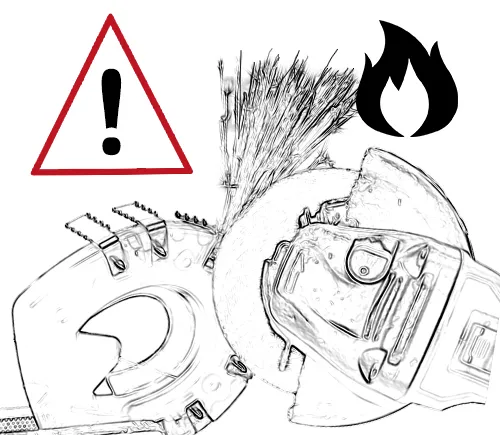
Grinding down protruding screws may produce sparks. Be sure to follow appropriate safety precautions and wear adequate Personal Protective Equipment , especially suitable eye protection.
2.7.5. Risks Associated with High Studs
CAUTION
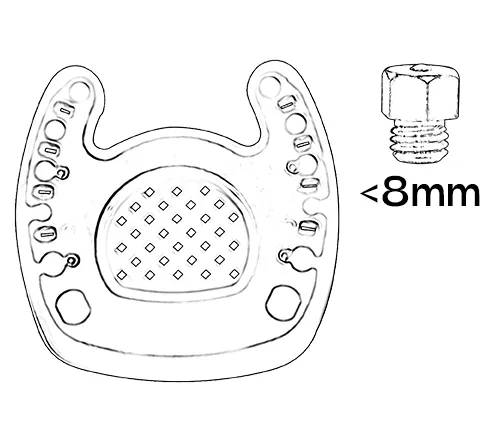
Threaded inserts that are firmly anchored in a metal core are generally also suitable for slightly taller studs. However, if you are using the horseshoes for an orthopaedic / therapeutic shoeing, we generally advise against using high studs. The same applies to the open-toed horseshoe with screw threads. In this case, we recommend using only the 6mm or 8mm studs with an effective height of 3mm or 5mm to avoid putting additional strain on the horse's health.
REFERENCE
See also section 2.8. with all sub-sections on the use of studs.
2.8. Risks Associated With the Use of Screw-in Studs or Drive-in Studs
CAUTION
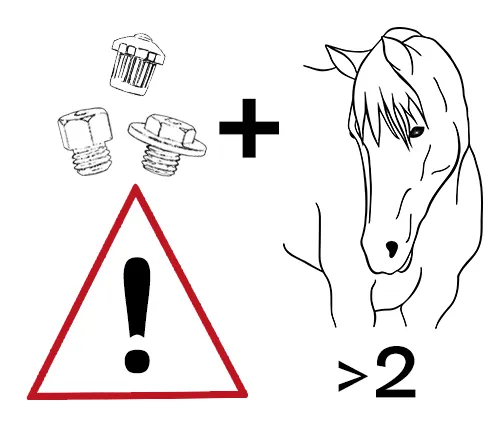
Any use of screw studs-in or drive-in
studs
increases the risk of
injury in the herd.
The pros and cons of using studs should therefore be agreed
between the farrier and the horse owner / rider (and possibly
the stable owner).
WARNING
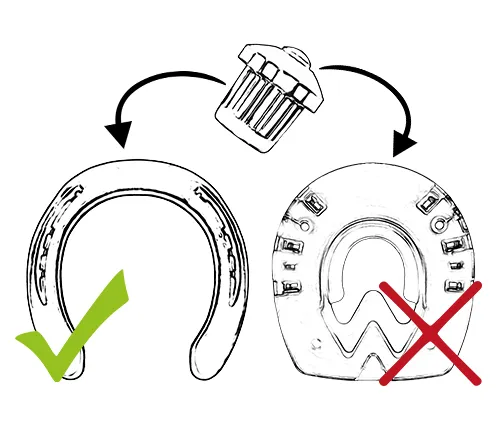
Our drive-in studs, known as "Speedies", are only suitable for use with conventional metal horseshoes. They cannot be used in combination with Duplo, blueline®, GluShu, or similar shoes from other manufacturers.
2.8.1. Position of the Thread Inserts (Stud Holes) on the Hoof
NOTICE
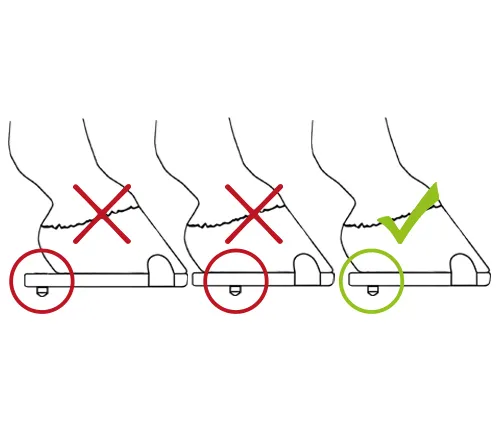
The correct position for the thread inserts is in the heel area. If you are using a horseshoe with four thread inserts, the two front thread inserts must be located under the bearing edge of the hoof wall.
WARNING
When choosing the correct shape and size of a horseshoe with stud holes, always pay attention to the position of the thread inserts. Incorrectly positioned thread inserts can increase the risk of the shoe coming off and/or exerting undesirable pressure on sensitive areas of the hoof.
2.8.2. Using a Threaded Horseshoe Without Studs
WARNING
To avoid punctual pressure on the hoof and not impair the stability of the thread insert, protect the thread inserts from accumulating dirt at all times with the aid of stud blanks or closing plugs .
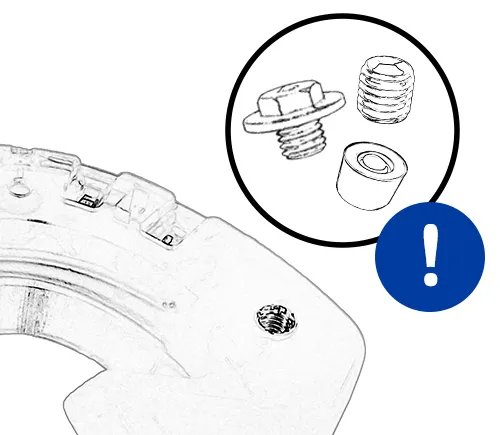
2.8.3. Thread Inserts in the Synthetic Cover
NOTICE
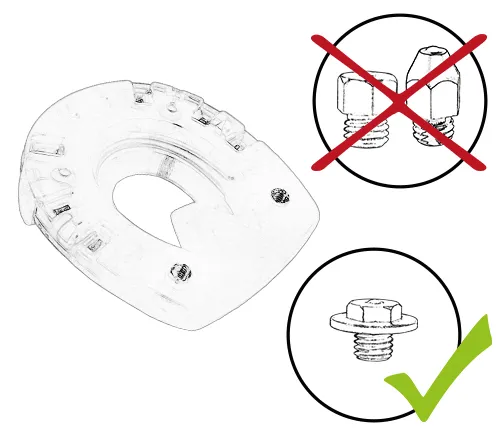
With these horseshoes, the 4mm studs with disk are the most suitable for the health of the horse and the stability of the horseshoe.
WARNING
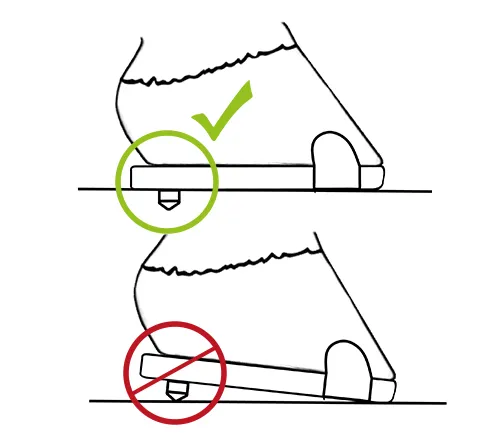
Our 6mm studs with disk are only suitable to a limited extent, depending on the ground conditions. Never use higher studs, as the thread inserts could be levered out of position. Do not use studs without disk to avoid punctual pressure on the hoof.
The slightly higher "Nordic" studs are developed exclusively for the Nordic countries . With these studs, it must be ensured at all times that the stud can sink completely into the ground. Otherwise, the use of these studs could affect the stability of the shoe and the health of the horse in the long term.
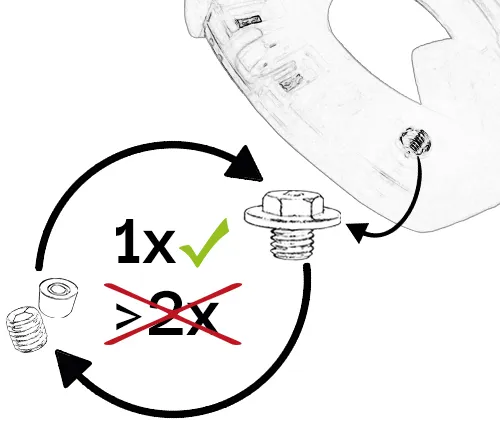
Horseshoes with thread inserts that are not anchored in the metal core are not suitable for multiple changes from stud blanks (see also section 2.8.2.) to studs. Repeated screwing and unscrewing of the (blind) studs jeopardizes the tight fit of the thread inserts in the horseshoe.
2.8.4. Thread Inserts in the Metal Core
WARNING
The thread inserts, which are firmly anchored in the metal core, are generally suitable for slightly higher studs. However, if the ground is hard and the stud cannot sink in, we believe that higher studs should only be used when necessary.
The permanent use of higher studs can have a negative effect on the health of the horse, the stability of the shoe and the safety of the herd, especially on hard ground. Do not use studs that are higher than the heights available from us and specified for your horseshoe.
2.8.5. Using Studs in case of Orthopaedic / Therapeutic Shoeing
REFERENCE
See section 2.7.5.
2.9. Risk of Injury when Using Spikes
CAUTION
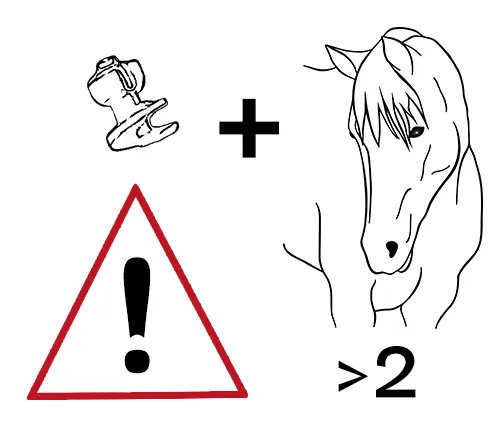
Spikes
increase both the grip of the horseshoe and the risk
of injury in the herd - but of course to a different extent
than studs do.
They are comparable to the tungsten carbide pins in
conventional horseshoes.
NOTICE
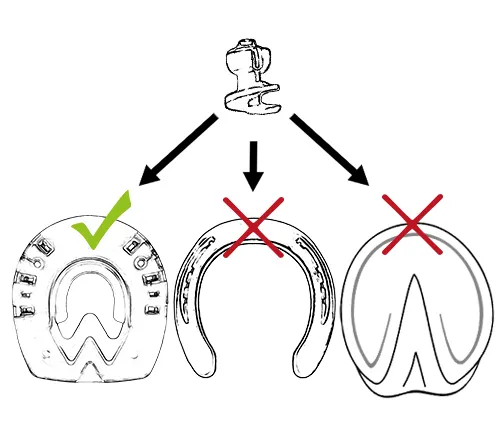
The exact placement and number of spikes used in the plastic cover is at the discretion of the on-site farrier. Basically, the options differ depending on the type of horseshoe used.
WARNING
Spikes are only suitable in combination with a composite horseshoe with synthetic cover or a purely synthetic horseshoe. Spikes are not suitable for use with steel shoes or GluShu. Spikes must not be screwed directly into the hoof.
2.9.1. Risk Due to Incorrect Installation / Position of the Spikes
WARNING
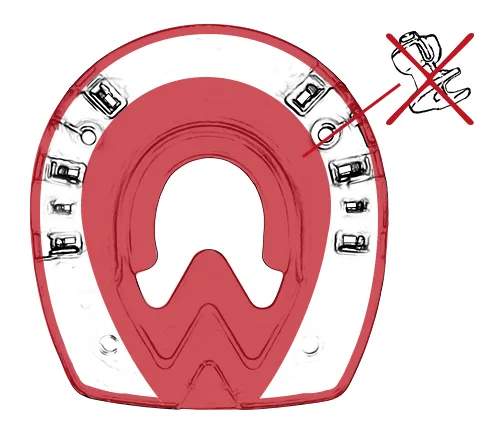
To avoid pressure on sensitive areas of the hoof, the spikes should be fitted in the plastic
cover in the area of the bearing edge
of the hoof
wall
.
Under no circumstances should the spikes be screwed in
too far inwards, i.e.
under the sole of the hoof. If the spike
is too close to the edge of the horseshoe, the plastic may
tear out.
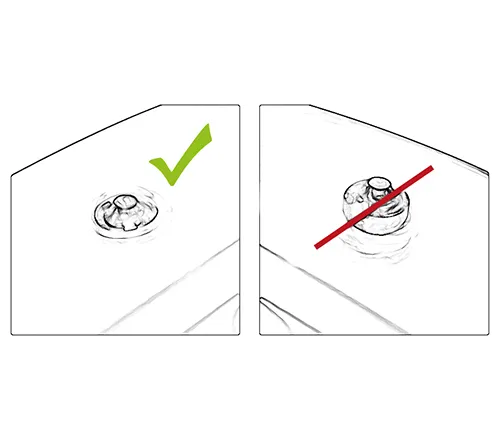
If the spike is not screwed in far enough, it is easy to lose
and also poses a risk of injury to humans and horses.
If the spike is screwed in too far, it does not provide any
additional grip
and there is a risk of the thread of the spike
breaking through the hoof side of the horseshoe.
To ensure a reliable grip, the spike should not be overtightened.
2.10. Using the Hoof Sole Protector (HSP)
NOTICE
Remove the debris
guard
as precisely as possible. If you cut
away too much material, the hooks of the sole protector may
not grip properly later, making installation more difficult.
Make sure you wear Personal
Protective Equipment
and
ensure adequate ventilation when installing the HSP.
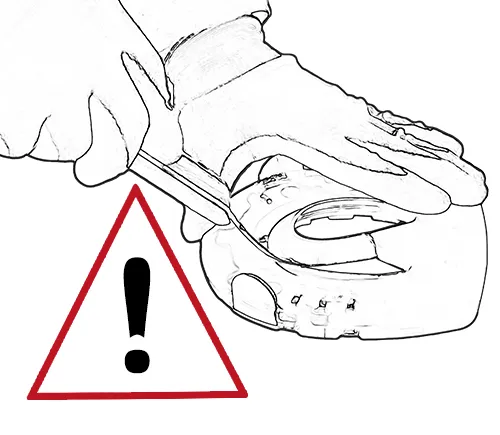
WARNING
The weld seam must run without gaps along the entire edge
of the sole protector to ensure stability.
Risks due to unstable weld seams:
- Dirt could get in, which can lead to an undesirable build-up of pressure.
- Loss of the sole protector.
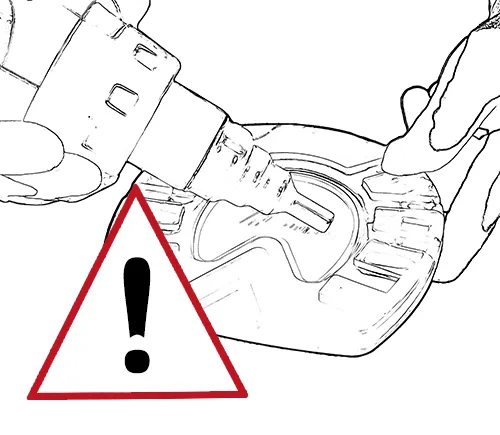
2.11. Adjust Length and Width with Extensions and Colored Strips
CAUTION
The weld seam between the shoe and the Extensions or colored strip must run continuously along the entire edge of the shoe. If there are gaps in the weld seam, dirt can get in. This can lead to localized pressure on the hoof or even to the loss of the Extensions or colored strip.
WARNING
With the Arizona , widening using extensions is only possible to a limited extent due to the additional steel edge. For our Straight Bar horseshoes and models designed for studs, we advise against width or length adjustments using extensions, as this alters the position of the stud holes and the bar, which may cause pressure on sensitive areas of the hoof.
2.12. Using Protective Insoles
NOTICE
Our Protective
Insoles
are hoof pads for steel shoes and offer a certain level of protection
against
snow and mud balling
up
.
They cannot be used in
combination with Duplo horseshoes, blueline® horseshoes, or similar products from
other manufacturers.
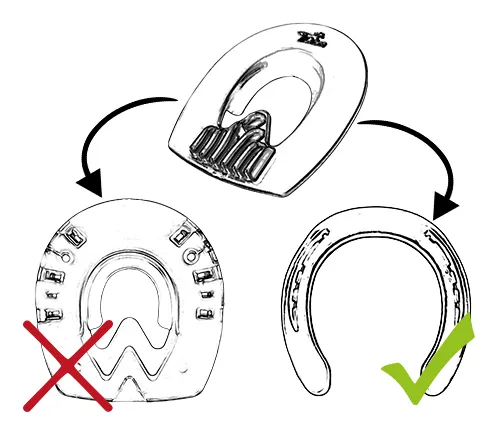
WARNING
Ensure a secure fit in the horseshoe during use. The insole can only perform its function if it is correctly fitted and processed. If used incorrectly, there is a risk of the insole slipping on the horseshoe or dirt accumulating between the horseshoe and the insole.
REFERENCE
See also section 3.2.1

2.13. Use of the Sole Relief Pads
NOTE
Our Sole Relief Pads are square pads with a crescent-shaped cut-out. They are designed to relieve pressure at the tip of the coffin bone for various indications. Any therapeutic or orthopedic application is at the discretion of the farrier on site and should ideally be coordinated with the attending veterinarian.
CAUTION
Always adapt the Sole Relief Pad both in its outer shape and in the area of the crescent-shaped cut-out to the individual hoof situation.
If you intend to use the Sole Relief Pad in cases of acute or chronic laminitis , we strongly recommend appropriate training and cooperation with the attending veterinarian. If laminitis is suspected or has been diagnosed, the position of the bar should be determined using current radiographs.
WARNING
When using the Sole Relief Pad, make sure it sits securely in the shoe. We recommend
spot-welding the Sole Relief
Pad in place.
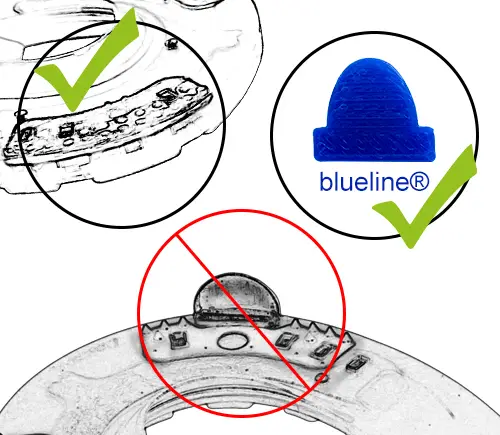
Remove all knobs. This applies both to the hard knobs of the colored knob
inserts
and to the soft production-related
knobs.
Do not use shoes with metal side clips.
The pad can only perform its function correctly if it is properly adapted and fitted. If used
incorrectly, the Sole Relief Pad may shift or create additional pressure.
2.14. Risks when Reusing a Used Horseshoe
NOTICE
If the metal core of the horseshoe is already visible due to extreme abrasion, we generally advise against using the horseshoe for another shoeing cycle. The final decision is up to the farrier on-site.
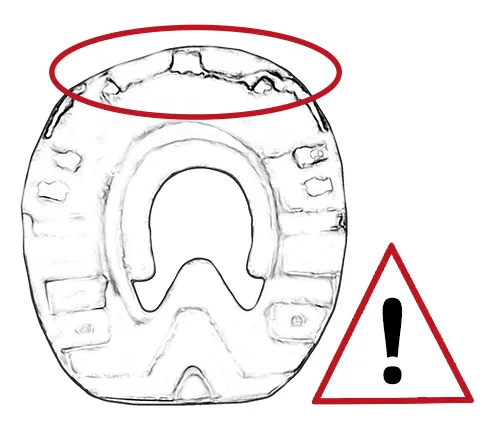
WARNING
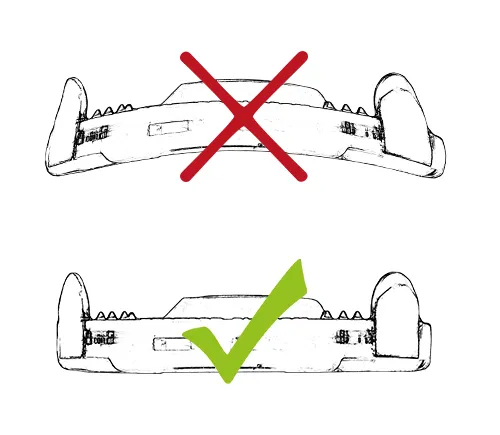
Before re-shoeing, it is essential that the horseshoe is
leveled
.
If the shoe was deformed during the previous shoeing
period, this could lead to tension and pressure on the sole
.
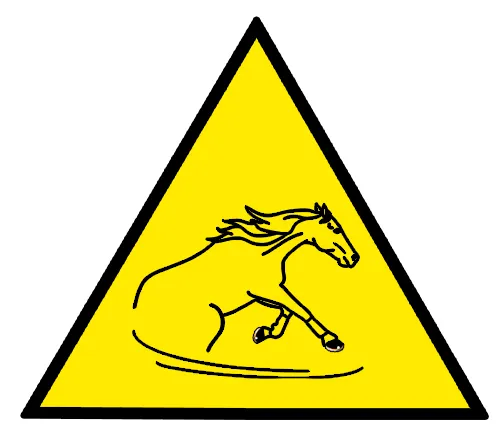
CAUTION
Please note that a used horseshoe has a slightly different slipping behavior than a new horseshoe - similar to a used winter tire on a car. Also pay attention to the depth of the profile of the horseshoe. If in doubt, you should always opt for a new shoe for safety reasons.
DANGER
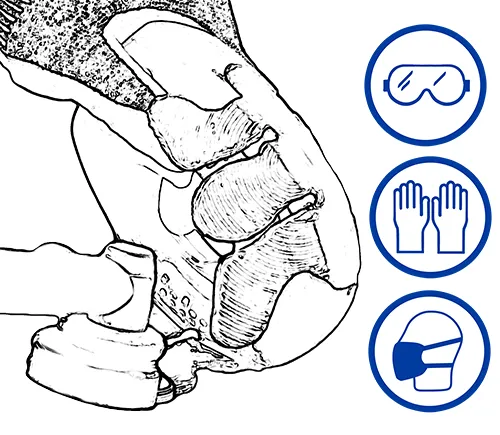
If you want to reuse an adhesive horseshoe, you must
remove the remains of the old glue from the glue-on tabs.
The old glue residue would have a negative effect on the
new adhesive bond.
Please note that the sanding dust from the glue poses
considerable health risks. Always protect yourself with
Personal
Protective Equipment
and adequate ventilation.
Part No. 3 - The Daily Use of our Products:
Information for Riders and Horse Owners During the Shoeing Period
NOTICE
Duplo and blueline® shoes are suitable for many different horses and disciplines. However, some horses may not tolerate the shoe well due to their limb conformation or movement patterns. It is the responsibility of the rider / horse owner to always take a critical look at the horse and the type of horseshoe. If you have the feeling that your horse is not getting along with the horseshoe for any reason, please contact your farrier. Our team will also be happy to advise you. Please note, however, that we cannot make any remote diagnoses.
3.1. Regular Checking the Hoof Protection
Personal Protective Equipment
Make sure you have the appropriate Personal Protective Equipment . Wear suitable gloves to avoid cutting injuries.
NOTICE
Check the correct and secure fit of the horseshoes and the accessories used once a day and before every activity with the horse to prevent shoe loss during the regular shoeing period. This applies to all types of horseshoes (nailed, glued, cast ).

CAUTION
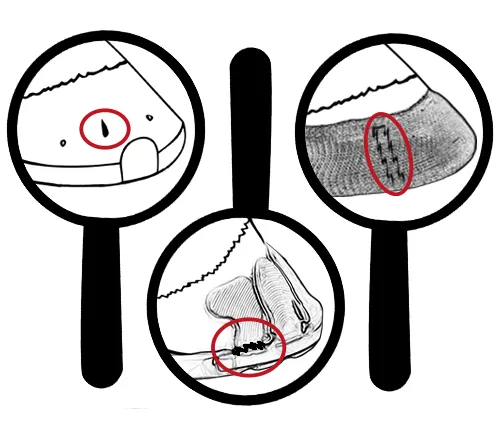
To avoid injuries, check at least once a week...
- ...whether there are any sharp edges on the horseshoe.
- ...whether the clips are positioned correctly against the hoof wall .
- ...whether there are any open rivets on nailed horseshoes.
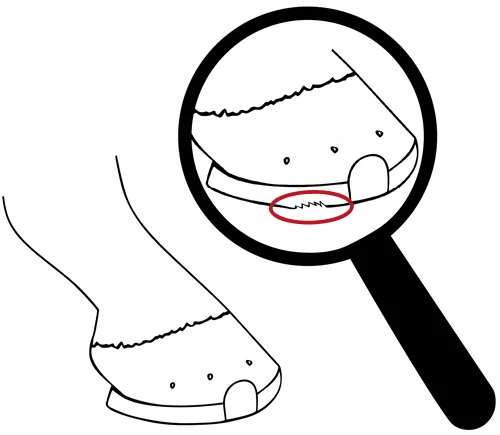
- ...whether the adhesive connection between the glue-on tabs and the hoof and the weld seam between the shoe and the tabs are intact in the case of adhesive horseshoes.
- ...whether the cast bandage on cast horseshoes is intact and no sharp points of the cast hooks are exposed.
3.2. Regular Hoof Care
Personal Protective Equipment
Make sure you have the appropriate personal protective equipment.
Wear suitable gloves to avoid cutting injuries.
3.2.1. Risks Due to Foreign Objects Under the Hoof / Hoof Protection
NOTICE
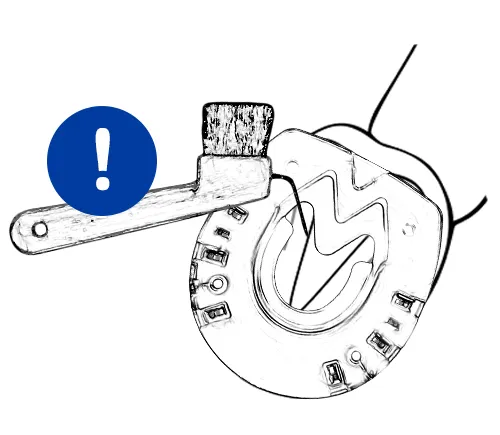
Regular hoof cleaning is essential even for a horse with shoes in order to maintain the horse's health. Especially in winter conditions, hooves should be checked more frequently than usual and thoroughly cleaned out.
WARNING
Our products can help reduce the presence of foreign objects under the hoof — including snow, stones, and dirt — but we cannot guarantee this. This applies equally to shoes with a debris guard , shoes with a closed sole, as well as our Protective Insoles . It can always happen that larger stones get wedged under the hoof or that, despite all precautions and the integrated debris guard, dangerous ice and snow can be balled up in winter.
3.2.2. Risks Due to the Ingredients of a Care Product
Personal Protective Equipment
Many hoof care products require the use of Personal Protective Equipment (PPE), such as gloves and respiratory or eye protection, due to their ingredients. Even for products with natural ingredients - and even if no warnings are indicated - we generally recommend suitable PPE, especially protective gloves. Natural substances can also cause skin irritation or allergic reactions . Always ensure good ventilation during application.
WARNING
Read and follow the warnings and safety instructions of the manufacturer of the product used. If you purchase the product from us, we will enclose the warnings and safety instructions separately with the delivery if they are not noted on the product itself. You can also find the relevant information in our online store.
NOTICE
Anyone working with polyurethanes is required to complete training on the safe use of diisocyanates . It is the responsibility of the user to ensure compliance with the applicable regulations.

3.3. Appropriate Speed and Riding Style
CAUTION
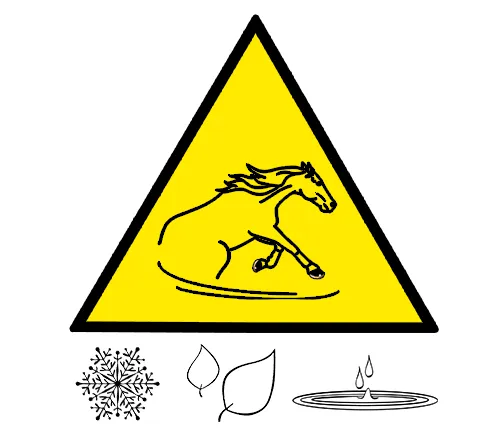
The gliding ability of our shoes on slippery surfaces (e.g. freshly mown meadows, wet leaves) corresponds approximately to that of an unshod hoof or a worn conventional horseshoe without studs. You must always adapt your speed and riding style to the surface and reduce your speed appropriately to prevent accidents. When using our products on slippery surfaces, you should use studs or Spikes to provide the horse with even better grip .
3.4. Using Spikes and Studs (screw-in studs and drive-in studs )
REFERENCE
See also sections 2.8. (studs) and 2.9. (spikes) with all subsections.
WARNING
Spikes and studs can pose a risk to the herd, especially with horses that tend to be belligerent. If you are not keeping your horse under a do-it-yourself livery arrangement, you should always discuss the use of spikes and studs with the stable owner beforehand.
CAUTION
The use of spikes and studs and the monitoring of their
correct fit and integrity during the shoeing period is at
the discretion of the horse owner / rider in cooperation
with the local farrier.
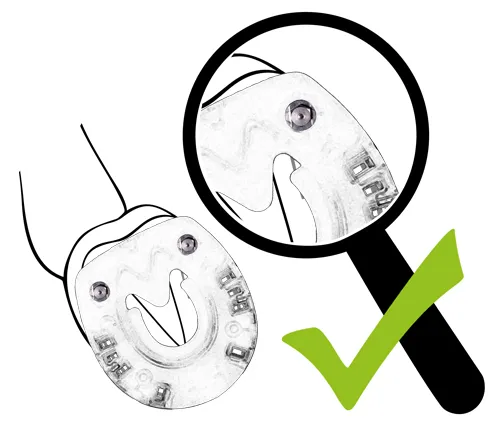
Check the correct fit and integrity of the spikes or (blind)
studs and the thread inserts daily and before every activity
with the horse. A crooked (blind) stud is an indication that
the fit of the thread insert is no longer optimal.
3.5. Using a Threaded Horseshoe Without Studs
REFERENCE
See section 2.8.2.
3.6. The Model "Snow Edition"
WARNING
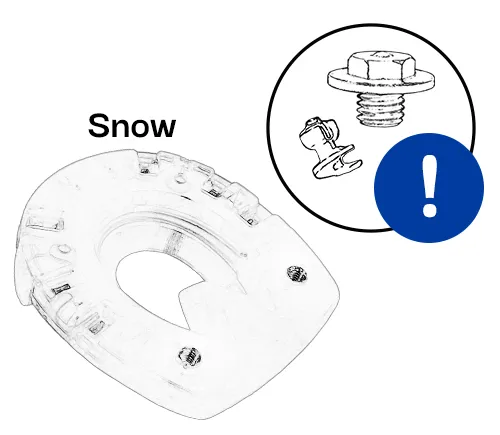
The Snow
Edition
was specially manufactured for use in
snow. It is aimed at anyone who has a problem with snow
balling
up
. We assume that the "Snow Edition" is more
slippery than the regular models when used without
additional anti-slip protection.
We strongly advise against using it without additional
anti-slip protection in the form of Spikes
and/or studs.
3.7. Increased Risk of Injury Due to a Visible Metal Core
NOTICE
If the metal core is already visible due to increased abrasion, the core functions of the horseshoe (hoof protection and shock absorption ) are still provided and it does not usually need to be replaced immediately.
WARNING
As soon as the metal core is visible, the risk of injury for the horse and the herd increases. When deciding when to change a horseshoe, the horse's behavior must be taken into account. Check whether there are any sharp edges on the horseshoe. If in doubt, consult your farrier to decide whether the horseshoe needs to be replaced.
3.8.The Model Arizona
NOTICE
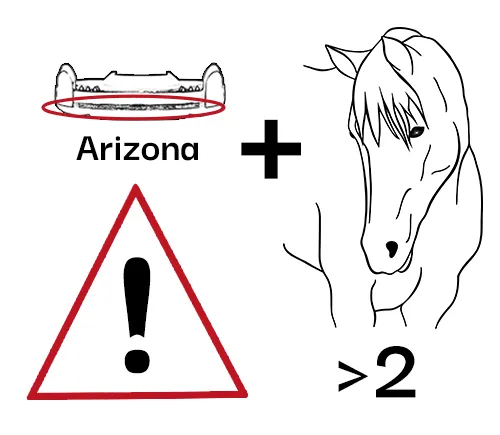
The steel border of the "Arizona" horseshoe is only minimally covered with plastic. It will therefore be visible within a very short time. With this special horseshoe, this is not a sign of increased abrasion or wear.
CAUTION
Due to the steel border, the risk of injury is higher with the "Arizona" than with our other horseshoes.
REFERENCE
See also section 3.7. with regard to the visible metal core or abrasion on the "Arizona".
3.9. Notes on Orthopaedic / Therapeutic and Laminitis Horseshoes
NOTICE
If your farrier uses our products for orthopaedic / therapeutic shoeing or e.g. for a laminitis shoeing, please note that our products are not intended to diagnose or cure diseases. Nevertheless, the targeted use of a composite shoe in consultation with the farrier and/or veterinarian, for example as part of therapeutic shoeing, can support the recovery process, e.g. in case of laminitis.
WARNING
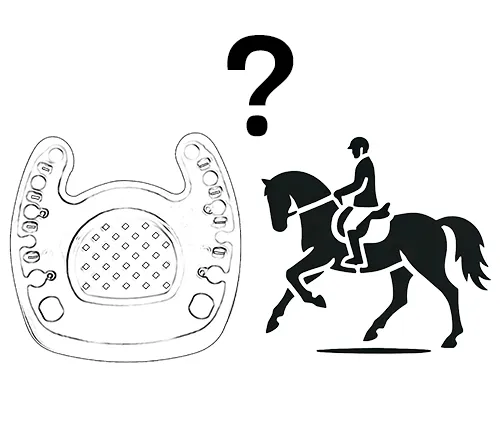
Basically, most horseshoes are also suitable as riding
shoes if they are used as orthopaedic / therapeutic
horseshoes. This also applies to open-toed
horseshoe
,
which are often used as laminitis horseshoes.
An exception is the cast
horseshoe
(see section 3.10).
We are unable to assess the extent to which your horse
is able to perform and therefore can be ridden during this
shoeing period.
When a horse is lame, it is obvious to everyone that there is a problem. However, if your horse
is only more sensitive to pain at certain points during this phase or is simply more cautious,
it may be that it is less sure-footed in the field, for example. You should therefore pay close
attention to your horse's signals so as not to endanger your own health or that of your horse.
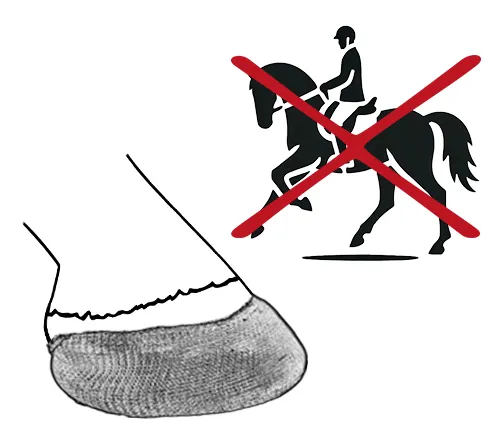
3.10. Notes on the Cast Horseshoe
WARNING
The cast horseshoe is a special form of orthopaedic /
therapeutic horseshoe.
It is not suitable as a riding shoe.